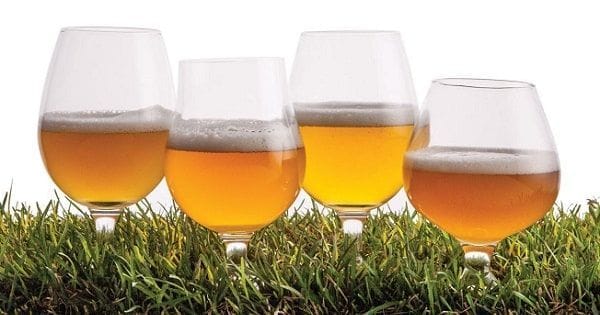
The growing demand for non-alcoholic beers (NAB) has highlighted a significant challenge: the perception that these beverages lack the aromatic complexity that characterizes their alcoholic counterparts.
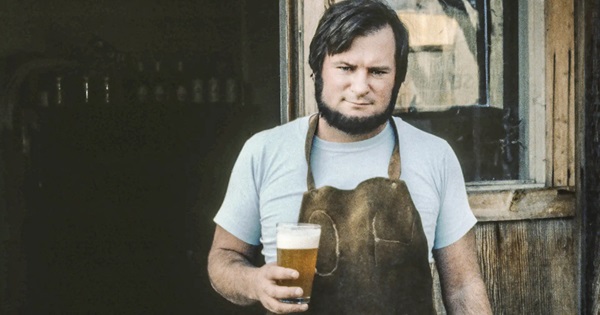
In a context where post-Prohibition American beer meant light lagers from a handful of industrial giants, Jack McAuliffe changed everything. He passed away on July 15, 2025, at age 80.
The legend of the Russian Imperial Stout style tells that the future Tsar of Russia, Peter the Great, was captivated by Porter-style beers during a visit to England in the late 17th century.
Although the origin of these names cannot be stated with absolute certainty, one of the most common explanations relates to how alcoholic beverages were historically identified.
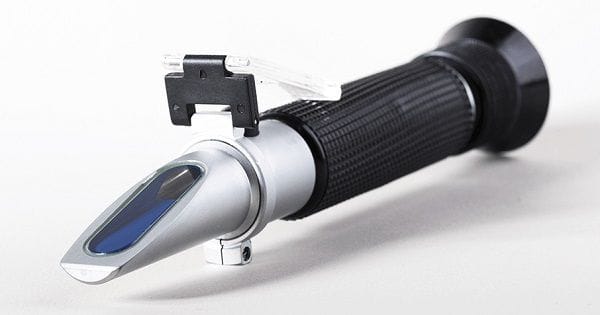
A refractometer is an optical instrument that measures the sucrose concentration of a solution based on the refractive index produced by light in that solution.
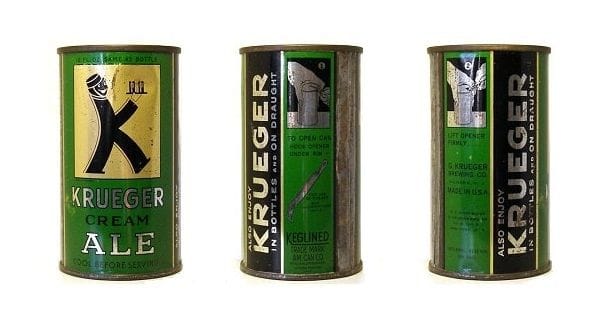
On January 24, 1935, the first canned beer went on sale after decades of experiments and more than ten years of Prohibition, thanks to the Gottfried Krueger Brewing Company in Richmond, Virginia.
The first thing to understand is that IBU, from a chemical perspective, does not refer to the perceived flavor in beer, but rather to the levels of certain bitter compounds dissolved in the liquid.
The Brewer’s Star, also known as Bierstern or Brauerstern, is an iconic symbol that has accompanied humanity for over 500 years, representing the art, tradition, and passion behind beer brewing.
Gushing is an undesirable phenomenon in beer characterized by an excessive and violent release of carbon dioxide (CO₂) when opening a bottle or can, leading to an uncontrollable overflow of foam and liquid.
Science had just emerged as a profession, yet it was a self-taught textile merchant who became one of the greatest scientific celebrities in all of Europe.
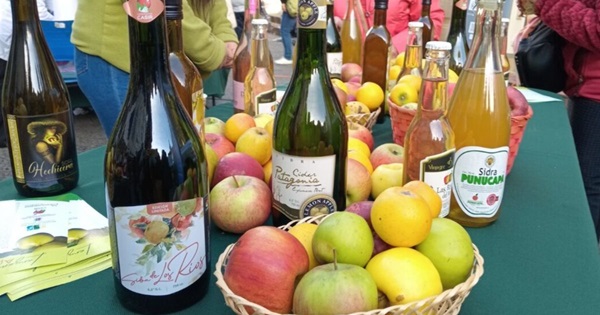
Cider is a fermented beverage made from apples, with a long and rich history intertwined with the introduction of apple trees (Malus domestica) to the Americas by the Spanish.
Saison beers were an early form of “fuel” in pre-industrialized Belgian farms, a crucial component for the success of the harvest season in the old farmhouses of the country.