This post is also available in:
 Español
  Português
Although the absolute origin of these names is not known with certainty, one of the most common explanations regarding the Dubbel, Tripel and Quadrupel denominations has to do with how alcoholic beverages were supposedly identified in the past.
When the majority of the population was illiterate, the easiest way to indicate the alcohol level of a beverage was with a certain number of “X”s.
One “X” would have been used for the lightest alcohol content, “XX”, “XXX” and “XXXX” successively for the stronger versions.
Thus, one “X” indicated a low-alcohol drink, “XX” a drink with twice the alcohol, “XXX” one with triple the alcohol content, and “XXXX” one with quadruple the alcohol.
MBAA Theory
The MBAA (Master Brewers Association of the Americas) offers a more technical theory for this case on how these beers might have gotten their name based on the mashing technique called parti-gyle.
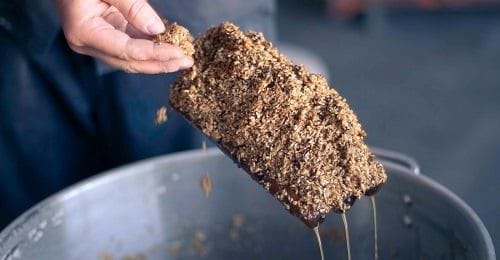
With this technique, a first wort is extracted with a fermentable sugar content of approximately 22.5%. The second extraction will be less strong, around 15%, while the final sparge would result in a sugar content of about 7.5%.
Now, conversely, worts with sugar proportions of 2X and 3X relative to the first are obtained. Essentially, three beers of three different strengths could be brewed from the same wort.
And although it is a nearly obsolete technique, this system could be a good historical explanation of how these styles got their names.
Westmalle Origin Theory
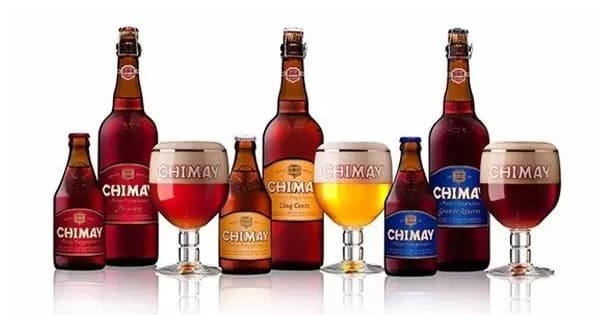
A third theory states that the origin of these names is due to the designation used by the Westmalle monastery, which until 1856 only produced one beer.

From that year onwards, they began brewing a second beer, which they identified as a Dubbel, and then in 1956, a third, which they named Tripel.
Each beer was significantly stronger in alcohol and flavor than the previous one, and from this point, these names supposedly became popular worldwide.
Later, the Koningshoeven brewery (La Trappe) in the Netherlands brewed an even stronger beer, which they called Quadrupel, initiating this denomination that encompasses monastery-style beers of 10, 12, or even 14 ABV.
Reference to Beer Styles
As a reference (BJCP), here are some of the characteristics we can find in each style.
Dubbel
ABV: 6 – 7.6. IBU: 15 – 25. SRM: 10 – 17. Dark amber, copper-colored, brilliant, with a voluminous, creamy, whitish, and lasting head. Malty aromas and flavors, chocolate, caramel, and/or toast; moderate fruity esters; and mild alcohol.

Tripel
ABV: 7.5 – 9.5. IBU: 20 – 40. SRM: 4.5 – 7. Yellow/deep golden color, brilliant and effervescent, lasting creamy white head. Spicy, fruity, and alcoholic aromas and flavors, with a citrus character and medium-high bitterness.
Quadrupel (Belgian Dark Strong Ale)
ABV: 8 – 11. IBU: 20 – 35. SRM: 12 – 22. Deep amber/copper color, large, creamy, persistent head. Complex malt, ester, and significant alcohol aromas and flavors; mild spicy character; and low bitterness.
Related Relevant Aspects
It is important to highlight the role that ingredients and brewing processes play in defining the Dubbel, Tripel, and Quadrupel styles.
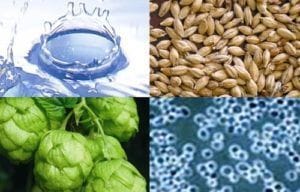
The selection of malts, yeasts, and hops is crucial to achieving the unique characteristics of each style.
1. Ingredients
The malts used in brewing these beers are typically Pilsner, Munich, and Caramel, which provide distinctive flavors and colors.
Belgian yeasts, known for their ability to produce esters and phenols, are essential for the fruity and spicy aromas. Hops, although less prominent than in other styles, contribute to balance and bitterness.
2. Brewing Process
The parti-gyle technique, although historically relevant, has been replaced in many breweries by more modern methods that allow greater control over wort density and final alcohol content.
3. Historical Context
Trappist beers have a rich history tied to Belgian and Dutch monasteries, which have not only preserved brewing traditions but have also innovated and adapted their recipes over the centuries.
Beer production in monasteries was closely related to monastic life, serving as a means of sustenance and a form of hospitality towards pilgrims.
4. Impact on the Modern Industry
These Belgian styles have significantly influenced the modern brewing industry, with many breweries worldwide adopting and adapting these styles, creating versions that respect traditions while incorporating local ingredients and techniques.
Frequently Asked Questions (FAQ)
1. What is the meaning of the “Authentic Trappist Product” seal, and what is the difference from an Abbey beer?
Not all Dubbel, Tripel, or Quadrupel beers are Trappist. The designation “Abbey Beer” is a commercial term that any brewery can use if inspired by traditional Belgian styles or if they have a licensing agreement with a non-Trappist monastery. Conversely, the “Authentic Trappist Product” (ATP) seal is a strict legal certification granted by the International Trappist Association. To obtain it, the beer must be brewed within monastery walls by the monks themselves or under their direct supervision, and profits must go towards the support of the monastic community and charitable works.
2. If a Tripel has a lighter color than a Dubbel, why does it have a higher alcohol content?
It is a common myth that dark color equals higher alcohol strength. Dubbel beers get their amber/copper color from the use of special roasted malts and, fundamentally, dark sugars (like caramelized Belgian candi sugar), but they maintain a moderate density. Tripels, on the other hand, use almost exclusively very pale Pilsner malts, but in a significantly larger amount of grain per liter, complemented by white or translucent candi sugar. This provides a massive amount of fermentable sugars that the yeast transforms into a high alcohol volume (7.5% – 9.5%), while maintaining the characteristic bright golden color of the style.
3. What is the function of Belgian candi sugar in the brewing of these high-gravity styles?
Candi sugar (inverted beet sugar using heat) is a critical ingredient in Belgian tradition. If brewers tried to reach the high alcohol levels of a Tripel or Quadrupel using only barley malt, the beer’s body would be excessively dense, sweet, and cloying. Candi sugar is 100% fermentable by Trappist yeast; this allows raising the alcohol content and drying out the beer’s final profile, achieving that drinks of 9% or 10% ABV maintain high drinkability (what Belgians call “digeste” or lightness on the palate) without overwhelming the palate.
4. At what temperature should Dubbel, Tripel, and Quadrupel beers be served to appreciate their attributes?
These beers should never be served extremely cold, as low temperatures numb the tongue’s receptors and freeze the aromatic esters and phenols generated by Belgian yeast. The general rule is to serve them between 8°C and 12°C (Dubbels and Tripels in the lower range and complex Quadrupels in the upper range). At this temperature, the alcohol is perceived in an integrated, warm way rather than aggressively, allowing the complex notes of dried fruits, spices, clove, and banana to flourish.
5. What type of glass is suitable for tasting these monastery-style beers?
The ideal vessel for all three styles is the Chalice (or Trappist glass). These glasses are characterized by having thick glass, a sturdy stem, and, fundamentally, a very wide, open mouth. This design not only pays homage to the mystical and monastic origin of the beverage but serves two technical functions: it allows for rapid release of complex aromas and facilitates the huge, creamy head to expand uniformly, breaking the excess carbonation with each sip.
Recommended
- Karin Bojs: “Humans Invented Agriculture to Make Beer”
- Christmas Beers: History, Origins, and Characteristics Around the World