This post is also available in:
 Español
  Português
  Français
The town of Malle, in the province of Antwerp, was actually formed on January 1, 1977, through the merger of two small villages, Oostmalle and Westmalle. With barely 14,000 inhabitants, it lies more precisely in the north of the Kempen region, between Antwerp and Turnhout.

It was probably a Frankish settlement in origin, known as Mallum or Maalberg. Its name first appears in 1194, when the Bishop of Cambrai granted the churches of Malle and Vorsele to the Church of Our Lady in Antwerp.
From then on, Oostmalle, Westmalle and Zoersel formed a single domain, which belonged to the province of Taxandria.
In the first half of the 13th century, the domain was split into Oostmalle and Westmalle, as part of the Duchy of Brabant.
From the 16th century until the French Revolution, Oostmalle belonged to the Renesse family, while Westmalle was held by the Van der Moelen, Cottereau and Powis families. Sadly, in 1965, a tornado destroyed 135 houses and the church of the village of Oostmalle.
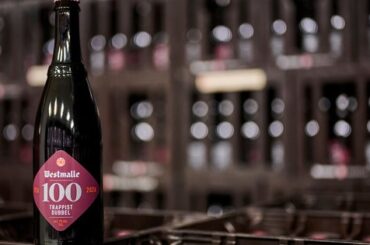
Malle is world famous for its Trappist abbey, which produces an excellent beer and a magnificent cheese. Our Lady of the Sacred Heart Abbey (Abdij Onze-Lieve-Vrouw van het Heilig Hart van Jezus), founded in 1794, belongs to the Cistercian order.
The order was nicknamed the Trappist order after La Trappe Abbey in French Normandy. There, in the 17th century, Abbot Armand Jean de Rancé led a reform toward a more austere way of life, and in 1892 his followers became an order in their own right, the Order of Cistercians of the Strict Observance.
The birth of the Westmalle brewery
The Trappist monastery of Malle, founded in 1794, was granted abbey status on April 22, 1836. The monks were allowed to drink the most famous beverage of Flanders, beer, with their meals.
Later, Abbot Martinus Dom decided to build a small brewery at the abbey. The first beer was brewed on August 1, 1836, and the monks drank it for the first time on December 10 of that year.
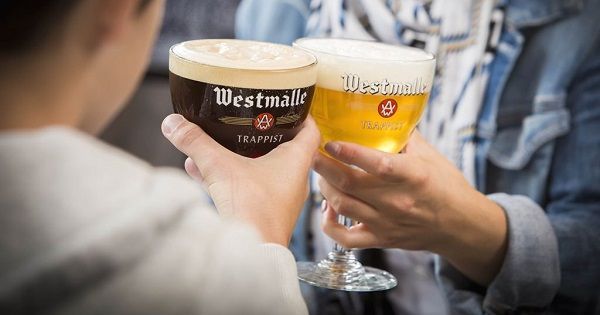
Until 1856, the beer produced in Malle was consumed only inside the abbey. That year, however, the monks began selling it at the abbey gate. As demand grew, the brewery expanded, and in 1921 the monks began selling their beer to traders beyond the abbey walls.
The recipes of these Trappist beers have changed little in almost a century. Today’s Dubbel derives from a 1926 recipe, and the Tripel, born in 1934, has kept the same recipe since 1956. They are brewed with water, malt, hops, yeast and sugar.
Today the International Trappist Association recognizes ten abbeys that brew and sell their own beer. Five are in Belgium, namely Chimay, Orval, Rochefort, Westmalle and Westvleteren. The other five are La Trappe in the Netherlands, Mont des Cats in France, Cardeña in Spain, Tre Fontane in Italy and Mount St. Bernard in the United Kingdom.

The list changes over time. Achel lost the label in 2021, when the last monks left the abbey, and Spencer, the only Trappist brewery in the United States, stopped brewing beer in 2022.
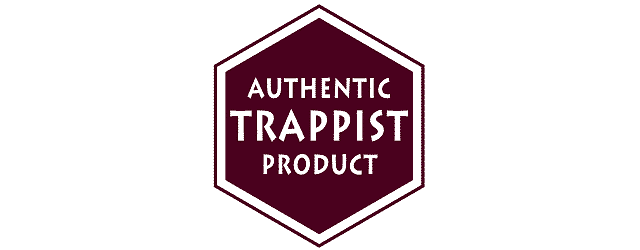
Beers that meet the conditions carry the logo that certifies them as an Authentic Trappist Product.
Requirements for a Trappist brewery
For a beer to be Trappist, it must meet three fundamental requirements.
The first is that it must be brewed within the walls of a Trappist abbey, by Trappist monks or under their direct supervision.
The second is that the brewery must depend on the monastery and be part of the monastic project.
The third is that the brewery cannot be a profit-making venture. Part of the income goes to support the monks and the rest goes to charity. In addition, advertising must respect the religious spirit in which the beer is brewed.
Products
The three beers produced at the abbey of Malle are the Dubbel, the Tripel and the Extra. For decades the Extra was brewed only a couple of times a year and was served only to the monks and their guests at meals.
That exclusivity ended when the abbey decided to also sell it through drinks retailers and the hospitality trade, as announced by the International Trappist Association. Its production remains very limited so as not to take capacity away from the Dubbel and the Tripel.
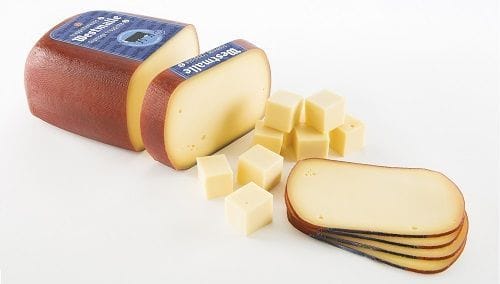
Westmalle Abbey has also been making cheese since the 19th century. The monks make it with milk from the abbey’s own cows. Colorings and preservatives are excluded from production, so the color of the cheese depends on what the cows eat.
Cheese production is very limited, and it can be bought at the abbey shop and at Café Trappisten, across from the abbey, in Malle.
Frequently Asked Questions (FAQ)
1. What beers does Westmalle Abbey brew?
The abbey brews three beers. The Dubbel is a dark beer whose current recipe dates back to 1926, the Tripel is a strong blonde ale born in 1934, and the Extra is a light blonde beer that for decades was drunk only by the monks and their guests. Today the Extra is also sold in shops and in the hospitality trade, although in very limited quantities.
2. Since when has beer been brewed at Westmalle?
The Trappist community settled in Westmalle in 1794 and was raised to the rank of abbey on April 22, 1836. That same year Abbot Martinus Dom set up the brewery. The first beer was brewed on August 1, and the monks drank it for the first time on December 10, 1836. Local sales began in 1856, and sales to traders in 1921.
3. What does the Authentic Trappist Product label mean?
It is the logo that the International Trappist Association grants to products made within a Trappist abbey, by the monks or under their direct supervision. The activity must depend on the monastery and must not be run for profit, because the income covers the community’s living expenses and the rest goes to charity.
4. How many Trappist abbeys brew beer today?
The International Trappist Association recognizes ten abbeys that brew and sell their own beer. They are Chimay, Orval, Rochefort, Westmalle and Westvleteren in Belgium, La Trappe in the Netherlands, Mont des Cats in France, Cardeña in Spain, Tre Fontane in Italy and Mount St. Bernard in the United Kingdom. Achel lost the label in 2021, and Spencer, in the United States, closed its brewery in 2022.
Recommended
- Westmalle Dubbel Turns 100 as the Trappist Beer That Gave Life to a Style
- Dubbel, Tripel, and Quadrupel? The Origin of the Names of These Traditional Belgian Styles