This post is also available in:
 Español
 Português
 Français
Cannabis beer has become an increasingly interesting combination for the brewing world, mainly due to the close taxonomic relationship between cannabis flowers and hop flowers.
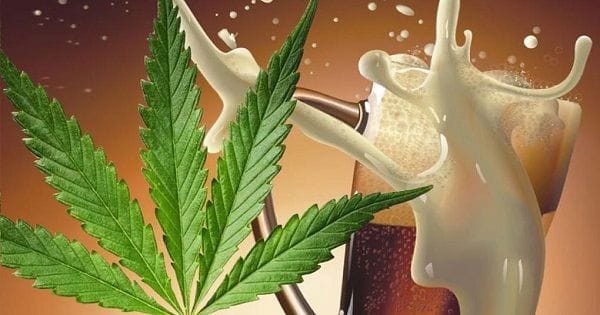
Both plants belong to the Cannabaceae family and share an evolutionary lineage that is also reflected in their chemical composition. Both cannabis and hops produce resins rich in volatile compounds, mainly monoterpenes and sesquiterpenes, which contribute significantly to their respective aromatic profiles.

This chemical relationship helps explain why certain cannabis profiles can resemble some characteristic hop aromas, including citrus, floral, resinous, spicy, earthy, and fruity notes. The scientific literature confirms that both plants are particularly rich in terpenes and share numerous compounds from this family.
However, obtaining replicable and efficient results when incorporating cannabis into finished beer remains a technological challenge. Terpenes and cannabinoids have different physicochemical properties and behave differently within a predominantly aqueous matrix like beer.
Understanding this relationship requires delving into molecular solubility. Cannabinoids are lipophilic molecules and have limited solubility in water, so their homogeneous incorporation into beverages constitutes one of the main challenges of this type of formulation.
There can be multiple reasons for brewing beer with terpenes and cannabinoids, ranging from innovation and sensory experimentation to interest in exploring the possibilities of one of the chemically most interesting plant families related to hops.
After decades of legal restrictions on cannabis, regulatory changes in different countries have also contributed to increasing scientific and commercial interest in beverages made with Cannabis sativa derivatives.
However, the possibility of brewing or commercializing this type of product depends on the legislation in force in each jurisdiction. A scientific review published in 2026 confirms that cannabis beverages still face technological, sensory, and regulatory challenges, as well as a lack of standardized preparation methods.
Beer styles for brewing with marijuana
Most cannabis varieties have intense aromatic profiles and require a beer capable of providing sufficient structure in aroma, body, and character to balance their final contribution.
A double IPA can be an interesting base from a sensory point of view due to its high aromatic intensity and the affinity between certain terpene profiles of cannabis and those of hops.
This does not mean that there is a universally suitable beer style. A lower-intensity beer can also work if the goal is to achieve a more delicate expression of cannabis, while an IPA may be appropriate when working with intense terpene profiles.
One of the main challenges appears when trying to incorporate cannabinoids, as they have very limited aqueous solubility. Ethanol concentration can modify their behavior within a beverage, but there is no universal alcohol threshold, such as 8% ABV, above which cannabinoids simply become soluble.
Recent research on Cannabis sativa beverages confirms that cannabinoid stability depends on multiple matrix factors, including temperature, acidity, storage, and the presence of lipids. In some studied matrices, the concentrations of certain cannabinoids can decrease considerably during storage.
Depending on the product and applicable legislation, formulation may resort to emulsification systems and other dispersion mechanisms. These technologies can improve the homogeneity of poorly water-soluble compounds, although their effectiveness depends on the specific formulation, the beverage matrix, and the characteristics of the ingredient used.
Standardization is especially important when developing a commercial product, as cannabinoid and terpene concentrations can vary considerably between varieties, cultivars, and batches of plant material.
How to choose the right marijuana strain?
Both hops and cannabis possess terpenes that develop floral, citrus, piney, spicy, and fruity aromas. Cannabis can also provide particularly intense herbal, resinous, or earthy profiles, so the selection of raw material should be made primarily based on its aromatic composition.

Myrcene is one of the most abundant terpenes in numerous cannabis varieties and is also widely present in hops. β-caryophyllene provides spicy and woody characteristics, while α-humulene is associated with herbal and earthy profiles.
Both cannabis and hops can also contain limonene, pinenes, and other volatile compounds that contribute to enormous aromatic diversity. The review by Nuutinen on cannabis and hop terpenes confirms the shared richness of both plants in mono- and sesquiterpenes.
Selecting varieties with complementary profiles allows building a more coherent flavor architecture. A raw material rich in limonene and pinenes, for example, can conceptually combine with hops of citrus and resinous profiles such as Citra, Mosaic, or Amarillo.
Conversely, profiles dominated by myrcene, humulene, and β-caryophyllene may integrate better with hops that present earthy, herbal, or spicy characteristics.
It is important, however, not to use the traditional categories of “sativa” and “indica” as reliable predictors of a variety’s aroma or effects. These denominations alone cannot determine its chemical composition.
For brewing, it is much more useful to consider the specific terpene and cannabinoid profile of each cultivar.
Some commercial cannabis varieties that have historically aroused interest among growers and consumers include Bruce Banner, Granddaddy Purple, Lemon Cake, Northern Lights, and Sour Kush.
However, their characteristics may vary according to genetics, cultivation, harvest, and storage conditions, so variety names should not substitute for composition analysis when seeking reproducibility.
Marijuana decarboxylation
Decarboxylation is a chemical transformation by which cannabinoids present in acidic form can be converted into their neutral forms. In the case of THCA, this transformation produces THC through the loss of carbon dioxide.
Tetrahydrocannabinolic acid exists naturally in the plant and can be transformed into tetrahydrocannabinol through the application of thermal energy. The same principle applies to other acidic cannabinoids, such as CBDA and CBD.

Decarboxylation modifies the chemical composition of the raw material, while extraction is a different process by which certain compounds are transferred from the plant material to a given medium.
Furthermore, heat treatment does not exclusively affect cannabinoids. Terpenes are volatile compounds and some may be lost, transformed, or degraded depending on temperature, time, and exposure conditions.
For this reason, there is a technological compromise between favoring certain chemical transformations and preserving the aromatic profile of the plant material.
There is no universal combination of temperature and time that simultaneously maximizes cannabinoid conversion and preserves all terpenes. The result depends on the variety, the state of the raw material, humidity, heating method, and other process variables.
Decarboxylation should also not be interpreted as a process intended exclusively to increase potency. From a technological point of view, it modifies the distribution of the different chemical forms of cannabinoids and should be considered alongside the stability of the other components of the plant material.
Dry hopping process with cannabis
Hop selection can follow principles similar to those used for brewing a conventional beer, especially when the goal is to achieve a coherent combination of terpene profiles.
Fruity and citrus hops such as Citra, Amarillo, Ekuanot, or Motueka can provide an interesting aromatic base for working with certain cannabis varieties.
The use of cannabis during a stage similar to dry hopping should be understood as an experimental application different from traditional dry hopping. Cannabis is a botanical species distinct from hops and has its own chemical composition.
Plant material can contribute terpenes and other compounds that affect the aroma and flavor of the beer, but it can also introduce unwanted plant compounds, such as chlorophyll and resinous materials, especially when contact and process conditions favor their transfer.
Maintaining a low temperature during contact stages can help preserve certain aromatic compounds and limit some unwanted transformations, although the result depends on the raw material and the beer matrix.
In previous homebrewing experiences described, varying amounts of cannabis have been used for batches of approximately 19 liters, along with different amounts of hops.
These values should be understood as experimental references and not as a standard formulation, as the composition of each variety can vary considerably.
A stepped strategy can first use hops to establish an aromatic base and later introduce the cannabis component. From a sensory point of view, this allows better evaluation of the contribution of each raw material and prevents the cannabis profile from completely dominating the beer.

The concept of performing dry hopping in two stages can also be used as a sensory control tool. The first stage establishes the aromatic structure from the hops, while a second addition allows adjusting the final expression of the cannabis.
In some experimental experiences, an approximate one-to-one ratio between cannabis and hops has been used. This proportion can serve as a reference for certain trials, but it does not constitute a universal scientific rule. Aromatic intensity, chemical composition, and sensory objective are much more important factors than a fixed ratio.
The final response will also depend on the cannabis variety, the hop cultivar, contact time, temperature, beer matrix, and batch characteristics.
Currently, the commercialization of alcoholic beverages containing cannabinoids continues to be restricted or specifically regulated in numerous markets.
Recent literature on Cannabis sativa beverages precisely identifies regulation, stability, and the lack of standardized methods as some of the main challenges for their commercial development.
Non-plant extraction and conditioning methods
Beyond the direct use of hop or cannabis flowers, there are advanced extraction and conditioning techniques that allow obtaining more standardized ingredients and better controlling the flavor, aroma, and chemical composition profile of a beverage.
These methodologies, many of which were originally developed for the food, pharmaceutical, and natural ingredients industries, can offer advantages over the inherent variability of plant material.
1. Supercritical CO₂ extraction
Supercritical carbon dioxide extraction is one of the technologies used to obtain plant extracts rich in lipophilic compounds, including certain terpenes and cannabinoids.
CO₂ brought to supercritical conditions has properties that allow it to penetrate the plant matrix and favor the selective extraction of certain compounds without leaving residues of conventional organic solvents.
One of its main advantages is the possibility of modifying the selectivity of the process through changes in pressure, temperature, and separation conditions.
The resulting extracts can present much higher concentrations of certain components than the original plant material, so their use in food and beverages requires carefully controlled characterization and dosing.
In commercial applications, the fundamental advantage is not only extraction efficiency but also the possibility of obtaining an ingredient with a more reproducible composition than unprocessed plant material.
2. Isolation and microencapsulation
Microencapsulation through technologies such as spray drying and other encapsulation systems allows incorporating poorly soluble or oxidation-sensitive compounds within a protective matrix.
This technology can be used to protect aromatic compounds and improve their dispersion within a beverage. The selection of the encapsulating material is fundamental because it determines characteristics such as stability, release, and compatibility with the food matrix.
In a beer, encapsulation can be especially interesting because the product is exposed to factors capable of modifying sensitive compounds, including oxygen, light, temperature, and storage processes.
However, encapsulation does not eliminate all stability problems. The beverage composition, pH, alcohol content, and storage conditions continue to influence the behavior of encapsulated compounds.
3. Ultrasound infusion
Sonication or ultrasound-assisted extraction uses acoustic waves to generate cavitation phenomena in the medium. These microbubbles can favor mass transfer and facilitate the release of certain compounds from a plant matrix.
The technique has been investigated for the extraction of cannabinoids and terpenes from cannabis and can reduce the times required under certain experimental conditions.
A study on ultrasound-assisted extraction compared this technology with microwave-assisted extraction and found significant differences in the yield of oils, terpenes, and cannabinoids.
Under the studied conditions, ultrasound extraction produced a higher oil and terpene yield than the microwave method, while cannabinoid concentration also responded to extraction conditions.
These results show that variables such as sample/solvent ratio, temperature, time, and operation cycle can significantly modify the result.
For this reason, it is incorrect to convert the results of a specific experiment into a universal percentage of improvement. Efficiency depends on experimental conditions and the compound to be extracted.
The application of ultrasound in fermented beverages continues to be a research field, and its results should be distinguished from those obtained in laboratory extraction systems.
4. Membranes for selective separation
Membrane filtration systems, including nanofiltration and reverse osmosis, allow separating components of a solution based on characteristics such as molecular size, osmotic pressure, and membrane properties.
In the beverage industry, these technologies can be used to concentrate, fractionate, or modify certain components of a liquid matrix.
Their application to beverages containing cannabis presents interesting possibilities but also limitations. It cannot be assumed that a membrane will selectively remove a specific compound without affecting other components. Separation will depend on the membrane used and operating conditions.
Combined with other extraction and formulation technologies, membranes can be part of strategies aimed at achieving ingredients and beverages with a more controlled composition.
5. Post-fermentation dosing systems
For breweries with automated packaging equipment, in-line dosing systems allow incorporating standardized ingredients after fermentation and before or during packaging.
This approach can use precision pumps and static mixers to favor homogeneous distribution of the ingredient in the finished product.
Its main advantage is the possibility of working with previously characterized extracts or ingredients instead of relying exclusively on the variability of whole plant material.
Furthermore, post-fermentation dosing allows conceptually separating beer brewing from the incorporation of the functional or aromatic ingredient, facilitating control of each stage.
For products containing cannabinoids, homogeneity becomes especially important, as irregular distribution could produce significant differences in concentration between individual units.
Frequently Asked Questions (FAQ)
1. What is the difference between terpene extraction and cannabinoid (THC/CBD) extraction?
Terpenes are volatile compounds responsible for a significant part of cannabis and hop aroma. Cannabinoids, such as THC and CBD, belong to a different chemical family and have much lower aqueous solubility. Therefore, the behavior of both groups within a beer is different. Terpene extraction and retention depend on factors such as volatility, temperature, matrix composition, and contact time, while cannabinoid incorporation is strongly conditioned by their low water solubility. Alcohol content can influence the solubility and distribution of some cannabinoids, but there is no universal threshold of 8% ABV that determines their efficient extraction.
2. Is it necessary to decarboxylate marijuana for the beer to have aroma and flavor?
Decarboxylation and extraction of aromatic compounds are different processes. The terpenes responsible for much of the aroma can be present in the plant material without the need to previously convert acidic cannabinoids. Decarboxylation, on the other hand, chemically modifies cannabinoids such as THCA and CBDA. Furthermore, heating can affect volatile terpenes, so heat treatment should also be considered from the point of view of preserving the aromatic profile.
3. Why are sativa cannabis strains often recommended for brewing?
It is imprecise to assume that varieties labeled “sativa” are automatically better for brewing. The sativa and indica categories have historical and commercial value, but they do not reliably predict the chemical profile of a variety. To select cannabis for a brewing application, it is more useful to analyze its terpenes and, where applicable, its cannabinoid composition. A variety rich in limonene, pinenes, or other citrus compounds may be more compatible with certain modern hops, regardless of whether it is commercially classified as sativa, indica, or hybrid.
4. What is the reason behind a 1:1 ratio of cannabis to hops in dry hopping?
A one-to-one ratio can be used as an experimental reference to balance the presence of both raw materials, but it does not constitute a universal scientific rule. The appropriate amount will depend on the aromatic profile of the cannabis, the intensity of the hops, the beer style, the sensory objective, and the particular characteristics of each batch. For this reason, it is more appropriate to speak of an experimental relationship than of an optimal proportion applicable to all beers.
5. Why can the two-stage dry hopping technique help control cannabis characteristics?
A two-stage incorporation allows partially separating the construction of the beer’s aromatic base from the specific contribution of cannabis. The first dry hop can establish the main hop profile, while a second stage allows adjusting the intensity of the cannabis component. It also facilitates sensory evaluation of each addition and can reduce the risk of the vegetal character completely dominating the result. However, the effect will depend on the raw materials and the specific process conditions.
6. Why is it difficult to incorporate THC and CBD into beer?
The main challenge is their low water solubility. Beer is a predominantly aqueous matrix, so lipophilic cannabinoids tend to present dispersion and stability problems. Research on cannabinoid formulation has studied emulsions, lipid systems, and other strategies aimed at improving the dispersion and bioavailability of these compounds. In beverages, factors such as pH, temperature, alcohol content, oxygen, storage, and matrix composition must also be considered. A review published in 2026 precisely identifies cannabinoid stability as one of the main technological challenges of Cannabis sativa beverages.
7. What is the difference between using cannabis flowers and using extracts?
Flowers constitute a complex plant raw material that contains cannabinoids, terpenes, waxes, pigments, and other components whose concentration can vary between varieties and batches. Extracts, on the other hand, allow concentrating certain groups of compounds and can offer a more standardized composition. From an industrial point of view, this standardization can facilitate quality control and reproducibility, although the extract also requires characterization, stability, and compatibility with the beverage matrix.
Bibliography
- Nuutinen, T. (2018). Medicinal properties of terpenes found in Cannabis sativa and Humulus lupulus. European Journal of Medicinal Chemistry, 157, 198–228. https://doi.org/10.1016/j.ejmech.2018.07.076
- Raber, J. C., Elzinga, S. y Kaplan, C. (2015). Determination of terpene and cannabinoid profiles in Cannabis sativa by gas chromatography mass spectrometry. Journal of Chromatographic Science, 53(3), 469–476.
- Microwave- and Ultrasound-Assisted Extraction of Cannabinoids and Terpenes from Cannabis Using Response Surface Methodology. (2023). This study experimentally analyzes ultrasound- and microwave-assisted extraction and demonstrates that factors such as time, temperature, and sample/solvent ratio significantly influence the yield obtained.
- Arnt Sant’Ana, R. R., Soldi, C., Castanho Amboni, R. D. M. y Fritzen-Freire, C. B. (2026). Cannabis sativa in beverages: incorporation methods, bioactive stability and sensory impact – a critical review. Critical Reviews in Food Science and Nutrition, 66(21), 4062–4073. https://doi.org/10.1080/10408398.2026.2629026