
This post is also available in:
 Español
  Português
  Français
Beer and cheese pairing opens up a vast world of sensations, mainly because the two share so much common ground, such as yeasts, earthy nuances, toasted aromas, floral or fruity notes and more.
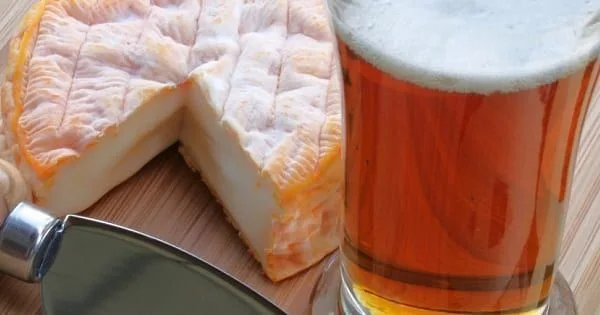
One great advantage of the organoleptic traits of beer is its versatility, which comes from the wide range of aromas and flavors it can offer when tasted and which makes it relatively easy to pair with the enormous variety of flavors and textures found in cheese.

Over the course of history we have gained a multitude of complex varieties, each with its own aromas and flavors, and they have shaped certain combinations in which bitter beers, sweet beers or roasted beers round out the nuances of strong, salty, buttery or sweet cheeses, for example.
When pairing beer and cheese, the cheese brings out the virtues of the beer instead of hiding its imperfections or flaws, as happens with wine (hence the old Spanish saying “que no te la den con queso”, roughly “don’t let them fob you off with cheese”, a warning about wine merchants who served cheese to mask a faulty wine).
General pairing principles
A beer style can find harmony with an interesting range of cheeses, even ones of different intensities.
It is important to remember that a light, fresh cheese should go with light beers; cheeses of medium complexity go well with beers of medium complexity, while very mature and complex cheeses get along with beers that have complex aromas and flavors.
Respecting this principle of intensity and complexity is vital, but above all you should let yourself be guided by experimentation and play, because sometimes they lead to very interesting results.
Moreover, in beer tasting and in beer and cheese pairing we look for complementary sensations in the mouth and varying degrees of complexity.
The secret of a good beer and cheese pairing is getting the flavors of both to harmonize without overpowering each other.
With that said, let’s take a closer look at which types of cheese pair well with which types of beer.
Lager beer and cheese pairing
Lager beers are much more uniform in flavor than Ale beers, partly because Lager yeasts produce a cleaner, rounder flavor.
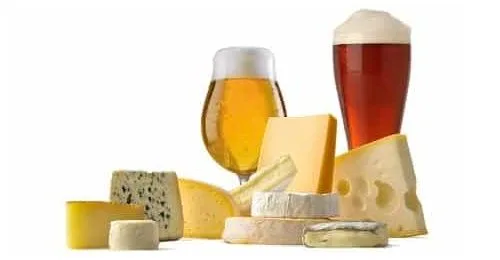
When we taste them or pair them with cheese, we tend to pay less attention to the variety of flavors and more to other elements, such as alcohol content.
1. Pilsner beers
Pilsner-style beers are characterized by their golden color, well-developed malts and hoppy notes. They are usually dry and pale, with good carbonation.
Alcohol content sits at around 5 to 5.5% ABV. Pilsner beers pair well with creamy cheeses such as Brie de Meaux and with mild cheeses such as young Goudas and Cheddars (aged 4-8 months).
2. Dark European Lagers
These beers are made from roasted barley malts. Lager yeasts have a maturing effect on the roasted malt and usually lift its caramel flavor, which then develops into spicy notes.
Alcohol content usually ranges between 4 and 5% ABV, which allows them to contrast with many cheeses.
We can pair this type of beer with slices of mozzarella or with sheep’s milk cheeses such as Ossau-Iraty or Petit Basque.
3. German Bock Lagers
Bock-style beers are smooth in texture, rich in malt and occasionally sweet. Alcohol content is usually high, from 6.5% ABV upward.
Bock has enough malt and sweet notes to go well with flavorful cheeses such as older aged Goudas or smoked Scamorza.
Ale beer and cheese pairing
Ales are top-fermented beers. Their yeast ferments at moderate temperatures and does not need cold.
Ales usually pair very well with any highly flavorful or strong cheese.
1. British Ales
Mild beers are low in hops and alcohol, which keeps both bitterness and strength down (3-4% ABV) and makes them good companions for light food.
Mild Ales pair well with very mild, slightly tangy or sweet cheeses that are not too heavy, such as unsmoked mozzarella or scamorza, the English Real Yorkshire Wensleydale or the American Carmody.
Bitter Ales vary enormously, and what they share is their bitter hop notes. They can also be quite sweet and are usually low in alcohol (3-4% ABV).
Given their bitterness, or their salty notes, contrast becomes essential. They can be paired with mild, low-fat cheeses, perhaps a little sharp and with gentle salty notes, something like a fresh Crottin or a Tomme.
Pale Ales got their name to set them apart from the dark Stouts and Porters because of their amber-gold color. Pale Ales are robust in flavor and drier, with hoppy (often bitter), herbal and lightly toasted notes.

One of their variants is India Pale Ale (IPA). Thanks to an alcohol content higher than the previous styles (5% ABV) and their noticeable bitterness, Pale Ales harmonize well with strong Cheddars aged up to 12 months.
2. Belgian Ales
Strong golden, amber or red Belgian Ales tend to be high in alcohol (6 to 12% ABV) and have an intense bittersweet flavor that, depending on the malt used and how it was roasted, can carry fruity, floral or caramel notes.
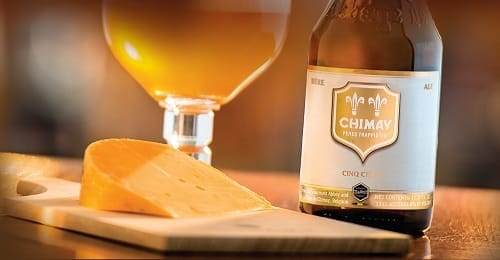
Because of their strength, their varied notes and their great complexity, these Ales pair well with strong, very aromatic cheeses such as blue or green cheeses, and with well-aged or cured cow’s or goat’s milk cheeses (the stronger and fuller-bodied the beer, the older the cheese should be).
For example, if the beer is a blonde with low alcohol and not much body, we can pair it with Münster, a cheese with a strong smell but a mild flavor, well suited to beers with floral and herbal notes such as Belgian Trappists.
3. American Ales
American Ales are styles that originated in the United States, and they generally reflect the hops used, the type of water and the different grains that go into brewing them.
First we need to know what type of beer we are dealing with, and then we check whether it has fruity, floral or grainy aromatic notes, which are very common in American Ales.
We recommend pairing them with cheeses to match, ones that harmonize with these notes while contrasting flavors; for example, an American Ale with cherry notes can pair well with a goat’s milk brie.
If we are looking for harmony, we can pair them with a sweet mascarpone (a fresh cheese made with cream) or a slightly fruity camembert.
4. Porter-style beers
Porter-style beers are characterized by the use of roasted barley malt. They are very dark, some almost black, and very often show notes of coffee, cocoa or toast.
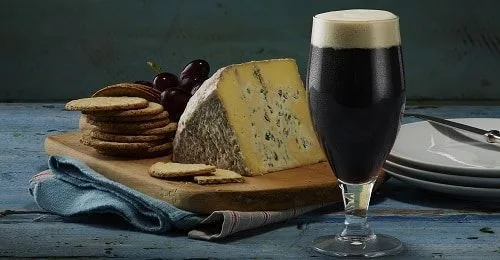
The interaction between the yeast and the roasted malt adds many fruity flavors. Porters have a strong flavor and a relatively high alcohol content (4 to 6.5% ABV).
Porters pair well when you take their roasted and fruity notes into account. An aged Gruyère or Comté, with its fruity and floral flavors, complements this beer perfectly.
5. Stout-style beers
Stout-style beers are known for their bitterness and roasted flavors and, like Porters, for their dark color. They also have chocolate and caramel flavors, and they are denser and creamier than Porters, with a wider range of alcohol content (5 to 8% ABV).
Drier Stouts, such as Guinness Extra Stout, pair well with cured cheeses such as Manchego or Gouda.
Stouts with sweeter notes, such as Samuel Adams Cream Stout, go very well with a really creamy blue cheese such as Roquefort, which matches their density and contrasts with their strong flavor.
Specialty beer and cheese pairing
1. Lambic beers
Belgian Lambic-style beers stand out for their use of wild yeasts, which trigger spontaneous fermentation when the beer is left in uncovered vats to develop on its own while airborne yeasts make their way into the wort.
Flavors vary widely from one beer to another and are usually very fruity. Cherry or raspberry is often added for flavor, and these combine with earthy and sour aromas.
Lambic beers pair well with tangy cheeses such as aged cheddar or gouda. With more markedly fruity Lambics, cheeses along the same lines, such as Brie de Meaux or Camembert, tend to work very well.
2. Wheat beers
Wheat beers are brewed by adding substantial amounts of wheat to the barley grist (40 to 70% of the total).
They tend to be great thirst quenchers thanks to their generally low alcohol content (around 2.8 to 3.8% ABV in Berliner Weisse and 4.3 to 5.6% ABV in Weizen, according to the BJCP 2021 guidelines), their lightness and their smoothness.
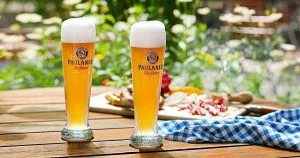
Belgian Witbier or Bière Blanche, unlike the German styles, has a slight tartness and more body thanks to the use of unmalted wheat.
In general, wheat beers pair well with semi-cured cow’s or sheep’s milk cheeses or young Goudas, in keeping with their smoothness.
Beer and cheese pairing ideas
Here are some additional suggestions for exploring this delicious field.
- Picture a lightly grilled brie with a Hefeweizen; the fruity flavors will pair beautifully with the sweet notes and the slightly tangy, sharp touches of the cheese.
- A Dutch Gouda will be a great match for a Belgian Witbier or an English IPA.
- Young Manchego goes wonderfully with a Helles or a Czech Pilsner, a semi-cured one pairs well with a British Pale Ale or an English IPA, and a mature one could play with the fruitiness and acidity of a Belgian Gueuze.
- Bock and even Doppelbock beers go very well with Gruyère.
- A mild Emmental goes well with a Roggenbier; if it is strong, the pairing would be a Golden Strong Ale, an Old Ale or even a Barleywine.
- Camembert can go very well with a Saison or an American Red Ale.
- A Port Salut holds its own with an English Brown Ale.
- A Morbier is a wonderful match for a Bitter or an American Pale Ale.
- A delicious Comté can pair with a Bitter, a Berliner Weisse or a Kellerbier.
- Alsatian Munster, with its deep and complex flavor, makes a luxurious pairing with a Strong Ale, a Doppelbock or a Barleywine.
- Gorgonzola is outstanding with Barleywines and could also contrast nicely with a Faro.
- The creaminess and the sweet and salty flavors of Cambozola make it a delicious partner for a Winter Ale or a Wee Heavy.
- Cotija can be paired with an English IPA. If it is grilled, the best pairing would be a Schwarzweizen.
- A Dry Stout would bring great depth of flavor to a Chihuahua cheese.
- Pecorino Romano, with its pungent and somewhat salty notes, could be contrasted with an Oud Bruin or accompanied by a Special Best Bitter.
- Parmesan is not usually eaten in slices. If it is served that way, it is a good idea to pair it with a Czech Pilsner, an American Pale Ale, a Witbier or a peach Fruit Beer.
- A plain goat cheese will pair perfectly with a good Weissbier or a Witbier, and the same goes for an herbed goat cheese with those beers.
- How about a Cenizo cheese with a Schwarze Weisse? Mozzarella is delicious with a mild Pilsner, while an interesting combination is (original) Feta with wheat beers or, failing that, a Czech Pilsner.
- Ricotta and Mascarpone are even better when escorted by a Fruit Beer (strawberry, raspberry, apple and more). Cream cheese goes well with a light Pilsner, and a Bola cheese calls for wheat beers.
- A plain Provolone (dolce) goes very well with light beers such as an English Pale Ale, a Vienna or a Kölsch; the sharp version, with salty notes from at least 4 months of aging, could be an excellent pairing for a Bock or even a Doppelbock; and for a smoked one, a Märzen Rauchbier would be sensational.
- Stilton is the perfect companion for a Barleywine; Cabrales cheese and an English Porter will make a feast of flavors; and Roquefort contrasts beautifully with a Faro or Gueuze, or with Tripel, Dubbel and Belgian Golden Strong Ale beers.
- French Cantal, with its robust and sharp flavors, will be a delight alongside an English IPA, a Best Bitter, an American Pale Ale or even an Old Ale.
- For preparations such as salads, all the ingredients and dressings should be taken into account.
- For dishes such as fondue, consider the predominant cheese and what it will be served with, and the same goes for any other dish that contains a large amount of cheese.
Every type of cheese has its own combination of fat, salt and ripening, which is why the recommendations vary so much from one case to the next. Our beer and food pairing tool lets you narrow the search to a specific cheese and to dozens of other food categories.
Frequently Asked Questions (FAQ)
1. What is the basic rule of beer and cheese pairing?
Match the intensity. A light, fresh cheese goes with light beers, a cheese of medium complexity with beers of medium complexity and a very mature cheese with beers that have complex aromas and flavors. From there it pays to experiment, aiming for flavors that harmonize without either one masking the other.
2. What beer goes well with blue cheese?
Blue cheeses call for beers with body and sweetness, or a tart contrast. Stilton and Gorgonzola work with a Barleywine, Roquefort with a Faro, a Gueuze or a Tripel, and a creamy blue with a sweet Stout such as a Cream Stout.
3. Which cheeses go with a Pilsner or a Lager?
Pilsners go well with creamy cheeses such as Brie de Meaux and with young Gouda or Cheddar, aged 4 to 8 months. Dark European Lagers go with mozzarella or sheep’s milk cheeses such as Ossau-Iraty, and Bocks prefer aged Gouda or smoked Scamorza.
4. Why does beer pair so well with cheese?
Both share yeasts, earthy nuances, toasted aromas and floral or fruity notes. In addition, the wide variety of beer styles makes it possible to find a partner for almost any cheese texture and flavor.

Recommended
- Beer and Food Pairing, Basic Rules, Types and Recommended Styles
- The Spanish book «Maridaje de cerveza y queso profesional» launches on Amazon