This post is also available in:
 Español
  Português
Beer and food pairing allows for the combination of multiple styles with a great variety of dishes, making beer one of the most versatile drinks when it comes to choosing the right match.
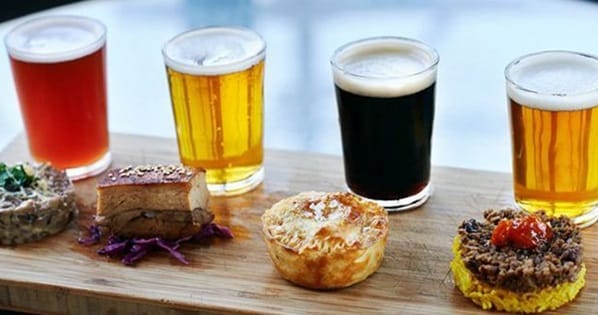
With so many alternatives available, there are 3 basic rules recommended when pairing beer with food:
- Maintain balance between the flavors of the beer and the food—neither should overpower the other.
- Seek affinity between the beer and the food, maintaining balance between aromas and flavors.
- The golden rule: pairing by contrast always works.
Rules of beer and food pairing
With these 3 rules in mind, let’s find the balance, harmony, and contrast!
1. Sweet and sour flavors
All sweet and sour sauces pair perfectly with a light, ice-cold beer. Asian cuisine wins here with its wasabi, sweet-and-sour, and soy sauces, because beer becomes the perfect contrast to these flavors.
Similarly, all dishes served with ketchup and mustard pair with beer better than any other drink.
2. Spicy and seasoned flavors
Another property of beer is its ability to soothe the uncomfortable sensation that spicy dishes—loaded with chili, spices, garlic, or paprika—leave on the palate.
This makes beer an ally for so many Asian gastronomy traditions that place special emphasis on spices, as well as for the undisputed king of spicy cuisine: Mexican food.
3. Acidic and bitter flavors
Beer contrasts very well with the acidity of lemon or vinegar. This is why any dish containing lemon is ideal to accompany with a beer, and the same applies to pickles, salads, and marinated seafood salads.
4. Bitter vegetables or tomato
There are many bitter vegetables such as endive, escarole, or arugula, and beer is their greatest ally.
Likewise, the infinite number of dishes containing tomato are perfect for pairing with a beer.
5. Meats
You can perfectly pair any meat with a beer. In this case, it is important to pay attention to the seasonings accompanying the meat.
Remember this infallible rule: the stronger the seasoning accompanying the meat, the darker and fuller-bodied the beer should be.
6. Fish
There are certain fish that are ideal to pair with a beer: oily fish, smoked fish, salt-cured fish, and marinated fish.
7. Cheeses and eggs
As surprising as it may seem, beer also works to “cleanse the palate” when paired with unctuous textures like cheeses or eggs.
8. Chocolate
Yes, you read that right. All dishes that feature chocolate, whether in a sauce or as the main ingredient, pair very well with beer. The darker and more intense the chocolate, the better it will pair with a dark beer.
[amazon box=”076034843X”]
Tips and basic pairing guide
When pairing beer with food, the key is to correctly identify the characteristics (flavor notes, intensity, and sensations) of the beer style and the foods being combined.
There must be harmony between the beer and the dish it accompanies so that neither dominates the other and they fit together perfectly.
Beer can be paired by affinity or by contrast of flavors, the latter being the most common.
There are many ways to pair beer with food, but the classic combinations are beer and cheese pairing, beer and fish pairing, beer and meat pairing, and pairing with desserts and sweets.
Characteristics of beer and food pairing
The characteristics found in beer are divided into 4 main groups: sensations, intensity, primary flavors, and secondary flavors (flavor complements).
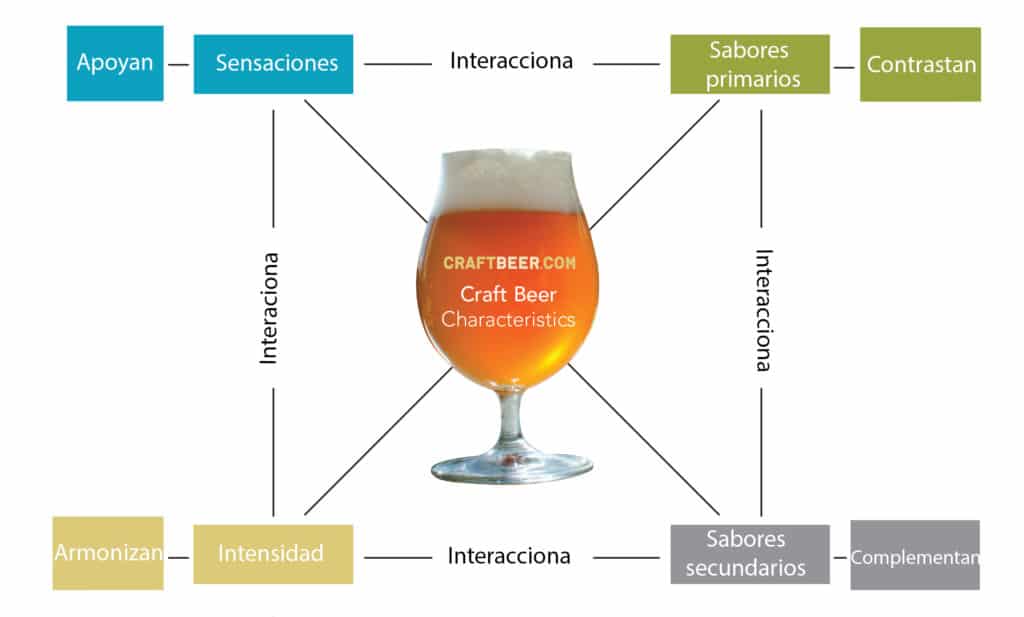
In pairing, all these characteristics interact with each other. Depending on the foods paired, there will be either a greater emphasis on secondary flavors creating complementary effects, or a contrast between primary flavors (for example, bitter and salty), depending on the characteristics of the beer and the individual’s palate.
Basic or primary flavors
Primary or basic flavors are the impressions caused by certain foods or substances, determined by chemical sensations detected by taste and smell.
The primary flavors are six: sweet (chocolate), salty (salt), sour (lemon), bitter (citrus peel), umami (mushroom), and fatty (meaty).
When combined, we find:
1. Sweet with sweet
Allows other flavors to stand out. For example, peas and carrots, milk with cookies, or a Stout with vanilla ice cream.
2. Sour with salty
The acidity cuts through the saltiness and compensates, creating a “cleansing” sensation. For example, tomato and scamorza cheese, pickles and seasoned meat, or a Weissbier or Hefeweizen with a good serrano ham.
3. Bitter with sweet
Allows hidden flavors to emerge. Within a single beer, the sweetness of malted barley is balanced by the bitterness of hops.
For example, the bitterness of a good IPA can be balanced by the sweetness of a vanilla flan.
4. Umami complements umami
The umami flavor, which in Japanese means “pleasant and savory taste,” can be defined as the fifth flavor, rich in protein and very present in Asian cuisine.
Mushrooms, pasta, some vegetables, aged products like certain cheeses, etc. For example, an aged, rounded beer with a strong malt character and good balance between its characteristics, paired with seafood or fish, such as sushi.
Secondary flavors
Secondary flavors are those more specific ones that complement the primary flavors.
In beer, the most characteristic are: cereals, toasted, coffee, chocolate, nut, smoky, earthy, caramel, fruit, herbs, spices, vegetables, oxidation, butter, minerals, wood, or yeast—arising as a result of a combination of primary flavors and volatile elements.
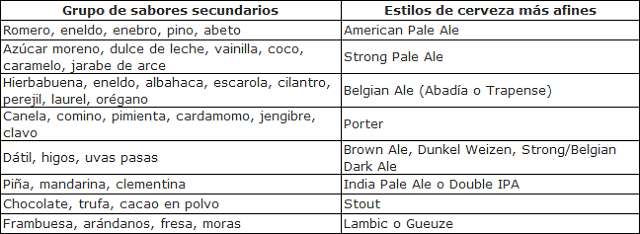
Below are examples of secondary flavor groups. You can look for common points within a group; this will be useful when choosing a pairing.
As an example, a Porter with notes of vanilla and chocolate can complement a sponge cake very well.
This table shows a small sample of the most common secondary flavor groups and their most similar beer styles, providing good ideas for pairing:
To achieve a good pairing, the strength of the beer must match the strength of the dish.
This is where beer intensity becomes important, measured by levels of roastiness, citrus, CO₂ volume, acidity, alcohol content, and bitterness intensity.
Finally, another influential characteristic is sensation. Sensations in some way reconfigure the palate and can even complement the oils, fats, and textures of food, cutting through the primary and secondary flavor sensations of the beer.
Depending on the temperature, texture, body, carbonation, and acidity of the beer, we find different contrasting sensations such as cold/hot, smooth/burning, dry/sweet, or silky/astringent.
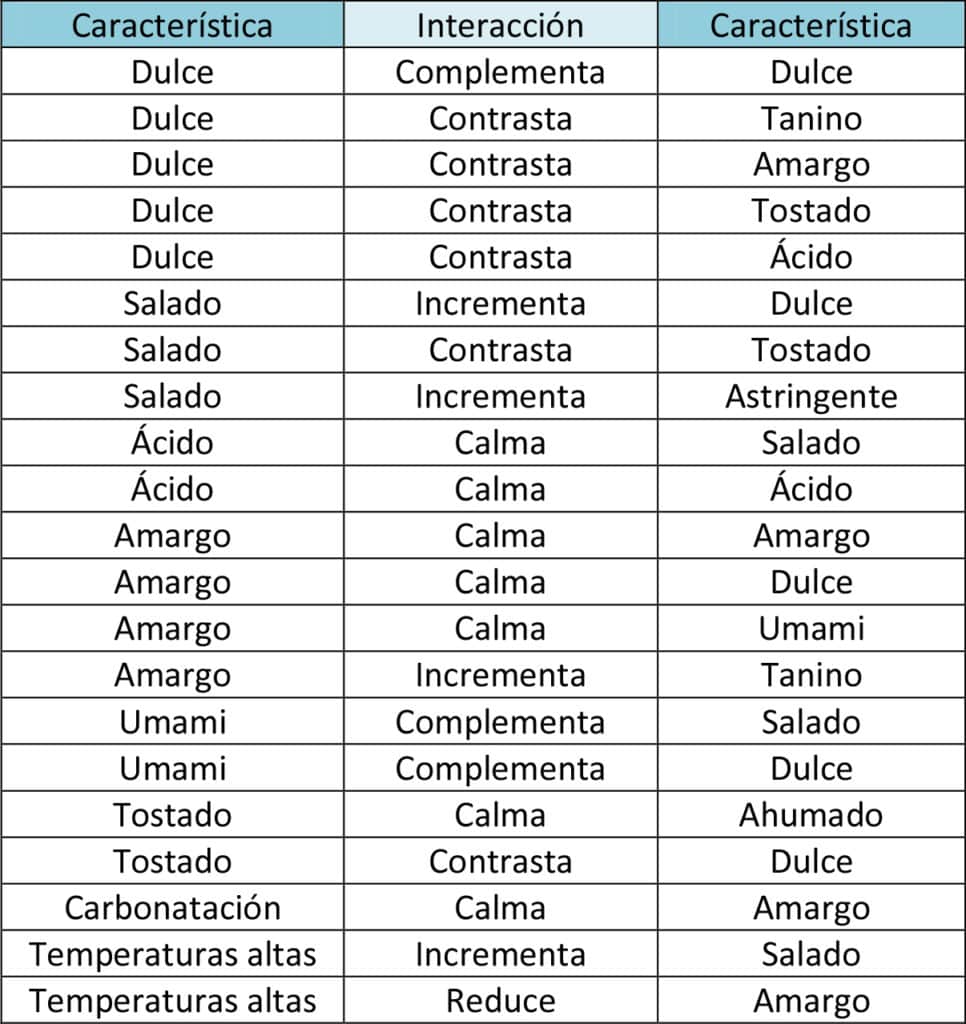
Basic interactions
The following table of interactions between beer and food can be very useful when looking for harmonizations.

1. Malt
The sweetness of malt reduces the heat of spicy food. Malt flavors (caramel, chocolate, toasted, etc.) harmonize with toasted and smoked foods because they share many of these flavors.
2. Hops
Due to the fat content in some foods, bitterness is reduced and the heavy mouthfeel is diminished.
This allows for better enjoyment of flavors, as bitterness balances both malt and the sweetness of foods.
3. Carbonation
Beer carbonation, when good and balanced, works to cleanse the tongue of fat and leave a feeling of freshness.
Beer pairing evaluation sheet
Its purpose is to guide step by step, in an effective way, the collection of information about each pairing, evaluating the tasting through four pairing sections:
- Intensity
- Flavor and mouthfeel
- Aromatic connections
- Overall pairing
By providing established discussion points, using this evaluation sheet in a tasting session aims to facilitate and encourage conversations about attendees’ individual impressions.
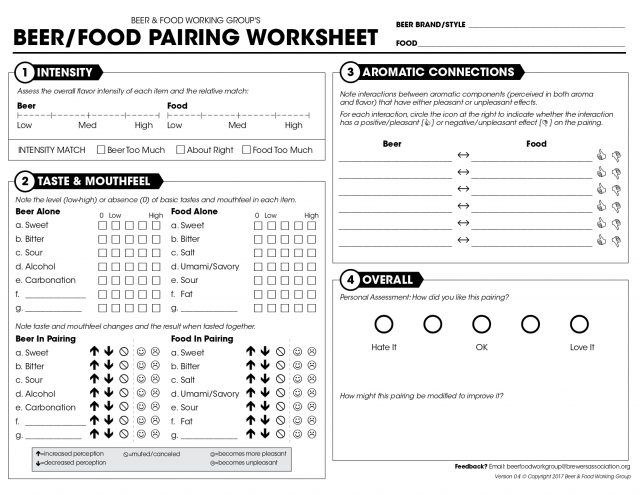
DOWNLOAD THE BEER AND FOOD PAIRING WORKSHEET
Beer styles and their pairings
This comprehensive guide to beer styles and their pairings, prepared by the Brewers Association, aims to be a reference for creating successful pairings, helping us find the right beer style for food, cheeses, and desserts, along with recommended serving temperature and glassware.
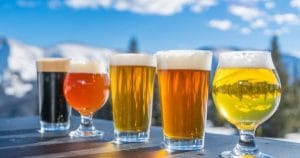
Kölsch, Cream Ale, Blonde Ale
Food: Light dishes, chicken, salads, sausages.
Cheese: Monterey Jack, Brick or similar, almond-flavored cheeses.
Desserts: Tangerine or apricot cake, lemon cream tart.
Temperature: 4.5 – 7°C.
Glass: Pilsner glass.
British-Style Bitter
Food: Roast chicken or pork, fish and chips.
Cheese: Mild English cheeses like Lancashire or Leicester.
Desserts: Oatmeal, raisin, and walnut cookies or another hearty basic dessert.
Temperature: 10 – 13°C.
Glass: Nonick Pint.
Pale Ale
Food: Meat pie, English cheeses, burgers.
Cheese: English cheeses like Cheddar or Derby with sage.
Desserts: Pumpkin flan, honey bread pudding, bananas Foster.
Temperature: 10 – 13°C.
Glass: Nonick Pint.
India Pale Ale
Food: Bold, spiced dishes (curry) or carrot cake.
Cheese: Mild blues like Gorgonzola and Cambozola.
Desserts: Caramel apple tart, ginger cake, or persimmon rice pudding.
Temperature: 10 – 13°C.
Glass: Nonick Pint.
Double/Imperial IPA
Food: Smoked breast fillet, grilled lamb, fried chicken fillet.
Cheese: Sharp and artisan blue cheese.
Desserts: Sweet desserts like carrot cake, cheesecake, or crème brûlée.
Temperature: 10 – 13°C.
Glass: American Pint.
[amazon box=”179138711X”]
Amber/Red Ale
Food: Chicken, seafood, burgers; excellent with spiced food.
Cheese: Port-Salut or other mild aromatic cheeses.
Desserts: Pears with dulce de leche, banana cake, walnut cookies.
Temperature: 10 – 13°C.
Glass: American Pint.
Scotch Ale/Wee Heavy
Food: Roast or grilled fillet, lamb, smoked salmon.
Cheese: Aged sheep cheese, Mizithra, or Idiazabal (smoked).
Desserts: Toffee pudding or chocolate chip shortbread.
Temperature: 10 – 13°C.
Glass: Tulip glass.
Brown Ale, Altbier
Food: Hearty dishes: roast pork, sausages, grilled salmon.
Cheese: Aged Gouda or crumbly Cheshire.
Desserts: Walnut and almond cake, pear fritters.
Temperature: 10 – 13°C.
Glass: Nonick Pint.
Abbey Dubbel
Food: Barbecue, braised meat, a hearty steak, or smoked roasted ribs.
Cheese: Washed-rind Abbey cheeses or French Morbier.
Desserts: Chocolate milk, butter truffles, or milk chocolate bread.
Temperature: 10 – 13°C.
Glass: Chalice glass.
Abbey Tripel, Strong Golden Ale
Food: Spiced food, crab cake, pheasant, or roast turkey.
Cheese: Triple-crème cheeses like St. André or Explorateur.
Desserts: Non-chocolate desserts, peach and/or amaretto tart, baklava, or Linzer tart.
Temperature: 4.5 – 7°C.
Glass: Tulip glass.
Old or Strong Ale
Food: Intense dishes like roast beef or lamb, grilled or roasted.
Cheese: Double Gloucester or another enriched, moderately aged cheese.
Desserts: Plum and walnut tart, classic cannolis, and crunchy toffee apples.
Temperature: 4.5 – 7°C.
Glass: Snifter glass.
Barley Wine
Food: Easily overpowers main dishes; best with cheese and desserts.
Cheese: Stilton and Walnut are classics.
Desserts: Rich, indulgent desserts: chocolate hazelnut cake, caramel and toffee cheesecake.
Temperature: 10 – 13°C.
Glass: Snifter glass.
Porter
Food: Roasted or smoked food: barbecue, sausages, roast meat, smoked fish.
Cheese: Cow’s milk cheeses like Tilsit or Gruyère.
Desserts: Peanut butter chocolate cookies, toasted coconut bar cookies.
Temperature: 10 – 13°C.
Glass: American Pint.
Dry Stout
Food: Hearty, savory dishes: steak, meat pie, raw oysters.
Cheese: Typical Irish cheeses like Dubliner Cheddar.
Desserts: Chocolate soufflé, tiramisu, mascarpone mocha mousse.
Temperature: 10 – 13°C.
Glass: Guinness pint glass.
Sweet or Oatmeal Stout
Food: Savory, spiced food like beef roast, Chinese food, or Mexican food.
Cheese: Great with aged, buttery Cheddar.
Desserts: Espresso chocolate cake, whipped cream, or profiteroles.
Temperature: 10 – 13°C.
Glass: American Pint.
Imperial Stout
Food: Easily overpowers main dishes, but holds its own alongside foie gras and smoked goose.
Cheese: Long-aged cheeses: Parmesan Gouda or Cheddar.
Desserts: Dark chocolate truffles, chocolate and raspberry mousse cake.
Temperature: 10 – 13°C.
Glass: Snifter glass.
Hefeweizen
Food: Light dishes, salads, seafood, sushi, white sausages (Weisswurst).
Cheese: Simple or herb-seasoned goat cheese like Boursin.
Desserts: Raspberry pastries, a little fresh fruit, or another very light dessert; perfect with lemon pie.
Temperature: 4.5 – 7°C.
Glass: Pilsner glass.
American Wheat Ale
Food: Pairs well with very light dishes: salads, sushi, vegetarian plates.
Cheese: Buffalo Mozzarella or Wisconsin Brick.
Desserts: Fresh berries or fruit compote.
Temperature: 4.5 – 7°C.
Glass: American Pint.
Witbier
Food: Light seafood; classic with steamed mussels.
Cheese: Mascarpone or herb-seasoned cheese on crackers.
Desserts: Banana and orange crêpes, sangria sorbet, lemon pannacotta.
Temperature: 4.5 – 7°C.
Glass: Jelly glass.
Dunkelweizen
Food: Hearty salads, braised chicken, or roast pork, strong sausages.
Cheese: Mature, soft goat cheeses or smoked Gouda.
Desserts: Sweet potato cake, peach and walnut strudel, lemon pie.
Temperature: 7 – 10°C.
Glass: Pilsner glass.
Weizenbock
Food: Roast pork, steak, smoked ham, or game birds.
Cheese: Aged Provolone or Spanish Manchego.
Desserts: Caramelized apple tart, pine nut and dried fruit cake, banana soufflé.
Temperature: 7 – 10°C.
Glass: Pokal glass.
Pilsner
Food: Excellent with light dishes: chicken, salads, salmon, or German sausages.
Cheese: Mild white Vermont Cheddar.
Desserts: Light desserts, banana ice cream, fresh strawberries with sabayon.
Temperature: 4.5 – 7°C.
Glass: Pilsner glass, Mug.
Helles, Dortmunder
Food: Light dishes: salads, seafood, pork, Asian or Latin-spiced foods.
Cheese: Butterkäse or another mild, light cheese.
Desserts: Light desserts, blueberries, apple and blueberry cake.
Temperature: 4.5 – 7°C.
Glass: Flute glass.
Oktoberfest, Märzen, Vienna
Food: Mexican food, or any hearty and spiced dish, chicken, sausages, pork.
Cheese: Cheeseburger with jalapeños (Spicy Jalapeño Jack).
Desserts: Coconut or mango flan, almond sweet bread, pine nut cake.
Temperature: 7 – 10°C.
Glass: Mug.
Amber Lager
Food: Hearty and spiced food, barbecue, burgers, chili.
Cheese: White Cheddar, Jack, or Brick.
Desserts: Passion fruit pudding, poached pears.
Temperature: 7 – 10°C.
Glass: American Pint.
Dark Lager, Dunkel, Schwarzbier
Food: Hearty and spiced food, barbecue, sausages, roast meat.
Cheese: Washed-rind Munster.
Desserts: Pomegranate and walnut tart, candied pear and ginger cake.
Temperature: 7 – 10°C.
Glass: Mug.
Maibock/Pale Bock
Food: Spiced food like Thai or Korean, fried chicken.
Cheese: Swiss Emmental.
Desserts: Apple and almond strudel, white chocolate cheesecake, walnut and honey soufflé.
Temperature: 7 – 10°C.
Glass: Pokal glass.
Doppelbock
Food: Savory dishes like roast duck or pork; excellent with cured meats.
Cheese: Limburger.
Desserts: Chocolate cake, Black Forest cake, nut tart.
Temperature: 7 – 10°C.
Glass: Snifter glass.
Frequently asked questions
What are the three basic rules of beer and food pairing?
The three fundamental rules are: (1) maintain balance between beer and food flavors so neither overpowers the other; (2) seek affinity between aromas and flavors; and (3) pairing by contrast always works—opposites can create perfect harmony at the table.
Which beer style pairs best with spicy food?
Light, cold lagers and wheat beers like Hefeweizen or Witbier are ideal with spicy dishes. Their carbonation and mild sweetness help soothe heat and cleanse the palate, making them natural allies for Asian and Mexican cuisines.
What is the difference between pairing by affinity and by contrast?
Pairing by affinity means matching complementary flavors—such as a smoky porter with smoked meats. Pairing by contrast combines opposing flavors that balance each other, like a bitter IPA with a sweet vanilla flan. Both approaches can produce excellent results.
Can you pair beer with chocolate?
Absolutely. Dark beers—stouts, porters, and imperial stouts—pair exceptionally well with chocolate dishes. As a general rule, the more intense the chocolate, the better it pairs with a dark, full-bodied beer.
What beer pairs best with cheese?
Hoppy beers like IPAs complement strong blue cheeses such as Gorgonzola. Wheat beers pair well with fresh goat cheeses. Stouts and porters are excellent with aged cow’s milk cheeses like Cheddar or Gruyère.
Recommended
- Liso Santafesino, the serving that is intangible heritage in Argentina
- 10 things you should know about hops (humulus lupulus)