This post is also available in:
 Español
  Português
It is often said that the best Chinese restaurants do not have an extensive beer list, and that the options almost always come down to choosing between Tsingtao or… Tsingtao.

But there are still places where you can bring your own bottles, and especially nowadays, where takeout has become an equally high-quality alternative, choosing the right beer to accompany a Chinese dish is vital to further amplify the culinary experience.
Beer and Chinese Food Pairing
Chinese food is one of the oldest and most diverse cooking styles in the world, with an enormous variety of options available depending on the region of the country where they originate.
This means we need to think openly and try to identify the best alternatives, primarily based on our tastes, that best pair with the different dishes of Chinese cuisine.
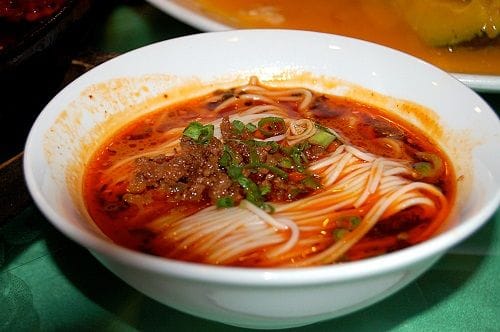
Dan Dan Noodles
When pairing beers with very spicy dishes like dan dan noodles, a good alternative is to choose beers with an equally complementary spiced character, such as a Belgian-style Saison, recognized for its spiced and citrusy flavors that enhance the intensity of Sichuan pepper grains, with a dry and effervescent finish that also helps relieve the heat of the chili oil.
Another good alternative is a slightly sour beer such as a German Berliner Weisse, low in alcohol, with gentle acidity and a slightly creamy texture that helps soothe the heat, with a pleasantly effervescent character that contrasts with the numbing effect of the Sichuan pepper grains on the tongue.
Along the same lines, a German wheat beer like Hefeweissbier works perfectly with its spiced and medicinal profile, which helps cut through the heat with its soft and creamy texture, accompanied by its classic notes of banana, clove, and vanilla that wonderfully balance the whole combination.
Finally, and once again from Germany, a truly malty Dunkelweisse with a deeper and toastier wheat profile pairs very well with roasted peanuts and pork pieces, maintaining an active carbonation that helps clean the unctuousness on the tongue, while the creaminess of the wheat calms the intense spicing.
Hot and Sour Soup
For a hot and sour soup, a balanced beer is required, as too much sweetness will clash with the spice and too much acidity could simply overshadow the true flavor of the soup.

A Blonde Ale can offer exactly this balance, with enough delicacy to let the dish remain the center of attention.
The bold flavors of this soup can equally shine without competing with traditional German beers like Oktoberfest or Märzen, which will perfectly complement the soup with their gentle sweetness.
Another good alternative is a California Common-style beer, which naturally means Anchor Steam, with its earthy and rugged quality from Northern California hops that pairs perfectly with the woody flavors of mushrooms and bamboo shoots.
Finally, taking experimentation hand in hand with availability, a combination you should not miss trying is a Belgian Lambic in the Faro style, which possesses just the right degree of sweetness and acidity to easily complement the whole ensemble.
Fried Rice
When pairing fried rice, an almost foolproof alternative is a Czech lager, led by its flagship Pilsner Urquell, whose soft bread-like malt flavors will fit perfectly with the sweetness of the carrots and peas.
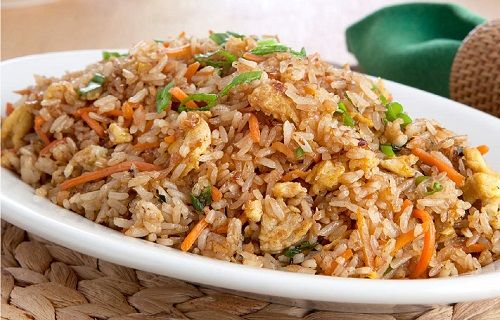
Saaz hops, for their part, will perfectly fuse the garlic and other spices in the rice, while their refreshing quality will quickly contain the richness of the rice and proteins.
Another good alternative is a slightly more bitter and hoppy American Amber Ale, with caramel notes and a slight sweetness that will balance perfectly with the fried rice.
A Porter with a smoky profile is undoubtedly also an excellent combination with fried rice, creating a delicious interaction with the soy sauce and incorporating an extra dimension of flavor to the preparation without overwhelming it.
Finally, other beers that pair perfectly with fried rice are Belgian Golden Strong Ales such as Duvel or Delirium Tremens, light-bodied beers that do not overload the palate while eating, but with pleasant fruity and spiced aromas to complement the variety of meats and vegetables, along with their dry and pleasant finish that helps cleanse the palate for the next bite.
Eggplant in Garlic Sauce
A dish like eggplant in garlic sauce calls for some more intense notes to accompany and balance it, where an aromatic and hoppy Black IPA can work quite well.

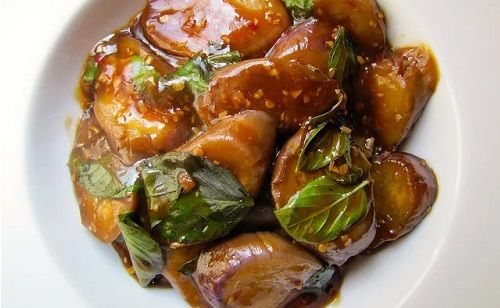
The deep malt flavors will pair with the roasted flavors of the eggplant, soy, and garlic, while the complex citrus hop notes and their characteristic bitterness allow the dish to be accompanied from start to finish without losing any of its own richness.
For its part, a Belgian Golden Strong Ale will hold up the garlic flavor and match it to the eggplant flavor, creating a perfect balance, while its effervescent carbonation acts as a palate cleanser, quenching the thirst and preparing it for the next bite.
Finally, a Belgian Saison seems to be a natural combination, with the earthy flavor of the eggplant and garlic interacting with the naturally spiced qualities of the style, while the ginger, onion, and garlic manage to stand out amid its vibrant carbonation and dry finish.
General Tso’s Chicken
For a crispy, spiced, and spicy preparation like General Tso’s Chicken, a Tripel-style beer is a brilliant pairing idea, where the beer’s deep spicing will integrate perfectly with the heat of the chiles, while its fruity flavor and well-carbonated body will balance the somewhat sticky and heavy sauce.

An American IPA, for its part, could flaunt its pronounced bitterness, accelerating the spicy sensation of the sauce, while its herbal profile makes the scallion and garlic notes shine, finishing in a dry and refreshing close that will help cleanse the palate of the richness from the fried chicken.
In contrast, an English IPA will provide a more balanced profile, though still with a firm and defined bitterness that helps cut through the richness, while its malty and somewhat toasted backbone functions as a perfect contrast to the capsaicin in the chile.
Peking Duck
Peking duck is a dish you should definitely try at least once; whether you are in a restaurant or at home, try to make sure you have a German Weizenbock on hand, with its delicious plum and dark bread flavors to accompany the duck meat, its caramelized notes highlighting the delicious crispy skin, and finishing with its nutty notes combining with the hoisin sauce and softening the spicy mustard.

English Best Bitter beers, such as Fuller’s London Pride, for example, also work wonderfully with this dish, where the almost creamy sweetness of the malts and the light citrus hop notes assemble perfectly with a well-balanced orange sauce.
Finally, a Belgian Dubbel with pronounced plum and dark fruit flavors perfectly contains the richness of the duck, which by its naturally fatty nature still needs some carbonation to cleanse the palate, while the crispy skin combines perfectly with its raisin and caramel profile.
Chinese Snack Buffet
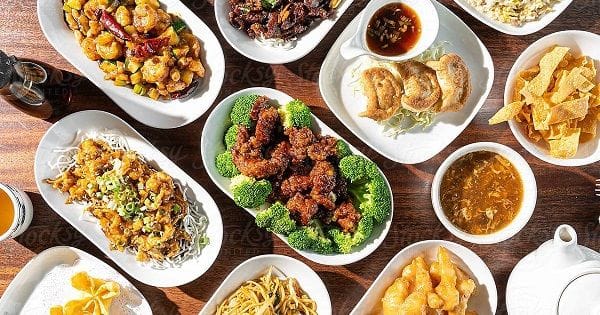
Chinese cuisine is full of bold and varied flavors that are often served as snacks in a family-style spread brimming with lo mein noodles, beef with broccoli, and chicken with cashews.

Now, considering that much of Chinese food can be particularly greasy, if all you need is a single beer to pair with different dishes, something hoppy and effervescent can be an excellent alternative, such as a Czech Pilsner or even a slightly sweeter German Helles.
Another great alternative is always a bold, citrusy Black IPA, where the toasted malt flavors can pair with the meaty and savory dishes.
An English ESB is also a very versatile choice to accompany Chinese food, with a gentle bitterness and earthy, spiced profile that are sufficient to counteract very heavy sauces or intense meats.
The fruity malt base, for its part, complements very well with soy sauce-based dishes while balancing the spicy profile of any side dish.
Finally, not to be overlooked, a Japanese rice lager like Kirin can prove to be the perfect combination for a wide variety of Chinese dishes, which tend to be relatively deep and salty due to the generous use of soy sauce, frying, and grilling of meats, where a light, smooth, and carbonated beer will succeed in counteracting the richness while pairing very well with the intensive use of rice and noodles.
Frequently Asked Questions (FAQ)
1. How does the alcohol level (ABV) influence pairing with very spicy Chinese dishes?
It is crucial to be careful with alcohol volume. Beers with a high ABV tend to intensify the burning sensation of capsaicin (the spicy component of chiles). For extremely spicy Sichuan dishes, it is preferable to opt for beers with moderate to low alcohol content, as high alcohol can mask the subtle flavors of the spices and prove aggressive on the palate.
2. What is the ideal serving temperature for these pairings?
Although the temptation is to serve the beer ice-cold to relieve the heat, excessive cold numbs the taste buds. For complex styles like the Saisons or Dubbels mentioned, a temperature between 8°C and 12°C is ideal for releasing the aromas that complement the food. Lighter Lagers can be enjoyed colder (4°C–7°C) to maximize their refreshing effect.
3. What beer is recommended for Chinese dishes based on steamed fish or seafood?
For delicate preparations such as steamed fish with ginger and scallion, the ideal choice is a Belgian-style Witbier. Its notes of orange peel and coriander seed enhance the freshness of the seafood without overwhelming it, maintaining a silky texture that respects the delicacy of the protein.
4. Are there pairing options for Chinese desserts such as fried bananas or moon cakes?
Yes. For desserts containing honey, caramel, or sweet seed pastes, a Stout-style beer or a Barleywine with notes of dried fruit and vanilla creates an exceptional contrast. The residual sweetness of the beer intertwines with the fried textures, elevating the close of the meal.
5. Why is high carbonation generally preferred with Chinese food?
Chinese cuisine frequently uses frying techniques and unctuous sauces. An active carbonation (fine and persistent bubbles) acts as a mechanical “cleanser” for the palate. Each sip carries the fat away from the tongue, allowing the next bite to be perceived with the same flavor intensity as the first.

Recommended
- 10 ingredients for the success of a craft brewery
- Nucleated beer glassware: everything you need to know