This post is also available in:
 Español
 Português
 Français
Fermented drinks such as chicha were prepared and consumed by almost every ancient people of the Americas. Each of them, in its own geographic area, identified one or more staple foods and applied fermentation methods, in a long chain of experience and knowledge built up over time.
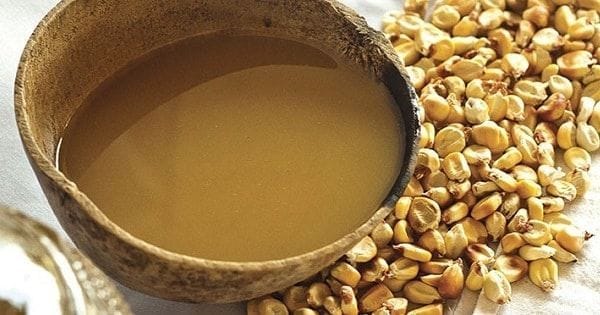
Chicha, definition and etymology

The Indigenous peoples of the Americas were no exception, and drinking it was usually tied to religious ceremonies, rites to bring good fortune, life and farming cycles and, in general, almost every social or collective event.
For these celebrations to succeed, women were in charge of putting their care and effort into brewing it to make sure the precious liquid was available.
Theirs was the responsibility for the preparation and the final result, with which they sought to give thanks and show affection to their community.
What Is Chicha? Origin and History
Chicha is the name given to a range of low-alcohol drinks made from cereals and fruits native to the Americas, whose starches and sugars are fermented and turned into alcohol by yeasts, mainly Saccharomyces cerevisiae.
The fermentation behind chicha is not a random process but an ancestral biotechnology that depends on specific conditions of temperature, pH and nutrient availability for the yeasts.
In practical terms, when the starches in corn or the sugars in fruit come into contact with water and the environment, wild or added yeasts begin to metabolize those compounds, producing ethanol, carbon dioxide and a series of aromatic by-products that define the sensory profile of each variety.
Understanding this microbiological basis is key to telling a well-made chicha, balanced in acidity, sweetness and body, apart from one that has suffered contamination or incomplete fermentation, which has direct consequences for food safety and for the drinker’s experience.
This knowledge was passed down orally for generations.
Historically, the alcohol content varied with the base ingredients, the yeasts present and the fermentation time.
In pre-Hispanic chichas made from corn or cassava the alcohol content was usually low, because the conversion of starch into sugar was incomplete.
In terms of raw material and process, two types of chicha can be distinguished, those made from starchy foods (what we would call beer today) and those produced by fermenting fruit or sap (what we would call wine or cider today).
What Does Chicha Mean? Etymology
There is no consensus on the origin of the word “chicha.” Some authors believe it comes from the Antilles, perhaps from Taíno or Arawak, while others attribute it to Kuna, the language of the Guna people of Panama and Colombia, in which “chichab” means corn. The latter is now the most widely cited hypothesis.
A third interpretation suggests that the word derives from the Aztec “chiohiatl,” formed from the words “chichilia” (to ferment) and “atl” (water).
Some scholars, however, hold that the correct word would be “chichiani,” which would mean something like “to turn sour.”
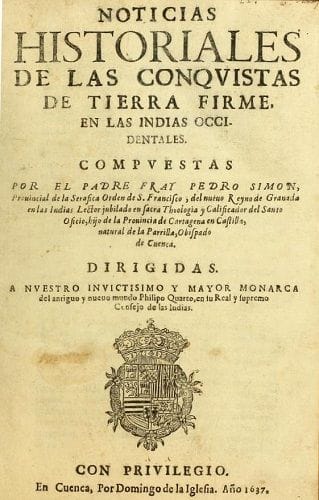
Definition of chicha in the Noticias historiales by Friar Pedro Simón (1627)
Later, the Spanish are thought to have spread its use as they advanced south across the continent, displacing local terms such as the Quechua word “azua” in Peru or the Mapuche words “mudai” and “pulcu” in Chile.
Friar Pedro Simón included the word in the table of American terms in his Noticias historiales de las conquistas de Tierra Firme en las Indias Occidentales, published in Cuenca in 1627, one of the first vocabularies of Americanisms. There he defined it as follows.
The wine the Indians make from their corn, which makes them drunk if they drink a lot of it, as wine does.
The word chicha is also closely tied to the term “jora,” which comes from the Quechua “shura” or “sora” (germinated corn), although other authors consider it to be of Aymara origin.
Table 1. Technical comparison of chicha varieties by raw material and process
| Main variety | Base raw material | Distinctive process | Region with the strongest tradition | Estimated alcohol content | Usual drinking context |
|---|---|---|---|---|---|
| Chicha de jora | Germinated corn (jora) | Controlled germination, milling, cooking, natural fermentation | Peruvian highlands, Ecuador | 2 to 4% | Festive, ceremonial, with meals |
| Muday or mudai | Corn, wheat or pine nuts | Chewing or natural enzymes, short fermentation | Mapuche people, Chile and Argentina | 1 to 3% | Ritual, communal, farming cycles |
| Apple chicha | Wild or cultivated apples | Pressing, spontaneous fermentation, sometimes blended with aguardiente | Southern Chile | 3 to 6% | National holidays, family gatherings |
| Tesgüino or tejuino | Nixtamalized or germinated corn | Long cooking, fermentation with ambient yeasts | Northern and western Mexico | 2 to 5% | Community events, collective decision-making |
| Cassava chicha (masato) | Cooked cassava | Chewing to start fermentation, resting in clay vessels | Peruvian, Colombian and Ecuadorian Amazon | 1 to 3% | Daily drinking, Indigenous ceremonies |
Types and Styles of Chicha by Country
Here is a look at the typical types of chicha in each Latin American country, their ingredients and their characteristic brewing methods.
Argentina
Until well into the Spanish colonial period, corn chicha was the main alcoholic drink produced and consumed in Argentina.
According to researcher Félix Coluccio, it was the favorite drink of the Indigenous peoples of the north, and it was made by fermenting corn, using either a special leaven or human saliva, which requires chewing the cornmeal.
Bolivia
The most important is corn chicha, one of the most popular and traditional drinks, consumed mainly in Tupiza, Chuquisaca, Tarija, Cochabamba and parts of Potosí.
It is drunk every day, but above all at traditional festivals and religious holidays. Among the most popular varieties are yellow corn chicha or willkaparu, chicha kulli made from purple corn, and chicha de ch’uspillu.
Chile
In Chile, chicha is the name given to drinks made by fermenting various fruits, and in some places they may be blended with aguardiente.
The Mapuche make and drink a type of chicha from corn, wheat or even pine nuts called muday.
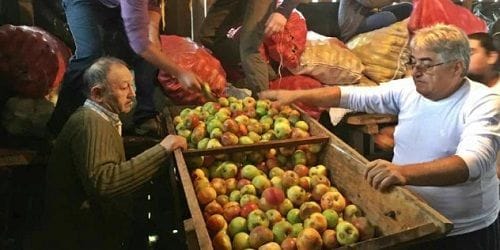
Making apple chicha in Chile
In central Chile, chicha is a grape ferment more rustic than wine, usually drunk in abundance on holidays such as the Fiestas Patrias.
In the south, the term refers to an apple ferment more rustic than cider. Other chichas can be made with the fruits of the luma tree (cauchaos), maqui and murta.
Honey is also used, producing a chicha similar to a low-alcohol mead.
Colombia
Chicha was the most widely consumed drink among the Muisca, who called it masato, used it as an offering in their rituals and also drank it regularly as part of their diet.
It was originally made from corn fermented in water, but after colonization cane honey began to be added for sweetness.
It has been banned many times, first by the Spanish, who called it the “vice of the Indians.” A widely repeated story attributes another ban to Simón Bolívar after it was supposedly used to poison his soldiers, although no documents support it.

The ban that nearly wiped it out came in 1948, when the Colombian government prohibited corn chicha that was not pasteurized and bottled. Chicha was blamed for dulling people’s minds, while the Bavaria brewery campaigned against it to promote beer.
Although it is no longer the country’s main alcoholic drink, it remains tied to festivities and its consumption rises in December.
Costa Rica
In Costa Rica corn chicha, simply called chicha, is popular, although sugarcane, peach palm, pineapple, cohombro, nance and jocote are also used.
Today it is made mostly for special occasions and is still a homemade drink sold in rural areas.
Ecuador
Drunk mainly in the highlands and the Amazon, Ecuadorian chicha is made by fermenting corn, quinoa, rice, barley or flour, together with panela or regular sugar.
Local fruits such as tree tomato, blackberry, pineapple, chonta palm, taxo and naranjilla are also used as ingredients, sometimes with aromatic herbs.
It usually ferments for three to twenty days, and it is also drunk by Amazonian peoples such as the Shuar and the Kichwa, who make it from cooked and fermented cassava or chonta.
Nicaragua
In Nicaragua, the name of the chicha depends on the department, for example chicha bruja, chicha pujagua, chicha raisuda, chingue de mai and others. The traditional recipe for corn chicha takes several days to make.
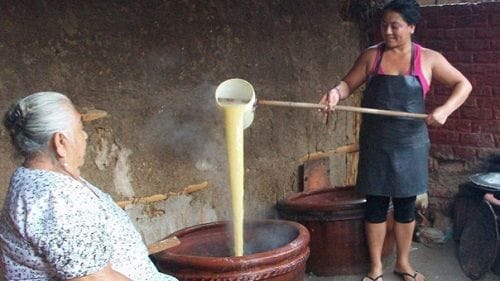
Making chicha bruja in Nicaragua
The corn is soaked in water overnight to soften it, then ground the next day and placed in water.
Red coloring is added and it is cooked. Once it cools, grated raw sugar and more water are added. The next day more water goes in and, finally, sugar.
El Salvador
Also made by hand, chicha here is brewed by fermenting corn kernels, pineapple peels, panela and ginger in large vessels called peroles.
The famous “Gallo en Chicha,” a Salvadoran take on the European chicken in wine, is also common during the year-end holidays.
Mexico
Better known as tejuino or tesgüino, it is a drink made from germinated corn that is ground and then boiled, consumed by various ethnic groups, mainly in the north of the country (the Yaqui and Pima of Sonora, the Tarahumara and Tubar of Chihuahua and Durango), in the northwest and west (the Huichol of Jalisco and Nayarit) and, to a lesser extent, in the south (the Zapotec of Oaxaca).
For the Tarahumara, as for other ethnic groups, tesgüino is the preferred drink at social events, religious festivals and sporting events, and at the so-called tesgüinadas, gatherings where important political and economic decisions are made for the community.
Paraguay
In Paraguay, chicha refers to a drink made with pineapple peels, water and sugar that ferments spontaneously without any specific yeast and has a low alcohol content.
Panama
In Panama, the word is used as a synonym for a soft drink (pineapple chicha, tamarind chicha, papaya chicha and so on).
One of the most traditional is rice and pineapple chicha, made with rice cooked in milk, panela and pineapple peels.
The alcoholic drink made by fermenting corn is called “chicha fuerte” and is made with germinated or malted corn, “maíz nacío,” left to ferment in fired clay vessels.
In some Indigenous communities the ancestral method persists, which consists of fermenting kernels that have first been chewed, as among the Kuna, who call it inna, or the Ngäbe, who call it dö kwaka, meaning bitter chicha or spicy chicha.
Peru
Fermented drinks, mainly from corn, have been made in Peru since pre-Inca times, for both ceremonial (sacred) and everyday (secular) use.
The Quechua called the fermented corn drink aqha or aswa, the Aymara called it kusa, and the Moche called it cutzhio, cochi or kocho.
Peruvian varieties include chicha de Terranova, very popular in nineteenth-century Lima; chicha de guiñapo, the emblem of Arequipa, made with black corn that is sprouted, germinated and ground; chicha blanca, also known as yurakk akkha, made with various cereals including corn, grains and spices; chicha de jora, which means germinated corn in Quechua; quinoa chicha, made in the regions of Arequipa, Puno and Cusco; chicha loretana, made from cassava flour and chancaca; chicha morada, named after the purple corn it uses, which contains no alcohol; and cassava chicha (masato), a traditional drink of the Amazonian peoples, made by fermenting chewed cassava.
Venezuela
In the Venezuelan Andes, a drink known as chicha andina is made, so named to set it apart from its non-alcoholic namesake, chicha criolla, made with rice and cow’s milk.
Along with the cereal, chicha andina uses pineapple guarapo, made by fermenting pineapple rind with water and papelón.
Chicha is generally made by hand at home. Its preparation originated in the Andean states of Venezuela, especially Táchira and Mérida.
Table 2. Good practice guide for safe home brewing
| Process stage | Recommended practice | Main risk to avoid | Visual or sensory sign of success |
|---|---|---|---|
| Choosing ingredients | Use fresh raw materials, with no mold or visible damage | Contamination with mycotoxins or pathogenic bacteria | Color, smell and texture typical of a healthy ingredient |
| Preparing the wort | Boil or pasteurize the base liquid before fermentation | Growth of unwanted microorganisms | Clean liquid, with no unusual suspended particles |
| Inoculation or start of fermentation | Use a starter from a previous safe batch or selected yeasts | Slow or contaminated fermentation that produces off-flavors | Steady bubbling in the first 24 to 48 hours |
| Control during fermentation | Keep the vessel covered with cloth or an airlock, in a dark and cool place | Excessive oxidation or entry of insects and dust | Pleasant aroma of fermented fruit or grain, with no rotten notes |
| Packaging and storage | Strain and package in sterilized containers, refrigerate if not drunk soon | Refermentation in the bottle causing explosions or spoilage | Balanced flavor, without excessive fizz or new haze |
Public Health and Chicha Safety
From a public health perspective, it is important to approach chicha drinking with balanced information. As a low-alcohol fermented drink, its physiological impact differs from that of industrial spirits, but it is not free of risk if it is made or stored in poor conditions.
Methanol, a common concern with homemade drinks, comes mainly from the pectin in fruit and is a serious risk in poorly made spirits, not in low-alcohol ferments such as chicha. The most common problems with homemade chicha stem from poor hygiene.
For drinkers, this means choosing products from suppliers who explain their process, keep their production hygienic and are open about ingredients and fermentation times.
For producers, it means documenting each batch and controlling critical variables such as temperature and pH, as well as considering regular microbiological testing if they plan to scale up production.
Frequently Asked Questions (FAQ)
1. Is it safe to make chicha at home without specialized equipment?
Safety depends more on hygiene and controlling variables than on technology. If you follow basic practices such as washing and sanitizing utensils, using drinking water, avoiding cross-contamination and keeping an eye on aroma and appearance during fermentation, it is possible to get a product that is safe for occasional drinking. For regular or commercial production, however, technical advice on food safety is recommended and, in some countries, local health registrations are required.
2. What are the differences between chicha, chicha de jora and muday?
Although the word chicha works as an umbrella term for traditional fermented drinks, chicha de jora, the ancestral Inca version, stands out for using germinated corn (jora) as a source of enzymes that turn starches into fermentable sugars, while muday, typical of the Mapuche people, can use corn, wheat or pine nuts and often relies on chewing to start fermentation. These differences in raw material and process lead to different flavor, texture and alcohol profiles, as well as specific cultural drinking contexts.
3. Does chicha offer nutritional or probiotic benefits?
As a fermented product, chicha can contain bioactive compounds derived from microbial transformation, such as organic acids, B vitamins and, in some cases, yeast strains with probiotic potential. These benefits, however, depend on the brewing method, the fermentation time and the absence of contaminants. It should not be considered a functional food without batch-specific evidence, but it can be part of a varied diet when drunk in moderation and when you choose a quality product.
4. Does chicha morada contain alcohol?
No. Peruvian chicha morada is an unfermented drink made with purple corn boiled together with pineapple peels, cinnamon and cloves, then sweetened and served cold. It shares its name with fermented chichas, but it is a soft drink.
5. Are there specific health regulations for producing chicha?
Regulations vary by country and, within each one, by the product’s destination (home use, local sale or national distribution). In general, if chicha is sold, it must be registered with health authorities, follow good manufacturing practices and carry labels listing ingredients, alcohol content and production date. In some cases laboratory tests are also required to rule out contaminants such as methanol or pathogens. It is advisable to check local food safety legislation and, where possible, join associations of craft producers that offer technical and legal support.

Recommended
- The Sacred Tesgüino of Onorúame, the Ancestral Beer of the Mexican Rarámuri
- How Was Saliva from Your Mouth Used to Make Beer Before Malting and Mashing?