
This post is also available in:
 Español
  Português
The 2025 data from the International Organisation of Vine and Wine (OIV) confirm a historic shift: that year, French people consumed 22.1 million hectoliters of beer versus 22 million of wine.
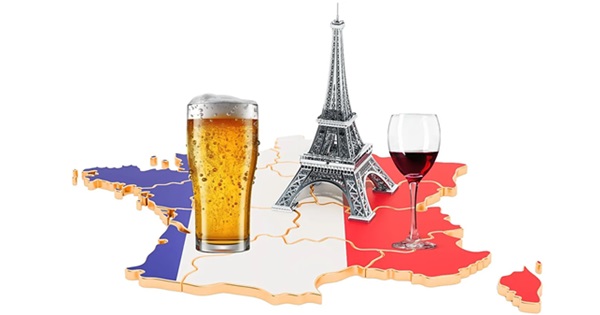

It is the first time on record that beer has surpassed wine in the country that for centuries defined global wine culture.
Wine consumption in France has hit its lowest level since 1957. This is not a sudden drop, but the end of a trend that has been building for decades, accelerated in recent years by economic, cultural, and commercial factors that have reshaped French drinking habits.
Beer, for its part, has seized that space with a more varied and more affordable proposition.
The Numbers Behind the Shift
According to the OIV, in 2025 the French consumed 22.1 million hectoliters of beer and 22 million of wine. The gap is small, but the symbolism is significant: beer has never before surpassed wine in France in terms of volume consumed.
The French brewers’ association, Brasseurs de France, has been documenting the growth of craft beer as a driver of demand diversification for years.
Why Is Wine Consumption Falling?
The reasons behind the decline of wine are multiple and reinforce one another. Economic pressure is one of the most direct. In a cost-of-living crisis context, beer is significantly cheaper than wine, especially for younger consumers.
Cultural shifts also play a role: there are fewer formal sit-down meals, the traditional setting for wine consumption, and more informal gatherings, sporting events, and social occasions where beer fits better.
Alcohol content matters too. Younger consumers seek lower-ABV drinks, and beer, especially craft and non-alcoholic varieties, meets that demand better than most wines. John Barker, Director General of the OIV, added another factor:
What we see in the 2025 data is a sector reacting in real time to the effects of US tariff policies.
Tariffs have complicated European wine exports and generated uncertainty in the market.

The Rise of French Craft Beer
France was not traditionally seen as a beer country, but that has changed. Over the past fifteen years, the number of French microbreweries has grown exponentially, especially in regions such as Alsace, Brittany, and Île-de-France.
The range of styles has gone from marginal to broad and recognized. IPAs, saisons, spontaneous-fermentation beers, and high-quality lagers now compete on the shelves alongside regional wines.
That shift in supply has attracted consumers who previously had no reason to choose beer over wine. Craft beer has also gained a presence in restaurants and bistros that previously only offered a wine list, changing the consumption context and normalizing beer in settings once reserved for wine.
France as a Symptom of a European Shift
The French case stands out for its symbolism, but it is not an exception. In Spain, Italy, and other wine-tradition countries, wine consumption has also been declining for years.
The difference is that in those markets the fall in wine does not necessarily coincide with an equivalent rise in beer, but rather a diversification toward spirits, cocktails, and non-alcoholic drinks. In France, beer is the primary beneficiary of the change.
Industry analysts cite Sciences Po and Les Échos as sources that have been tracking this trend since at least 2020.
The 2025 crossover is not a surprise to those following the data; it is the arrival point of a trajectory that was already evident.
Frequently Asked Questions (FAQ)
1. When did beer surpass wine consumption in France?
In 2025, according to data from the International Organisation of Vine and Wine (OIV). That year, French people consumed 22.1 million hectoliters of beer versus 22 million of wine. It is the first time on record that beer has overtaken wine in France.
2. Why is wine consumption falling in France?
Wine consumption in France has reached its lowest level since 1957. The factors behind the decline are multiple: the rise of craft beer, economic pressure making beer more affordable, cultural shifts (fewer formal sit-down meals), beer’s lower alcohol content, and the impact of US tariffs on the wine trade.
3. What role does craft beer play in this shift in French drinking habits?
The French craft beer scene has grown significantly over the past decade, with hundreds of microbreweries diversifying supply and attracting younger consumers. Craft beer is associated with social occasions, sporting events, and informal gatherings — contexts once dominated by wine.
4. What did the OIV say about the state of the wine market in 2025?
John Barker, Director General of the International Organisation of Vine and Wine (OIV), stated: “What we see in the 2025 data is a sector reacting in real time to the effects of US tariff policies.” US tariffs have affected European wine exports, with an indirect impact on production and domestic market prices.

Recommended
- Barley ‘Gluten-Free’ Beers: The Study Questioning Whether Current Controls Are Sufficient for Celiacs
- Coopers Best Extra Stout: Tasting Notes and Pairings Recommended by a Beer Sommelier