This post is also available in:
 Español
 Português
 Français
A homemade donut recipe made with an Amber Ale, perfect for breakfast.
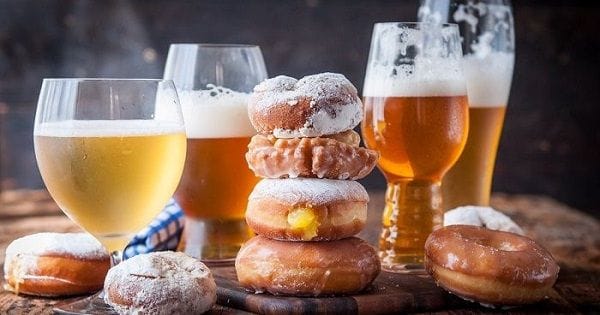
As with most recipes that use beer, you can try bolder styles such as a Pale Ale or an IPA to add an extra touch of flavor.

Nutrition Information
Beer Donuts Recipe
Finish your beer donuts with powdered sugar or cinnamon sugar and enjoy them whenever you like.
Ingredients
- 100 ml (about 3.4 fl oz) Amber Ale
- 100 g (½ cup) white sugar
- 4 tablespoons melted butter, cooled
- 3 tablespoons buttermilk powder
- 2 large eggs
- 1 cup cake flour
- 1 teaspoon baking powder
- 1 teaspoon ground cinnamon
- ¼ teaspoon ground nutmeg
- ¼ teaspoon salt
Instructions
- Preheat the oven to 190 °C (375 °F) for at least 10 minutes.
- Melt the butter in a medium saucepan over medium heat, let it cool to room temperature and set aside.
- Sift all the dry ingredients into a medium bowl. In a separate bowl, mix the eggs, the melted butter and the beer until smooth.
- Generously grease the donut pan with butter, pour the liquid mixture into the dry ingredients all at once and stir gently.
- Fill each mold halfway, place the pan on the middle rack of the preheated oven and bake for 8 to 9 minutes for mini donuts or 9 to 12 minutes for regular donuts. The tops barely brown, and the donuts are ready when they spring back when pressed gently.
- Take the beer donuts out of the oven, let them cool in the pan for one minute, unmold them and roll them in powdered sugar or cinnamon sugar before serving.
What to Serve with Beer Donuts
Once your beer donuts are ready, try pairing them with a butterbeer like the one in Harry Potter for a complete beer-themed menu.
Origin and History of Donuts
Donuts, or doughnuts, are believed to go back to the ancient Greeks and Romans, who already made a very similar sweetened fried dough, although without the hole in the middle.
The word “doughnut” combines “dough” and “nut”. The most common explanation links it to the nuts placed in the center of the dough, the part that took longest to cook, although it may also refer to the shape of small balls of dough.

The most famous legend credits the ring shape to Hanson Gregory, a young sailor from Maine who in 1847 is said to have punched out the center of the dough so it would not stay raw while frying in hot oil.
The tradition reached the United States with Dutch immigrants and their olykoeks, and donuts became especially popular between the 19th and early 20th centuries. Later, Dunkin’ Donuts, which opened in 1948 in Quincy, Massachusetts, as Open Kettle and took its current name in 1950, turned donuts into a phenomenon that spread across the country and eventually around the world.
Frequently Asked Questions (FAQ)
1. Which beer should I use to make donuts?
This recipe uses an Amber Ale, which adds caramel notes and a gentle bitterness. For a more intense flavor, you can try a Pale Ale or an IPA.
2. Are these donuts fried or baked?
They are baked in a donut pan at 190 °C (375 °F), so they need no hot oil and come out lighter than fried donuts.
3. Do beer donuts contain alcohol?
They keep some of it. According to the USDA nutrient retention tables, a dish baked for 15 minutes retains about 40% of the added alcohol, a small amount in this recipe since it uses only 100 ml of beer for four servings.
4. How do I know when the donuts are done?
They should spring back when pressed gently. Regular donuts need 9 to 12 minutes in the oven and mini donuts 8 to 9 minutes.
5. How do you finish beer donuts?
After cooling for one minute, roll them in powdered sugar or in a mix of sugar and cinnamon.
Recommended
- How to Make Beer Crepes: Recipe and Step-by-Step Instructions
- How to Make Beer Waffles: Recipe with Ingredients and Step-by-Step Instructions