This post is also available in:
 Español
  Português
The richness of Mexican gastronomy lies not only in the diversity of its ingredients but also in the cultural depth that each dish contains.
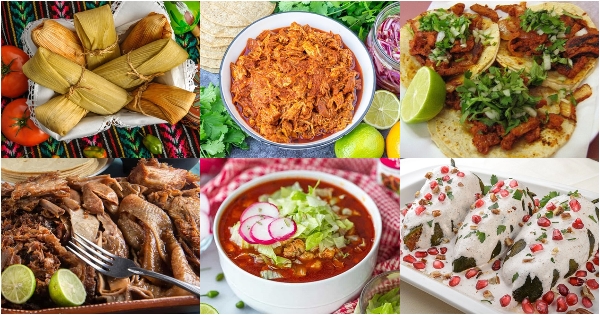
From ceremonial recipes to street food, each preparation offers a universe of flavors that, when paired with the right beer, reach a different dimension.
Below is a journey through ten of the most representative dishes of Mexico and the beers that best enhance their character.
1. Mole poblano
Among the most representative dishes of Mexico is mole poblano, a complex and deep preparation that combines different types of chilies with spices, seeds, nuts, and a touch of cocoa.
The result is a dark, velvety sauce with an intense, slightly sweet flavor, traditionally served with chicken or turkey.

For this monumental dish, a Porter or an Oatmeal Stout is the ideal companion, thanks to their roasted character with coffee and chocolate notes that naturally dialogue with the mole’s cocoa and provide balance against the spiciness.
The malty sweetness softens the intensity of the spices while cleansing the palate to continue enjoying each bite.
2. Pozole
Pozole is a stew made from nixtamalized corn that has accompanied Mexicans since pre-Hispanic times.
Prepared in its white, red, or green variations, it is served with pork or chicken and garnished with radishes, lettuce, onion, lime, and oregano, resulting in a festive and comforting dish.
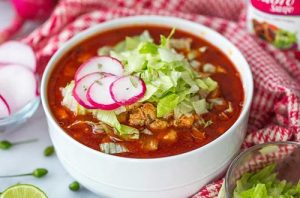
Its robust yet fresh character finds a perfect balance in a Saison or a Belgian Wit, light-bodied, spicy beers with citrus notes that harmonize with the garnishes and cleanse the palate after each spoonful of broth.
The liveliness of these beers highlights the contrast between the density of the corn and the freshness of the toppings.
3. Cochinita pibil
From the Yucatán Peninsula comes cochinita pibil, a pork delicacy marinated in achiote and sour orange juice, wrapped in banana leaves, and slowly cooked until achieving a tender, juicy texture.
Its citrusy, spicy, and slightly smoky nuances find a perfect complement in a Pale Ale or a moderately bitter IPA.
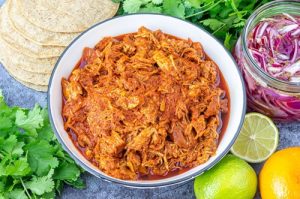
The hoppy freshness enhances the acidity of the marinade and cuts through the richness of the meat, while the fruity notes of the hops create a bridge with the achiote aromas.
If seeking a lighter experience, a well-chilled Kölsch or Pilsner offers a refreshing contrast that makes the essence of the dish stand out without overshadowing it.
4. Chiles en nogada
Chiles en nogada represents not only a dish but also a national symbol. The poblano chili stuffed with a fruit-infused minced meat mixture, covered with a creamy walnut sauce, and crowned with pomegranate and parsley reflects the colors of the Mexican flag.
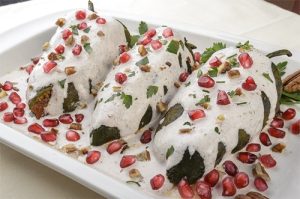
The delicacy of the nogada, with its natural sweetness and velvety texture, finds a perfect pairing in a Belgian Blonde Ale or a Golden Ale, styles that offer medium body, a fruity touch, and the necessary smoothness to complement the filling without overshadowing it.
The contrast between the beer’s effervescence and the sauce’s density allows each layer of flavor to be appreciated in its proper measure.
5. Barbacoa
Barbacoa is synonymous with ritual and tradition. Slowly cooked in earthen ovens, covered with maguey leaves, the meat, usually lamb or goat, acquires a smoky and juicy flavor that is hard to match.
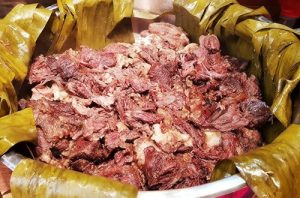
This dish, with its deep intensity and earthy aroma, is elevated when accompanied by a dark Bock or a Strong Ale, styles with robust body and roasted notes that enhance the smoky and caramelized character of the meat.
Each sip highlights the warmth of the dish, prolonging the rustic, celebratory feeling that barbacoa evokes.
6. Carnitas
Michoacán-style carnitas are a celebration of textures: pieces of pork slowly cooked in their own fat, crispy on the outside and juicy on the inside.
Their rich, unctuous character and intense flavor find balance in malty beers like a Vienna Lager or an Amber Lager.


The malt contributes sweet and roasted notes that blend with the meat, while the moderate bitterness refreshes the palate and prevents saturation.
The result is a pairing that invites unhurried eating and drinking, savoring the richness of each bite.
7. Tacos al pastor
Tacos al pastor, with their pork marinated in spices and achiote, slowly cooked on a vertical spit, and served with pineapple, onion, and cilantro, represent the spirit of Mexican street food.
Their combination of sweet, sour, spicy, and fresh flavors requires a beer capable of keeping pace without losing its identity.
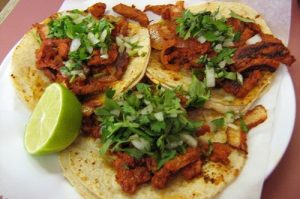
A medium-to-high character IPA achieves this thanks to its bitterness, which balances the meat’s fat and enhances the sweetness of the pineapple, while the hop’s tropical aromas accompany the spicy notes of the marinade.
Another successful alternative is a wheat beer, whose fruity and spicy notes add smoothness to the whole and reinforce the freshness of the cilantro and onion.
8. Enchiladas
Enchiladas are a showcase of Mexican versatility: tortillas filled with chicken, cheese, or beans, bathed in green, red, or even mole sauces.
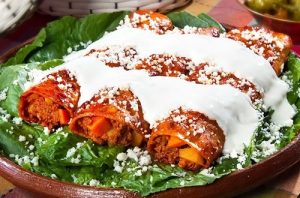
Each version calls for a different pairing. Green enchiladas, fresh and herbal, are enhanced by a light Pilsner that reinforces the tomatillo’s acidity. Red enchiladas, more intense and spicy, find balance in a malty Amber Ale.
And mole enchiladas shine even brighter alongside a porter, whose chocolate and coffee notes echo the sauce. This variety of combinations makes enchiladas a dish that is never enjoyed the same way twice.
9. Tamales
Tamales are synonymous with celebration and family tradition. Wrapped in corn or banana leaves, this bite of filled dough can be savory, spicy, or sweet, depending on the occasion and the region.

For savory tamales, a pale ale offers a refreshing counterpoint to the spiciness of the sauces, while sweet tamales benefit from a Brown Ale, whose caramel and nutty notes perfectly accompany fillings of raisins, pineapple, or nuts.
In this case, the beer becomes a bridge between the festive and the everyday, enhancing the warmth of the dough.
10. Tlayudas
Originating from Oaxaca, tlayudas are large, crispy tortillas topped with beans, string cheese, meats, chorizo, avocado, and salsa.
The combination of fresh and hearty ingredients makes this dish a complete experience that calls for a beer with freshness and character.
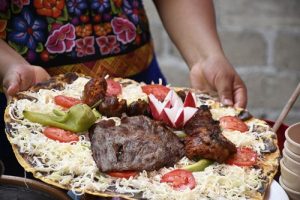
An American Pale Ale, with its vibrant hops and citrus notes, cuts through the fat of the string cheese and chorizo while highlighting the freshness of the avocado and the heat of the salsa.
A Saison also works as an alternative, with its spicy, light profile that accompanies without stealing the spotlight.
A meeting of flavors and tradition
Pairings between beer and Mexican food are not mere accompaniments but a dialogue between intensities, contrasts, and nuances that enrich the experience.
From the complexity of mole to the street-side freshness of tacos al pastor, each dish finds in beer the perfect partner to exalt its qualities.
Exploring these combinations is a journey through Mexico with the palate, discovering in each sip and each bite the cultural depth that makes this cuisine one of the most admired in the world.
Frequently Asked Questions (FAQs)
1. How does the spiciness of chili affect the perception of alcohol and hop bitterness in beer?
The spiciness of chilies comes from a chemical compound called capsaicin, which irritates the thermal receptors in the mouth. When pairing, you must consider that high alcohol and intense hop bitterness (IBU) enhance and multiply the sensation of heat, sometimes making it aggressive. Conversely, carbonation helps physically sweep capsaicin away from the receptors, while residual sugars from malts (sweetness) act as a balm that extinguishes the fire on the palate.
2. Why are Amber or Vienna Lager beer styles so popular in Mexican cuisine?
It is no accident that the Vienna Lager style has been deeply rooted in Mexico’s beer culture since the 19th century. Technically, its clean, low-fermentation (Lager) notes combined with the subtle toasted sweetness of Vienna malt create a perfect flavor bridge with nixtamalized corn tortillas and golden-brown meats (such as carnitas or tacos al pastor). Furthermore, its moderate bitterness cleanses fat without overwhelming the palate, making it the ideal all-rounder for local gastronomy.
3. What pairing rule should be followed when combining beers with highly acidic, citrusy dishes?
Dishes like cochinita pibil or Mexican ceviches have a strong acidic load due to the use of sour orange or lime. The sommelier rule dictates that the dish’s acidity should be matched with similar acidity or high carbonation in the beer. Styles like a Saison or a Belgian Witbier work perfectly because their citrusy, effervescent profiles are not overshadowed by the dish; a flat or overly sweet beer, on the other hand, will taste metallic or insipid when faced with the impact of lime.
4. Can traditional Mexican food be paired with high-alcohol dark beers?
Yes, but exclusively with complex, slow-cooked dishes that have smoky, spicy notes, or cocoa elements, such as mole poblano or pit-barbacoa. Dark beers like Stout or Porter contain roasted malt, which shares aromatic compounds (pyrazines) with smoked dried chilies and toasted seeds. The dense body of these beers supports the structure of monumental stews without being crushed by them.
5. When organizing a taco dinner, what is the correct order to serve beers according to their styles?
To avoid palate fatigue, the pairing should be structured from lowest to highest intensity, both in alcohol and bitterness. The ideal order for a taco progression would be:
- Fish or seafood tacos: Paired with light, clean styles like Pilsner or Kölsch.
- Fatty or pork tacos (Carnitas/Pastor): With malty or medium-hopped styles like Vienna Lager or Amber Ale.
- Complex stew or intense meat tacos (Barbacoa/Mole): Finishing with robust, full-bodied styles like IPA, Bock, or Stout.
Recommended
- The 9 best Japanese beers available on the market according to Esquire
- 20 beer cocktail recipes selected to prepare and enjoy at home