This post is also available in:
 Español
  Português
Beer foam, that usually fleeting mantle that crowns a good pint, is much more than a simple sensory ornament; behind its light and ephemeral appearance lies a complex system that depends on a delicate interaction between chemical components, interfacial properties, and hydrodynamic dynamics.

A recent study published in Physics of Fluids in 2025 delves into these mechanisms, using advanced techniques to connect the behavior of individual liquid films with the macroscopic dynamics of foam.

What Makes Beer Foam Stable?
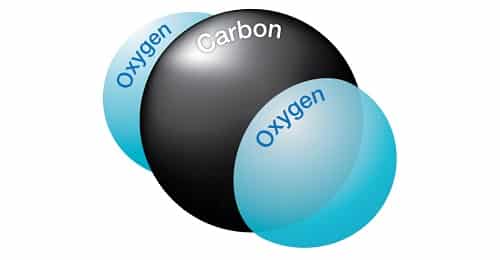
Foam is a colloidal system formed by gas bubbles (mainly carbon dioxide) separated by thin liquid films whose stability is fundamental for the foam to remain stable and persist.
When these liquid films become too thin, they lose cohesion and break, causing the bubble to collapse and eventually the entire foam to collapse as well.
However, not all films behave the same. Their resistance depends on the components that accumulate at the air-liquid interface, such as proteins, lipids, and hop-derived compounds.
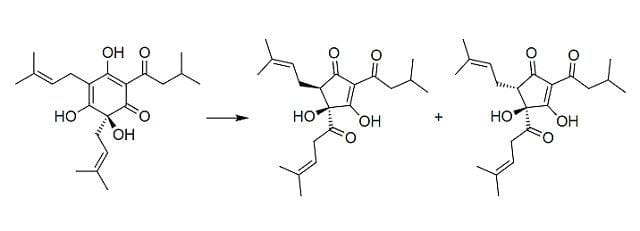
In the case of beer, two types of molecules are especially relevant: malt lipid transfer protein (LTP1) and iso-humulones, which come from hops and contribute to the bitter flavor.
These molecules not only adsorb at the interface, but also form interfacial layers with specific mechanical properties, such as elasticity and surface viscosity. These properties directly influence how the film resists rupture.
For example, an elastic interface can recover after a disturbance, while a viscous interface can dissipate energy and slow down liquid drainage.
The balance between these effects determines the shelf life of the foam. Understanding this balance requires going beyond macroscopic observation and directly studying the behavior of individual films under controlled conditions.
From Microscale to Macroscale
The study is based on a multiscale approach that combines measurements at the level of individual liquid films with macroscopic foam observations.
To analyze thin films, the researchers used a technique known as pressure-controlled dynamic thin film balance, which allows creating and maintaining a liquid film between two bubbles or between a bubble and a flat surface.
This configuration allows precise measurement of surface tension, film thickness, and liquid drainage rate while applying a controlled pressure gradient.
At the same time, tensiometry and interfacial rheology methods were employed to characterize the mechanical properties of the surface layer formed by the proteins and surfactants present in barley and malt extracts.
In addition to experiments with individual films, macroscale foam tests were performed using aqueous extracts of wheat and barley flour, which simulate real beer conditions.
These extracts were agitated to generate foam, and their stability was monitored over time through image analysis and foam height measurements.
This combination of techniques allowed direct correlation of interfacial properties measured at the microscopic level with the behavior observed in more complex systems, such as real foam.
A key aspect of the study was the use of extracts with varying compositions, which allowed isolating the effect of specific components, such as LTP1, on foam stability.
The Role of LTP1 and Surfactants
One of the most significant findings of the study is that the LTP1 protein, despite its low concentration in beer, plays a fundamental role in foam stability.

This protein has a high affinity for air-water interfaces and forms dense, elastic layers that resist rupture.
The experiments showed that films stabilized by LTP1 exhibit slower drainage and greater resistance to coalescence, even in the presence of ethanol, which normally destabilizes foams by reducing surface tension and competing for the interface.
LTP1 seems to act as an interfacial “reinforcement,” maintaining the integrity of the film even when other components, such as lipids, tend to destabilize it.
On the other hand, iso-humulones, although they do not form layers as cohesive as proteins, contribute to stability through electrostatic effects.
When ionized in solution, they generate a negative charge at the interface that repels other bubbles, reducing the probability of coalescence. This repulsion effect adds to that of LTP1, creating a double protection system: a mechanical barrier (the protein layer) and an electrostatic barrier (the iso-humulones).
However, the study also reveals that the presence of lipids, even in traces, can negatively interfere with this balance. Lipids compete with proteins for the interface and reduce the elasticity of the film, which accelerates collapse.
This finding confirms previous observations about foam destabilization by fats, but now with a more solid mechanistic basis.
From Film to Foam
The innovation of the study lies in establishing a direct connection between the behavior of a single liquid film and the stability of the complete foam.
The researchers demonstrated that the drainage time of an individual film, measured in seconds, accurately predicts the half-life of macroscopic foam, which can last minutes.
This link is explained because foam collapse is not a random process, but is governed by the progressive rupture of the films separating the bubbles.

When a film fails, it triggers a coalescence cascade that rapidly reduces the foam volume. Therefore, improving the stability of a single film has a multiplier effect on the entire foam structure.
This approach allows scientists and brewers to intervene more precisely in the brewing process. For example, if LTP1 is found to degrade during malting or cooking, the thermal conditions can be adjusted to preserve its functionality.
Similarly, if certain nonionic surfactants, such as Tween 20, are identified as displacing proteins from the interface, their use in equipment cleaning can be avoided, since minimal residues can negatively affect the foam.
Furthermore, the study suggests that selecting barley varieties with higher LTP1 content could be an effective strategy to naturally improve foam quality without the need for additives.
Toward a Beer With Better Foam
Beer foam stability is not a magical phenomenon, but the result of precise physical and chemical interactions occurring at imperceptible scales. This study demonstrates that understanding the dynamics of thin liquid films is key to explaining and predicting the macroscopic behavior of foam.
LTP1 protein emerges as a major player, capable of forming resistant interfacial layers that counteract the destabilizing effects of ethanol and lipids. Combined with the electrostatic action of iso-humulones, it creates a robust system that defines the sensory quality of beer.
These findings have implications not only for the brewing industry, but also for other sectors where the stability of foams and emulsions is critical, such as dairy products, cosmetics, or pharmaceuticals.
By connecting interfacial microstructure with macroscopic performance, the research opens new avenues for the rational design of more stable colloidal systems. Ultimately, knowing why a beer maintains its foam not only satisfies scientific curiosity, but also improves the consumer experience — a goal as eternal as beer itself.
References
Chatzigiannakis, E., Alicke, A., Le Bars, L., Bidoire, L., & Vermant, J. (2025). The hidden subtlety of beer foam stability: A blueprint for advanced foam formulations. Physics of Fluids, 37(8), 082139. https://doi.org/10.1063/5.0274943

Recommended
- LeFort Tripel: Tasting Notes and Pairings Recommended by a Beer Sommelier
- Technological Revolution in Beer Brewing: Precision, Efficiency, and Customization