This post is also available in:
 Español
  Português
  Français
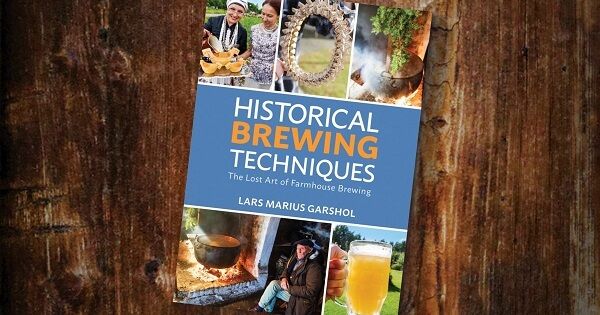
For those who don’t know Lars Marius Garshol but have heard of kveik yeast, he is the man who introduced it to the world, and he tells the story in his book “Historical Brewing Techniques: The Lost Art of Farmhouse Brewing“.
Garshol is a beer-loving software engineer who has spent many years traveling the world and researching the least-known aspects of farmhouse brewing in Scandinavia and the Baltic countries.

It was in western Norway that he found his “holy grail”, a yeast that farming families had kept and shared for generations, able to ferment quickly at high temperatures without producing off-flavors, and of which there were hardly any written records.
- Title: Historical Brewing Techniques: The Lost Art of Farmhouse Brewing
- Author: Lars Marius Garshol
- Publisher: Brewers Publications
- Published: April 2020
- Length: about 400 pages, in English
Book Review
Historical brewing traditions and techniques have been passed down from generation to generation on farms in the remote areas of northern Europe.
With these traditions on the verge of extinction, author Lars Marius Garshol set out to explore and document the lost art of brewing beer with traditional local methods.
The book is split in equal parts between history, cultural anthropology, social science and travelogue, describing brewing and fermentation techniques that are very different from those of modern craft brewing and preserving them for posterity and further exploration.
Did Garshol Discover Kveik Yeast?
Not strictly speaking. Kveik is a traditional yeast that farmers in Voss, Hornindal and Sunnmøre, in western Norway, had kept alive for centuries, but Garshol was the one who documented it and spread the word outside the country from 2013 onward.
His fieldwork led to the farmhouse yeast registry he maintains on his website and to the first reference scientific study, which he co-authored (Preiss et al., Frontiers in Microbiology, 2018).
Garshol writes mainly about the discovery of kveik yeast, an unusual yeast strain with diverse and attractive properties, such as tolerating a wide range of temperatures and fully fermenting beer in about 36 hours under the right conditions.
Kveik keeps gaining popularity and is enjoying a renaissance in the craft beer market, among homebrewers and professionals alike.

What Other Farmhouse Beers Appear in the Book?
This book is not a beer style guide, but rather a fascinating look at the countless ways beer was made before industrialization, a read that will interest professional brewers and beer enthusiasts alike.
Find out how to make “keptinis” by baking the mash. Explore the use of juniper branches at various stages of the brewing process. Challenge yourself by brewing recipes drawn from years of travel and research in the farmlands of northern Europe.
Keptinis is a farmhouse beer from northeastern Lithuania in which the thick mash is baked in trays, in bread ovens, until it forms a toasted crust. The hops are added as an infusion and the wort is not boiled, just like in Finnish Sahti and other indigenous beers of northern Europe.
Finally, meet the brewers and dig into the ingredients that have kept these traditional methods alive for centuries, discovering regional differences throughout history. Along the same lines, Latgalian ale from Latvia shows another Baltic tradition that survived on the farms.
In October 2026 Garshol announced a new book on his blog, “The Power of Beer”, a history of beer focused on its relationship with power.
Frequently Asked Questions (FAQ)
1. Who Is Lars Marius Garshol?
Lars Marius Garshol is a Norwegian software engineer and farmhouse beer researcher who has spent years documenting the rural brewing traditions of Scandinavia and the Baltic countries. He is best known for introducing kveik yeast to the world.
2. What Is Historical Brewing Techniques About?
The book, published by Brewers Publications in April 2020, collects the farmhouse brewing techniques of northern Europe, from Norwegian kveik to Lithuanian keptinis and the use of juniper, combining history, anthropology and travelogue with recipes.
3. What Is Kveik Yeast?
Kveik is a family of traditional yeasts from farms in western Norway, especially Voss, Hornindal and Sunnmøre. It ferments at very high temperatures, 30 °C or more, without producing off-flavors, and can finish a fermentation in about 36 hours.
4. What Is Keptinis?
It is a farmhouse beer from northeastern Lithuania in which the mash is baked in trays until it forms a toasted crust. The wort is not boiled and the hops are added as an infusion, which is why it is considered a raw ale.
5. At What Temperature Does Kveik Ferment?
According to Garshol’s farmhouse yeast registry, Norwegian farmers pitched kveik into wort at between 20 and 40 °C, and its maximum growth occurs at around 40 °C. That heat tolerance stems from the custom of adding the yeast to the wort while it was still warm.

Recommended
- What is Kveik yeast? The revolutionary story of its origins and discovery
- What is Sahti? History and origin of the ancient Finnish beer