This post is also available in:
 Español
  Português
Saint Joseph Abbey was founded in 1950 on a tree-covered hilltop north of the city of Spencer, Massachusetts.

The Catholic monastery is home to the monks of the Cistercian Order of the Strict Observance, better known as Trappists.
It is common for Trappists to produce goods and provide services to help finance their monastery and support their charitable efforts economically.
Since 1950, the monks of Spencer Abbey have been brewing and selling jams and jellies for this purpose, but it was only a few years ago that the Massachusetts abbey decided to follow the traditions long rooted in European Trappist monasteries and begin brewing beer.
After spending a great deal of time studying brewing techniques and visiting some of the most renowned Trappist breweries, Spencer Trappist Brewery opened its doors in 2013, becoming the first and currently only Trappist brewery in the United States recognized by the ITA (International Trappist Association).
We had the opportunity to speak with Father Isaac, director of Spencer Brewery, to ask him for some tips to share with homebrewers.
Brewing Beer Like a Trappist
Before getting to the tips for homebrewing, Father Isaac emphasizes that “Trappist” is not a specific beer style, but simply designates the place where a particular beer is brewed — in this case, in a Trappist monastery with an active community of monks.
Due to the monks’ well-known passion for excellence in brewing, the term Trappist has historically been associated with the highest standard of quality in global beer culture.
After meeting with the brewing team, Father Isaac and the monks of the Abbey have compiled the following tips to share with homebrewers.

1. Passion for Excellence
Trappist breweries occupy a place in global beer culture because they refuse to compromise on ingredient quality and use cutting-edge technology alongside continuous education. This combination allows for consistency, which is the foundation of quality excellence.
Buy the equipment that best fits your budget and purchase the freshest, highest-quality ingredients. Keep meticulous records of each brew and allow enough time to clean properly.

Wait until you have brewed your new recipe around 15 or more times, modifying only one detail each time and evaluating the results, until you finally achieve the beer of your dreams.
2. Keep It Simple
Especially when it comes to malt combinations. We typically use a combination of two-row and six-row Pilsner malt along with Caramunich malt to adjust color.
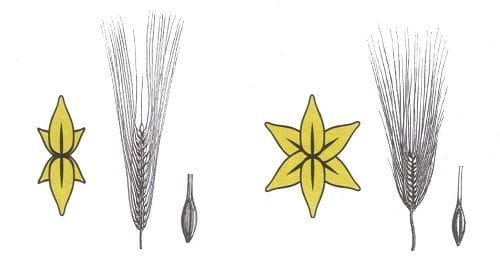
Favor fresh, high-quality malts over exotic ones. The delicious flavor profile of Belgian malt comes more from temperature steps during the mash than from the use of special, expensive, and hard-to-find malts.
3. Be Kind to Your Yeast
When a craft brewer once asked us why we use only a single yeast strain during fermentation, a veteran Trappist brewer replied that he had spent his entire life studying that one yeast and only at that point felt he was beginning to understand it with some depth.

Choose a top-fermenting yeast from a reputable lab — perhaps a Wyeast 3787 or 3538, or another yeast with an ester profile of clove, fruit, and banana — and be patient and gentle with it. Set the primary fermentation temperature to 25°C (±1) and between 20 and 22°C during secondary fermentation for three weeks.
4. Seek Balance
A fundamental difference between a particular Trappist beer and Belgian beers in general is the harmony of ingredients and fermentation byproducts that impart aromas and flavors to the beer.

The central principle is that no single element should dominate — especially alcohol. The malt, yeast, hops, and water elements are so naturally balanced that the final flavor profile develops in layers: complex, difficult to separate analytically, with an intriguing aroma and, ultimately, delicious. A symphony of taste sensations!
Frequently Asked Questions (FAQ)
1. In what year did Spencer Trappist Brewery open?
Spencer Trappist Brewery opened its doors in 2013, becoming the first and only Trappist brewery in the United States recognized by the ITA (International Trappist Association).
2. What does the term “Trappist” actually mean for beer?
It does not refer to a specific beer style, but rather is a designation of origin indicating that the beer is brewed inside a Trappist monastery by an active community of monks.
3. What malt combination and technique do the monks recommend?
They recommend using a basic combination of two-row and six-row Pilsner malt along with Caramunich malt for color. The characteristic flavor profile comes from temperature steps during the mash, not from exotic malts.
4. What are the recommended fermentation temperatures and timeframes?
The primary fermentation temperature should be set to 25°C (±1°C), then maintained between 20 and 22°C during secondary fermentation over a period of three weeks.
5. What sets a Trappist beer apart from other Belgian beers?
The central principle is the harmony and natural balance of its ingredients (malt, yeast, hops, and water), ensuring that no element — especially alcohol — dominates over another, to achieve a complex flavor developed in layers.
Recommended
- Was poor water quality in the Middle Ages just a myth?
- Westmalle Tripel: Tasting notes and recommended pairings