This post is also available in:
 Español
 Português
 Français
The scene baffles many foreign visitors. Dozens of people sniff a fine powder from early in the day and pass it among friends in plain sight, surrounded by traditional costumes and servers able to carry twenty one-liter steins at once.
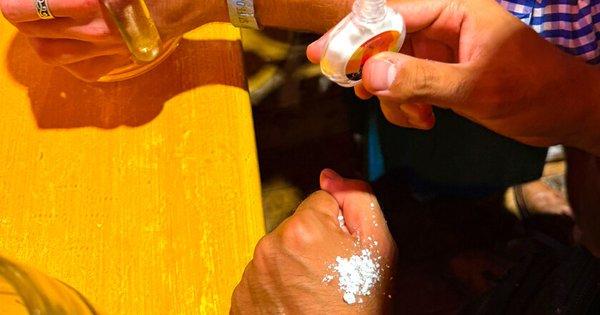
The white powder that circulates from table to table during the Munich Oktoberfest is not cocaine. It is known as Wiesn Koks, a mix of lactose, dextrose and menthol with no tobacco or narcotics, and a direct descendant of Bavarian snuff.
Oktoberfest begins on the first Saturday after September 15, when the mayor of Munich taps the first keg. The 2026 edition, from September 19 to October 4, set a record with about 7.4 million visitors and 6.7 million liters of Festbier, according to the City of Munich’s provisional figures.
That year a one-liter stein cost between 14.80 and 15.90 euros depending on the tent (muenchen.de, 2026).
The festival began in 1810 as a celebration of the wedding of Crown Prince Ludwig, the future King Ludwig I of Bavaria, to Princess Therese of Saxe-Hildburghausen, an aristocratic origin that has since been reduced to eating and drinking, as our look at the history and origins of Oktoberfest explains.
What Does Wiesn Koks Actually Contain?
The name translates as “meadow coke” and refers to the Theresienwiese, the open ground in Munich where the festival is held.
The composition is far less dramatic than the label. It contains lactose, dextrose and menthol, with no trace of tobacco or any other active substance. People who use it describe a sweet sensation along with a cooling, decongesting effect.
That tingle comes from the menthol, which opens the nostrils for a few seconds and explains much of the appeal inside a tent thick with heat and the smell of food.
From Bavarian Snuff to the Beer Tent
The practice did not begin at Oktoberfest. It comes from snuff, the ground tobacco inhaled through the nose that for centuries was part of popular culture in southern Germany.
Wiesn Koks keeps the gesture and drops the tobacco. The market’s benchmark is Schneeberg, made since 1923 by Pöschl Tabak.
The company keeps the formula strictly secret, an industrial secret that the German press often compares to Coca-Cola’s. Its use spans generations and works as a rite of initiation between veterans and first-timers.
Why Does It Make the Organizers Uneasy?
Neither the German authorities nor those running the festival welcome the custom. The reason is simple. To the naked eye, using Wiesn Koks looks exactly like using cocaine, and that image spreads every September in thousands of photos and videos from the grounds.

In 2025 police caught about a hundred people using cocaine on the grounds. For one of them, carrying more than a gram, it meant a fine of 40,000 euros.
In 2026 police recorded 845 crimes and offenses on the grounds, 8% more than the previous year and mostly related to narcotics (ZDFheute, 2026).
The health objection is more solid. No ear, nose and throat specialist endorses inhaling powders through the nose, whether or not they contain active substances. The nasal mucosa is not designed to receive particulate matter repeatedly, and the fact that the product is food-grade does not make it harmless by that route.
What the Oktoberfest rules have banned since 2010 is smoking inside the tents, a rule extended to e-cigarettes and vapes. Cannabis is banned across the grounds, with fines starting at 1,500 euros that can exceed 5,000 for repeat offenses.
None of these rules reaches snuff powders, because they are not smoked and contain no controlled substances. The official lists of prohibited items and practices for the 2026 Wiesn mention neither Schnupftabak nor Wiesn Koks.
There is one nuance. Each tent has its own right of admission and security staff instructions are binding, so a given venue can ask you to stop even without a general ban.
Beer Remains at the Heart of the Festival
The white powder is an anecdote at a festival that revolves around beer. The tents serve the special Festbier of Munich’s six historic breweries, a medium-bodied, highly drinkable lager style.
The food on the grounds follows suit with roast chicken, pork knuckle with sauerkraut and white sausages, the famous Munich weisswurst. That dish has its own classic pairing with wheat beer, a combination we look at in our Weihenstephaner Hefe Weissbier tasting notes.
Anyone planning a first visit will find the other practical tips in our guide to what to know before going to Oktoberfest.
Frequently Asked Questions (FAQ)
1. What is Wiesn Koks?
It is a white powder made mainly of lactose, dextrose and menthol that is sniffed at the Munich Oktoberfest. It contains no tobacco or narcotics and is not considered a drug. Its name literally means “meadow coke”, referring to the Theresienwiese, the grounds where the festival takes place.
2. Why does it look so much like cocaine?
Because of how it looks and how it is used. It is a fine white powder that is inhaled through the nose and passed from hand to hand among friends, a scene that looks exactly like cocaine use to the naked eye. That confusion is why neither the German authorities nor the Oktoberfest organizers look kindly on the practice.
3. Where does this custom come from?
From Bavarian snuff, the ground tobacco inhaled through the nose that was widespread in southern Germany. Wiesn Koks repeats that gesture without the tobacco. The best-known brand is Schneeberg, made since 1923 by Pöschl Tabak, with a formula the company guards as closely as Coca-Cola guards its own.
4. Is it safe to use?
There is no medical support for inhaling powders through the nose, whether or not they contain active substances. Ear, nose and throat specialists advise against the practice regardless of the product’s composition. The effect that users describe, a sweet sensation and a cooling tingle that clears the nostrils, comes from the menthol.
Recommended
- The real Curt Prank: Star of ‘Oktoberfest: Beer and Blood’ on Netflix
- 10 German Beer Sayings, Proverbs and Expressions