This post is also available in:
 Español
  Português
  Français
The relationship between beer consumption and testosterone levels is more complex than it seems. It is not simply that alcohol lowers testosterone, but an effect that depends on the dose and involves the hypothalamus, the pituitary gland, the testes and the liver.
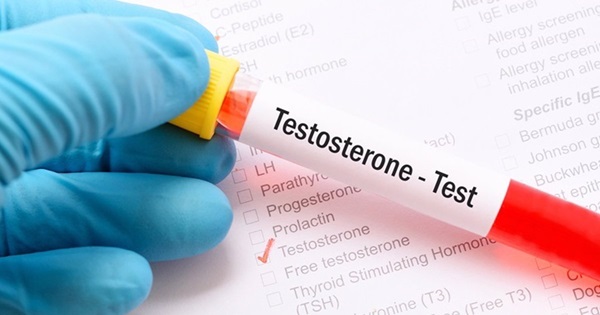
A low dose of alcohol can raise testosterone for a few hours, while heavy and prolonged drinking is associated with low testosterone and testicular damage. In between, studies in the general population show no clear differences between moderate drinkers and abstainers.

What Is Testosterone and Why Does It Matter?
Testosterone is a steroid hormone produced mainly in the testes, although smaller amounts are also made in the adrenal glands and the ovaries.
In men it is involved in secondary sexual development, muscle and bone mass, mood, libido, erectile function and sperm production.
The 2018 guideline of the American Urological Association (AUA) considers 300 ng/dL a reasonable threshold below which testosterone is considered low. Levels fluctuate over the day and over a lifetime, and age, sleep, stress and diet all influence them.
How Alcohol Affects Testosterone Production
Testosterone is not produced in isolation. It is the result of a chain of signals that runs from the hypothalamus to the pituitary gland and from there to the testes, and the liver is involved in the metabolism of sex hormones.
According to the review by Emanuele and Emanuele (1998), alcohol can interfere with each of these links, and heavy drinking is associated with impotence, infertility and reduced secondary sexual characteristics.
1. The Hypothalamus, Pituitary and Testes Axis
The pituitary gland releases luteinizing hormone (LH), the signal that tells the testes to make testosterone. The same 1998 review notes that alcohol can reduce the production, release or activity of LH and of follicle-stimulating hormone (FSH).
With acute intake the picture is different. A 1987 review by Ellingboe on non-alcoholic men concludes that after drinking, LH stays the same or rises, probably because the testes produce less testosterone and the brain tries to compensate.
2. Direct Effect on Leydig Cells
Leydig cells are responsible for synthesizing testosterone in the testes, and alcohol can damage them directly.
In a classic experiment by Van Thiel and colleagues (1975), rats fed a diet in which ethanol provided 36% of calories developed testicular atrophy and greatly reduced testosterone levels. Those given the same calories as sugar did not, which points to ethanol as a direct testicular toxin.
3. The Role of the Liver
When the liver metabolizes alcohol, its redox state changes, meaning the balance between the oxidized and reduced forms of coenzymes such as NAD.
That change alters androgen metabolism. In a placebo-controlled trial, Sarkola and Eriksson (2003) found that the effect of a low dose of alcohol on testosterone disappeared when a drug was used to block the liver’s metabolism of alcohol.
The Role of Hops and Phytoestrogens
Hops (Humulus lupulus), a key ingredient in brewing, contain compounds with estrogen-like properties, such as 8-prenylnaringenin, considered one of the most potent phytoestrogens known.
Its concentration in beer is usually low. However, according to Possemiers and colleagues (2006), the gut microbiota can convert another hop compound, isoxanthohumol, into 8-prenylnaringenin and increase exposure tenfold in some people.
The authors conclude that with moderate beer consumption this exposure could fall within the range of human biological activity. No study has shown that this effect actually lowers testosterone in beer drinkers.
Acute Versus Chronic Drinking
The dose makes the difference. In the trial by Sarkola and Eriksson, 13 men drank 0.5 grams of alcohol per kilo of body weight, about three beers for an 80 kilo man, and their blood testosterone rose from 13.5 to 16.0 nmol/L.

High doses have the opposite effect. The same authors point out that heavy acute drinking lowers testosterone through a direct effect on the testes.
Heavy and prolonged drinking is what is associated with low testosterone. In Van Thiel’s animal model, the authors set out to reproduce the hypogonadism and feminization seen in men with chronic alcoholism.
In the general population the difference fades. A meta-analysis of 17 observational studies published in 2024 found no overall differences in testosterone, LH or FSH between drinkers and non-drinkers.
In the same study, the low and moderate drinking groups even showed slightly higher testosterone than abstainers. The authors stress that alcohol use disorder does alter these hormones.
This table summarizes what each type of study shows.
| Situation | Effect on testosterone | Source |
| Single low dose (0.5 g/kg) | Acute rise, from 13.5 to 16.0 nmol/L | Sarkola and Eriksson, 2003 |
| Single high dose | Decrease through a direct effect on the testes | Ellingboe, 1987 |
| Habitual low or moderate drinking | No overall difference compared with abstainers | Moosazadeh et al., 2024 |
| Heavy and prolonged drinking | Low testosterone and testicular atrophy | Emanuele, 1998; Van Thiel, 1975 |
Appropriate Monitoring
Anyone who drinks frequently and notices symptoms such as persistent tiredness, lower sex drive or erection problems should discuss it with their doctor.
The AUA guideline recommends measuring total testosterone on two occasions, in the morning, before diagnosing low testosterone. Depending on the case, the doctor may also order LH, FSH and estradiol to find where in the axis the problem lies.
Individual Variables
Not everyone responds to alcohol in the same way. Genetic variants of enzymes such as ALDH (aldehyde dehydrogenase) and CYP2E1 change how quickly the body metabolizes alcohol.
Body composition also matters. Fat tissue contains aromatase, the enzyme that converts testosterone into estradiol, so men with more body fat tend to have a higher proportion of estradiol.
A Physiology-Based Approach
Beer is not inherently harmful to testosterone. What the evidence associates with low testosterone is heavy and prolonged alcohol consumption, not one or two occasional beers.
The strategies marketed to protect testosterone while drinking, such as supplements or specific foods, are not backed by studies. The measure with evidence behind it is to moderate the amount of alcohol.
Balance and Mindful Drinking
Occasional beer consumption does not pose a serious risk to testosterone levels. Regular heavy drinking can cause significant hormonal changes, and that is when it is worth reviewing your habits and seeing a doctor.
Understanding the mechanisms behind this relationship makes it possible to make informed decisions, even if you are a beer lover.
Frequently Asked Questions (FAQ)
1. Does drinking beer lower testosterone?
It depends on the amount. A single low dose can raise it for a few hours, as a 2003 trial showed when it rose from 13.5 to 16.0 nmol/L. Heavy drinking, on the other hand, lowers it, and chronic alcoholism is associated with low testosterone and testicular atrophy.
2. Do moderate drinkers have less testosterone than abstainers?
According to a meta-analysis of 17 observational studies published in 2024, there are no overall differences. The low and moderate drinking groups even showed slightly higher testosterone than people who did not drink.
3. Do the hops in beer have an estrogenic effect?
Hops contain 8-prenylnaringenin, one of the most potent phytoestrogens known, and the gut microbiota can form more of it from isoxanthohumol. No study has shown that this exposure lowers testosterone in beer drinkers.
4. Are there supplements that protect testosterone when you drink?
No studies support any supplement or food for that purpose. The measure with evidence behind it is to moderate alcohol consumption and, if symptoms such as persistent tiredness or lower sex drive appear, to see a doctor.
References
- Ellingboe, J. (1987). Acute effects of ethanol on sex hormones in non-alcoholic men and women. Alcohol and Alcoholism, Supplement 1987. https://pubmed.ncbi.nlm.nih.gov/3122772/
- Emanuele, M. A., & Emanuele, N. V. (1998). Alcohol’s effects on male reproduction. Alcohol Health and Research World, 22(3), 195-201. https://pubmed.ncbi.nlm.nih.gov/15706796/
- Possemiers, S., Bolca, S., Grootaert, C., Heyerick, A., Decroos, K., Dhooge, W., De Keukeleire, D., Rabot, S., Verstraete, W., & Van de Wiele, T. (2006). The prenylflavonoid isoxanthohumol from hops (Humulus lupulus L.) is activated into the potent phytoestrogen 8-prenylnaringenin in vitro and in the human intestine. The Journal of Nutrition, 136(7), 1862-1867. https://doi.org/10.1093/jn/136.7.1862
- Van Thiel, D. H., Gavaler, J. S., Lester, R., & Goodman, M. D. (1975). Alcohol-induced testicular atrophy. An experimental model for hypogonadism occurring in chronic alcoholic men. Gastroenterology, 69(2), 326-332. https://pubmed.ncbi.nlm.nih.gov/1171045/
- Sarkola, T., & Eriksson, C. J. P. (2003). Testosterone increases in men after a low dose of alcohol. Alcoholism, Clinical and Experimental Research, 27(4), 682-685. https://doi.org/10.1097/01.alc.0000060526.43976.68
- Moosazadeh, M., Heydari, K., Rasouli, K., et al. (2024). Association of the effect of alcohol consumption on luteinizing hormone (LH), follicle-stimulating hormone (FSH), and testosterone hormones in men. A systematic review and meta-analysis. International Journal of Preventive Medicine. https://doi.org/10.4103/ijpvm.ijpvm_81_24
- Mulhall, J. P., Trost, L. W., Brannigan, R. E., et al. (2018). Evaluation and management of testosterone deficiency. AUA guideline. The Journal of Urology, 200(2), 423-432. https://doi.org/10.1016/j.juro.2018.03.115

Recommended
- Beer Consumption and Prostate Health, What Science Says
- Fatty Liver and Beer, What Medical Guidelines Say and How Many Beers Are Too Many