
This post is also available in:
 Español
  Português
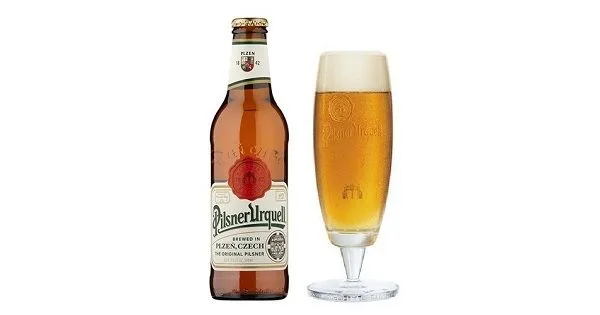
Pilsner Urquell is a bottom-fermented beer that has been brewed since 1842 by Plzeňský Prazdroj in the city of Pilsen (Plzeň), Bohemia, present-day Czech Republic.

General Information
Name: Pilsner Urquell
Brewery: Plzensky Prazdroj
Origin: Plzen, Czech Republic
Style: Czech Pilsner
ABV: 4.4%
IBU: 40
Calories: 132 kcal
Glassware: Pilsner, Mug
Tasting and Drinking Notes
Pilsner Urquell is the first beer of its kind in history and the one from which, for better or worse, all others in its style were developed. Its quality is guaranteed by the use of the original recipe.
1. Appearance
Soft golden, clear, and filtered, with a gentle, thin carbonation that rises slowly under a medium-height, creamy foam crown with medium persistence and lacing, which holds as a thin layer while drinking.
2. Aroma
Its entry is balanced with aromas of sweet grain, nuts, and traces of honey, blending into a mineral character with spicy and herbal hops that sustain an intensity capable of merging all its features into a profound nose.
3. Taste
Its start is smooth, blending into a spicy and sweet-grain character that gradually opens into mineral notes, walnuts, bread, and mild honey in successive pauses that evolve slowly until reaching a peak of herbal hop bitterness, relatively dry and with a moderate yet defined bitterness, which lingers in a similarly defined aftertaste.
4. Mouthfeel
Medium-low body, well-structured, with a light and lively carbonation, in a brisk display that leaves behind a very slight roughness on the tongue.
5. Overall Impression
Unsurprisingly, the classic taste of a Pilsner has a balance between the soft, sweet notes of the malt and the spicy, herbal, and bitter characteristics of Saaz hops, where each manages to achieve a slight degree of prominence, first on the nose and then in the mouth. Its depth, overall balance, and definition are surprising. It is drunk simply as good beers are drunk, setting its own drinking pace. A beer that literally changed history and reminds us once again that drinking a freshly brewed Pilsner Urquell at its place of origin should be on every beer lover’s travel itinerary.
Suggested Pairings
These suggestions take advantage of Pilsner Urquell’s characteristics to create harmonious combinations that enhance both the food and the beer experience.

1. Main Dishes
The smoothness and light bitterness of Pilsner Urquell complement seafood dishes such as steamed fish or grilled shrimp perfectly. Also with ceviches.
2. Cheeses
Soft cheeses like Brie or Camembert pair well with Pilsner Urquell thanks to its spicy and herbal character, creating harmony with the earthy and milky notes of these cheeses.
3. Vegetarian Dishes
The light carbonation along with the herbal and spicy profile of Pilsner Urquell enhance the flavors of grilled vegetables or pizzas with fresh tomato, basil, and mozzarella.
4. Desserts
A lemon tart or a citrus sorbet is an excellent choice with Pilsner Urquell, where its moderate bitterness balances the sweetness of desserts, creating a refreshing and satisfying finish.
Frequently Asked Questions (FAQ)
1. What is the difference between Pilsner Urquell and a common commercial lager beer?
The main difference lies in its traditional ingredients and brewing method. While most modern commercial lagers use inexpensive adjuncts (like corn or rice) and speed up fermentation times, Pilsner Urquell is brewed exclusively with Moravian barley malt, extremely soft Pilsen water, and whole Saaz hops. Additionally, it maintains the traditional triple decoction method in copper kettles heated by direct flame, which gives it a caramelized malt profile and a complex bitterness that industrial lagers lack.
2. What does the name “Pilsner Urquell” mean?
The name literally translates to “The Original Source of Pilsen” (in German, “Urquell” means “original source” or “primal spring”). It was formally adopted in the late 19th century to protect the brand and distinguish it from the hundreds of copies and imitations that began to emerge worldwide after the massive success of the golden, clear beer style invented in the Czech city of Plzeň.
3. Is Pilsner Urquell gluten-free or suitable for celiacs?
No, Pilsner Urquell contains gluten. As a beer brewed under traditional recipes that follow purity principles, its base is 100% barley malt, a cereal that naturally contains gluten. People with celiac disease or severe gluten sensitivity should avoid consuming it and opt for beers specifically labeled “gluten-free.”
4. What is the ideal serving temperature for Pilsner Urquell?
To fully appreciate its balance between malt sweetness and the herbal profile of Saaz hops, it is recommended to serve it at a temperature between 5 and 7°C. If served too cold (near 0°C), the taste buds become numb, hiding its subtle notes of bread and honey; if served too warm, the carbonation loses liveliness, and the bitterness can feel harsh.
5. What are the traditional Czech serving styles (Hladinka, Šnyt, and Mlíko)?
In Czech beer culture, how the beer is poured from the tap defines the taste and experience of a Pilsner Urquell:
- Hladinka: The classic pour. Three-quarters beer and a generous crown of creamy foam (three fingers). Offers perfect balance.
- Šnyt: Two parts beer, two parts foam, and one part air in the glass. This was the traditional pour for brewmasters to taste the freshness of the batch.
- Mlíko: The glass is filled almost completely with wet, creamy foam. It has a surprisingly sweet taste and is traditionally consumed in one gulp as a dessert.

Recommendations
- Recipe for Belgian Flemish Carbonade: Traditional beef stew with beer
- How to organize a beer tasting at home? Everything you need to know