
This post is also available in:
 Español
  Português
The history of beer is often divided into technological eras defined by refrigeration or pasteurization. Yet there is an earlier milestone, born in the laboratories of the transition between alchemy and chemistry, that forever changed our understanding of what happens inside a fermentation tank.
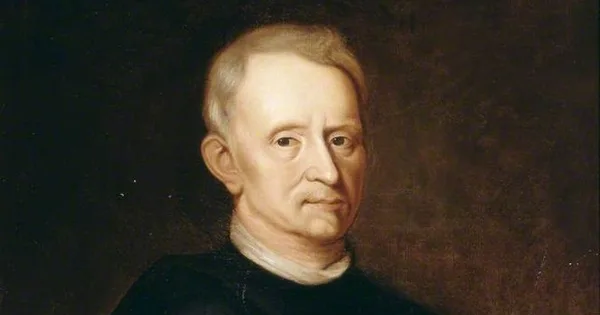

Jan Baptista van Helmont, a Flemish physician and mystic of the seventeenth century, not only defied the dogmas of the Spanish Inquisition but was the first scientist to identify carbon dioxide (CO₂) as a substance distinct from ordinary air.
For the modern brewing industry, this discovery is the cornerstone that enables everything from natural carbonation control to the engineering of gas recovery systems in large-scale production plants.
The Break with Medieval Alchemy
Jan Baptista van Helmont is recognized for coining the word gas, derived from the Greek term khaos. Before his contribution, alchemical science classified any volatile substance simply as air or spirit.
Van Helmont was the first to postulate that different types of vapors existed with unique physical and chemical properties, breaking with the Aristotelian theory of the four elements.
For the technical brewer, this paradigm shift is fundamental. Without the distinction between atmospheric air (composed mainly of nitrogen and oxygen) and the byproducts of fermentation, it would be impossible to understand critical processes such as oxidation or carbonation.
The transition from viewing vapor as a mystical spirit to seeing it as a quantifiable gas enabled the subsequent development of physical laws that today govern the operation of any isobaric filling system.
The Identification of Carbon Dioxide
During his experiments with the combustion of charcoal and the fermentation of worts, Van Helmont observed the release of a substance he called gas sylvestre (forest gas or wild gas).
He noted that this gas could extinguish flames and that it was the same substance that accumulated in caves and fermentation cellars, proving lethal to living beings when concentrated in excess.
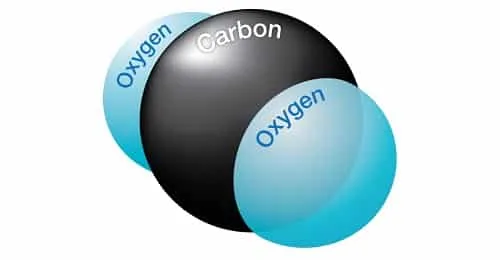
This wild gas was none other than CO₂.
In the brewing industry, the identification of this component made it possible to understand why wort bubbled during yeast activity.
By understanding that it was a specific substance, science could begin to measure its density and behavior at different temperatures, which eventually led to the creation of carbonation tables used in software tools such as BeerSmith.
The Willow Tree Experiment
One of Van Helmont’s most famous contributions was his experiment with a willow tree. Over five years, he grew a willow in a pot with a controlled amount of soil, adding only water.
At the end of the period, the tree had gained considerable mass while the soil had barely lost any weight. Van Helmont concluded, incorrectly, that the tree’s matter came exclusively from water, ignoring the role of atmospheric CO₂ in photosynthesis.
Despite the error in the final conclusion, the experiment was revolutionary for its quantitative approach. In beer production, this mass-balance mindset is essential.
Today, brewmasters use similar balances to calculate extract yield and mash efficiency. Van Helmont’s methodology of meticulously weighing and measuring every input and output of the process is the direct precursor of modern quality control.


Fermentation as an Observable Process
Van Helmont was among the first to propose that biological processes, including digestion and fermentation, were driven by chemical ferments or enzymes (though he did not use that specific term).
He viewed fermentation not as a divine miracle but as an internal transformation of matter mediated by specific agents that released gas.
This vision demystified the production of alcoholic beverages. By treating fermentation as an observable chemical reaction, the door was opened for future scientists such as Pasteur to identify yeast as the responsible organism.
For a brewery, this means that the process of converting sugars into ethanol and CO₂ is predictable and controllable through the manipulation of variables such as temperature and inoculation rate.
The Conflict with the Inquisition
After the publication in 1621 of his works on magnetic healing, Jan Baptista van Helmont was subjected to proceedings by the Spanish Inquisition in the Low Countries, culminating in 1625 with the censure of several of his theses and periods of house arrest.
These measures restricted the dissemination of a body of ideas that included experimental observations on gases, which he called gas, among them the gas sylvestre, today identified as carbon dioxide (CO₂).
The conflict unfolded in a context of tension between Aristotelian scholasticism and iatrochemistry, as Van Helmont described the generation of gases as a measurable material phenomenon, the product of natural reactions such as combustion and fermentation.
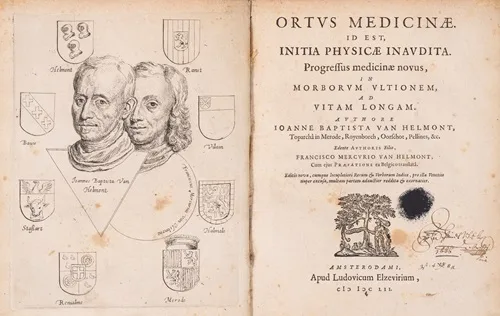
The posthumous publication of Ortus Medicinae in 1648 delayed the circulation of these observations, postponing the incorporation of CO₂ as a distinct physical entity in the study of processes such as fermentation and the transformation of matter.
The Relationship Between Pressure and Solubility
Although Van Helmont did not formulate Henry’s Law, his discovery of gas as a physical entity was the necessary step for others to do so. The solubility of CO₂ in beer is inversely proportional to temperature and directly proportional to the partial pressure of the gas above the liquid.
In industrial practice, this translates into the need to chill beer as close as possible to 0 degrees Celsius before forced carbonation.
The efficiency of the process depends on understanding that the gas sylvestre identified in the seventeenth century has a specific affinity for liquid that varies drastically with thermal changes, which influences foam stability and gas retention in the final service.
Frequently Asked Questions (FAQ)
1. How is dissolved carbon dioxide (CO₂) measured in beer in the modern industry?
In modern breweries, dissolved CO₂ is measured in volumes of CO₂ or in grams per liter (g/L) using analytical carbonation meters (volume expansion methods or infrared optical sensors). These tools determine the exact amount of dissolved gas independently of air or other gases present, ensuring foam texture and stability.
2. What is the technical difference between fermentation CO₂ and commercially injected CO₂?
Chemically they are the same molecule, but CO₂ naturally produced during fermentation often carries volatile aromatic compounds from hops and malt. In large-scale production plants, the gas released during fermentation is purified and recovered through compression systems for subsequent reinjection, optimizing costs and preserving the sensory profile of the beer.
3. What impact does atmospheric air or oxygen have inside the fermentation tank?
Unlike CO₂, atmospheric oxygen is the primary enemy of finished beer. Although yeast requires oxygen in the initial inoculation phase to synthesize sterols and fatty acids, the presence of O₂ in later stages causes oxidation, generating off-flavors (such as wet cardboard or sherry) and degrading the alpha acids of hops.
4. What is an isobaric tank and why does it require precise gas control?
An isobaric tank is a sealed vessel designed to maintain constant and uniform pressure during beer filling or conditioning. It allows the liquid to be transferred and packaged without dissolved CO₂ degassing (avoiding excess foam) and prevents the entry of outside air that could contaminate or oxidize the product.
5. Who discovered the exact relationship between pressure and the solubility of gases in liquids?
Although Jan Baptista van Helmont identified CO₂ gas, it was the British chemist William Henry in 1803 who formulated Henry’s Law. This law states that the amount of gas dissolved in a liquid is directly proportional to the partial pressure of that gas above the liquid, a principle that governs forced carbonation in beer production.