
This post is also available in:
 Español
 Português
 Français
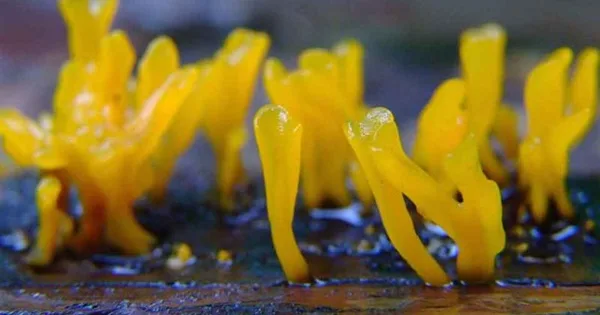
Nagardo is a natural preservative for non-alcoholic beverages, including non-alcoholic beer. It is sold by the German chemical company LANXESS and consists of a mixture of glycolipids produced by the edible fungus Dacryopinax spathularia.
Its appeal for the brewing industry comes down to a specific problem. Without alcohol to hold microorganisms back, non-alcoholic beer spoils more easily than regular beer.
In this article we explain what it is, how it works, which beverages it is approved for and what limits apply to its use in beer.
Where Does Nagardo Come From?
Nagardo is obtained from Dacryopinax spathularia, an orange jelly fungus that grows on dead wood in tropical and subtropical climates. In English it is known as “sweet osmanthus ear” and it is an edible species.
According to its manufacturer, LANXESS, the product is a purified mixture of glycolipids that the fungus produces naturally, extracted without chemical modification. The same company makes Velcorin, another microbial control agent widely used in beverages.
Glycolipids are molecules made of a sugar bound to a fatty chain. That dual nature lets them insert themselves into the cell membrane of yeasts, molds and bacteria, disrupt it and stop the microorganism from multiplying.
Which Microorganisms Does It Inhibit?
LANXESS publishes the minimum concentrations that stop each group from growing. For yeasts they range from 3.1 to 6.3 milligrams per liter, for molds from 6.3 to 12.5 mg/L, and for bacteria from under 3.9 mg/L for Lactobacillus plantarum up to 50 mg/L for Acetobacter aceti.
The yeasts it inhibits include Zygosaccharomyces bailii, one of the most resistant to classic preservatives. They also include Saccharomyces cerevisiae, the same species that ferments most beers.
That last point is key for brewers. Nagardo cannot be added before or during fermentation, because it would stop the brewing yeast itself. It belongs at the end of the process, in the finished beverage.
The manufacturer claims it is up to 50 times more effective than chemical preservatives, although it does not say which product it was compared with or under what conditions.
Which Beverages Is It Approved For?
In the United States it received GRAS status (generally recognized as safe) in 2018 for non-alcoholic beverages. LANXESS also lists approvals in the European Union, Canada, Australia, New Zealand, Switzerland, Norway, Türkiye, Peru and Colombia, among other markets.
The uses listed by the manufacturer include carbonated and still soft drinks, sports drinks, ready-to-drink teas, flavored waters, juices, kombucha, syrups, non-alcoholic beer and beer-mixed drinks.

It is not a preservative for alcoholic beer. In the United States, using it in alcoholic or dealcoholized beverages requires formula approval from the TTB, the federal agency that regulates alcohol.
Why Does It Matter in Non-Alcoholic Beer?
In regular beer, alcohol, hops, low pH and CO₂ form a barrier that few microorganisms can overcome. Non-alcoholic beer lacks the most important piece and usually keeps more unfermented sugars, so wild yeasts and bacteria find a much friendlier medium.
That is why most of these beers are pasteurized. The heat treatment guarantees stability but can dull aromas and add cooked notes. A preservative that works at a few milligrams per liter makes it possible to rely less on heat.
Nagardo works between pH 2.5 and 4.6, a range that matches most beers. According to LANXESS, it does not change the color or the flavor of the beverage. It is added dissolved in water at the mixing stage, which in beer means just before packaging.
What Nagardo Does Not Do
It is not an antioxidant. Its job is to stop microorganisms, so it does not protect beer from oxygen aging or from the cardboard flavors that appear over time.
Nor does it replace hygiene in the brewery. A preservative slows the spoilage of a beverage with a low microbial load, but it cannot rescue a beer contaminated during brewing.
As with any additive, its use depends on the laws of each country and the type of beverage, so every brewery must check whether it is allowed in its product and at what dose.
| Feature | Nagardo |
|---|---|
| Origin | Glycolipids from the fungus Dacryopinax spathularia |
| Manufacturer | LANXESS |
| Inhibits | Yeasts, molds and bacteria |
| Minimum effective dose | From 3.1 mg/L for yeasts |
| Active pH range | 2.5 to 4.6 |
| When to add | To the finished beverage, before packaging |
| Beverages | Non-alcoholic, including non-alcoholic beer |
| Antioxidant | No |
Frequently Asked Questions (FAQ)
1. What is Nagardo?
It is a natural preservative for non-alcoholic beverages made by LANXESS. It consists of a mixture of glycolipids produced by the edible fungus Dacryopinax spathularia and works by disrupting the membrane of yeasts, molds and bacteria.
2. Can Nagardo be used in alcoholic beer?
It is designed for non-alcoholic beverages, including non-alcoholic beer and beer-mixed drinks. In the United States, using it in alcoholic or dealcoholized beverages requires formula approval from the TTB.
3. When is it added to beer?
At the end, to the finished beer, just before packaging. It cannot be added during fermentation because it also inhibits Saccharomyces cerevisiae, the yeast that ferments beer.
4. Does Nagardo replace pasteurization?
It can reduce the need for heat treatment in non-alcoholic beverages, because it stops the microorganisms that spoil them. The decision depends on the microbial load of the product, its pH and the regulations in each country.
5. Is Nagardo an antioxidant?
No. Its role is antimicrobial, so it does not prevent beer oxidation or the cardboard and sherry flavors that come with aging.
References
- LANXESS. Nagardo, natural preservative for beverages. Product page.
- Scott Laboratories (2026). Introducing Nagardo, a new natural microbial control agent. Craft Beer & Brewing, sponsored content.

Recommended
- The Preservative That Could Help Curb Contamination in Alcohol-Free Beers
- Études sur la Bière by Louis Pasteur, the Book That Changed Beer Forever