This post is also available in:
 Español
  Português
It was following the fall of the Roman Empire at the hands of the barbarians that its inhabitants continued to preserve many of the centuries-old traditions they had acquired, while also incorporating new customs brought by the peoples who gradually settled in the former Roman territories.

These changes were most evident in culinary customs, where Roman wine and the beer arriving from the north complemented each other to meet the needs of these new inhabitants of the Middle Ages.

The advantage? There was no competition between the two markets: north of the Alps, beer was the drink of choice, and south of the Alps, wine.
Origins of beer soup
In the northern region, beer was the drink that brave medieval warriors used to celebrate their victories and herald prosperity — but it was not only that: it was also considered a “food.”
14th-century documentary records recommended including a jug of beer or a bowl of beer soup at breakfast, even for children. They describe the following procedure:
“A pot is placed on the fire with beer, and butter is added once it is hot. Once the butter has melted, it is removed from the heat and mixed with a couple of beaten eggs. The mixture is stirred vigorously and a pinch of salt is added. In the bowl where it is to be served, a slice of white bread is placed, and the beer mixture is poured over the bread.”
At that time, beer soup was well known throughout northern Europe. In Germany it was known as “biersuppe,” while in Poland it was called “zupa piwna.”
While the ingredients of beer soup and the way of preparing it could vary greatly from country to country, it was always a humble dish made with ingredients within everyone’s reach — its main components being: beer, butter, eggs, wheat grains, and hard rye bread.
Almost four centuries later, in 18th-century England, beer soup was a family dish consumed in quantities that could reach up to three liters a day. The German physician Johann Placotomus wrote:

“[…] persons of both sexes and all ages, the healthy and the sick alike, require it (beer).”
While no particular beer style is recommended, beer soup was originally made with light and mild varieties — although you can always experiment according to your own experience and taste.
1. Medieval “zupa piwna” recipe
This is a sour-flavored beer soup, excellent on hot days when served cold or on cold days when served hot; both versions are very popular in Poland.

Preparation: 30 minutes
Cooking: 30 minutes
Servings: 4 people
Nutritional information
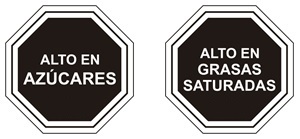
Each serving of zupa piwna contains approximately 310 kcal, 8 g of protein, 15 g of total fat (6 g of saturated fat), 120 mg of cholesterol, 25 g of carbohydrates, 12 g of total sugars and 180 mg of sodium.
Ingredients
- 1 liter of craft beer
- 5 cloves
- 3 egg yolks
- 3 tablespoons of brown sugar
- 1 cup of Polish curd cheese
- ½ cup of sour cream
- Ground cinnamon
Preparation
- Place the 3 egg yolks and sugar in a medium saucepan, mixing for a couple of minutes until the mixture turns a bright color, adding the sour cream while stirring. Keep over low heat.
- Once the cream is hot, add the beer, cloves, and a teaspoon of ground cinnamon. Heat the mixture carefully; the soup will begin to thicken. Watch until it reaches a medium consistency, then turn off the heat.
- Cut the curd cheese into small pieces. Set out some bowls and place the cheese at the bottom. Pour the soup into the bowls, making sure to leave enough space at the top to add rye bread croutons when serving.
2. Medieval “biersuppe” recipe
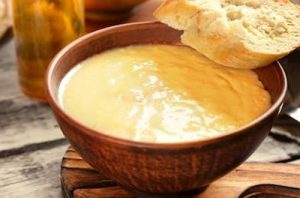
A delicious traditional German beer soup. There are several variants of this recipe, but the version we present below is without doubt one of the most popular.
Preparation: 30 minutes
Cooking: 30 minutes
Servings: 4 people
Nutritional information
Each serving of biersuppe contains approximately 340 kcal, 9 g of protein, 18 g of total fat (8 g of saturated fat), 95 mg of cholesterol, 30 g of available carbohydrates, 6 g of total sugars and 320 mg of sodium.
Ingredients
- 700 ml of craft beer
- 400 g of diced potatoes
- 100 g of sliced mushrooms
- 100 g of sliced leeks
- 100 ml of heavy cream
- 70 g of raw ham (prosciutto)
- 1 onion, thinly sliced
- 1 egg yolk
- 1 clove of garlic, minced
- 2 tablespoons of butter
- Lemon juice
- Fine salt
- Black pepper
- Fresh chopped parsley
Preparation
- Place the sliced mushrooms in a medium bowl and pour lemon juice over them. In a medium saucepan, melt the butter and sauté the ham, onion, garlic, and mushrooms, setting some aside for garnish.
- Add the leek rings, diced potatoes, and beer. Season with salt and pepper, stir, and cook over low heat for 35 to 40 minutes.
- Once cooking is complete, turn off the heat and add the cream and egg yolk. Stir gently. Serve topped with chopped parsley and the reserved mushrooms as garnish.
Did you know?
During the Middle Ages, beer was so fundamental to the daily diet of northern Europe that it was even included in the school menus of monasteries, where children and novices consumed beer soup as a regular breakfast — as it was considered safer than water and provided essential calories in times of scarcity.
References
- Unger, R. W. (2004). Beer in the Middle Ages and the Renaissance. University of Pennsylvania Press.
- Scully, T. (1995). The Art of Cookery in the Middle Ages. Boydell Press.
- Nelson, M. (2005). The Barbarian’s Beverage: A History of Beer in Ancient Europe. Routledge.
- Dembińska, M. (1999). Food and Drink in Medieval Poland: Rediscovering a Cuisine of the Past (M. Thomas, Trans.). University of Pennsylvania Press.
- Hagen, A. (2006). Anglo-Saxon Food and Drink: Production, Processing, Distribution and Consumption. Anglo-Saxon Books.
Recommended
- Amanita Muscaria: The Psychedelic Mushrooms Behind the Santa Claus Legend
- Beer Consumption and Cholesterol Levels: Effects on Your Cardiovascular Health