
This post is also available in:
 Español
  Português
The Eleusinian Mysteries still constitute a topic based on fragmentary sources of information, giving rise to great controversy among historians who work based on complex assumptions while trying to unravel the mystery of this ancient tradition.
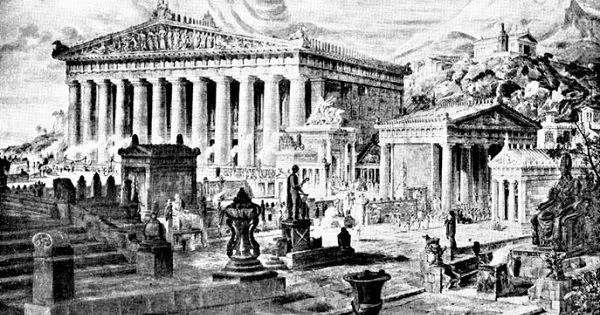

Although we lack explicit descriptions of what occurred inside the Telesterion, archaeological findings at the sacred site, including votive inscriptions, remains of ritual vessels, and architectural structures, offer indirect clues about the logistics and symbolism of the cult.
Furthermore, scattered references in classical texts, such as the speeches of Isocrates or the comedies of Aristophanes, allow us to partially reconstruct the social and religious framework in which the rites developed.
However, the deliberate absence of doctrinal records or liturgical manuals reinforces the hypothesis that knowledge was exclusively experiential and oral, transmitted only at the moment of initiation.
The complete details surrounding the acts and rituals that took place during the celebration of the mysteries were sealed by the initiate’s oath of secrecy, which is why they have eluded our knowledge.
What do we know about the Eleusinian Mysteries?
Although modern historians still debate the different aspects related to these mystical rituals, some general ideas are commonly accepted, having reached us through the written testimonies of the initiates themselves.
In ancient Greece, the city of Eleusis, located west of Athens, became the most important religious center of the pagan world of its time.
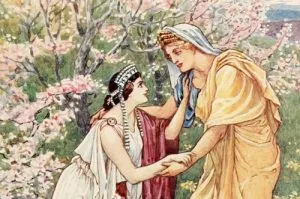
According to ancient belief, as narrated in the Homeric Hymn, Demeter, goddess of agriculture, stopped in Eleusis to rest while traveling in search of her daughter Persephone, who had been abducted by Hades.
There, Demeter ordered a temple and an altar to be built in her honor. After the joy of the goddess’s reunion with the lost Persephone, Demeter gave instructions to the authorities of Eleusis on how to conduct her rites. The Eleusinian cult, therefore, was supposedly taught directly by the goddess Demeter herself.
The divine legitimacy of the rite not only conferred spiritual authority on the cult but also guaranteed its immutability over the centuries.
Unlike other Greek festivals subject to political reforms or local adaptations, the Eleusinian Mysteries remained under the hereditary custody of two priestly families, the Eumolpidae and the Kerykes, whose authority dated back to mythical times.
This institutional continuity, combined with the backing of the Athenian state from the 6th century BC, turned Eleusis into a pan-Hellenic sanctuary of the highest order, comparable in prestige to the Delphic oracle, though with a deeply personal and transformative orientation.
Phases of the ritual and the use of “kykeon”
We know that different levels of initiation took place and that there were three different categories of knowledge: Drómena (what was represented), Deiknúmena (what was shown), and Logómena (what was explained).
The Eleusinian Mysteries were divided into two parts that took place at different times of the year: the “Lesser Mysteries,” a preliminary initiation involving purification celebrated at Agrae (a suburb of Athens) during spring, and the “Greater Mysteries” in Eleusis, which would take place in autumn at the end of September, for those already purified in the spring rites.
Participants would spend a certain number of days in Athens preparing for this second part of the cult.
It must be noted that the duration and frequency of these celebrations continue to be the subject of heated debate among some historians to this day.
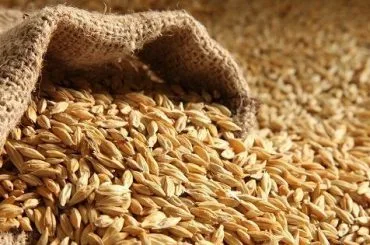
An essential part of the Eleusinian rites was the consumption of a beverage called “kykeon,” an infusion made from sacramental water, barley, and mint.
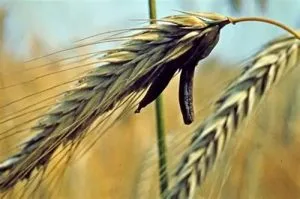
It has been suggested that “kykeon” may have contained the ergot fungus (Claviceps purpurea) in its composition, possibly mixed with other hallucinogens, which would thus have produced an intense collective psychedelic experience in the initiates, aiding in their transformation.
After drinking the “kykeon,” the initiates entered the Telesterion, a space resembling an underground theater, where the secret phase of the ritual took place.
Historians believe that this part of the rite constituted a symbolic representation of the death and subsequent rebirth of Persephone.
Possible meanings of the festivities
It is believed that the meaning of these festivities revolved around the symbolic representation of Persephone’s search by her mother, Demeter.
A widely accepted theory is that Demeter and Persephone symbolize life, death, and even immortality; that these symbols gave the initiate confidence to face death and the promise of bliss in the dark realms of Hades.
Whatever occurred inside the Telesterion, those who entered emerged the following morning radically transformed.
According to studies carried out by George Mylonas, the growing popularity of this cult led to the expansion of the original temple of Demeter in Eleusis.
In those days of antiquity, Mylonas explains:
People from all corners of the civilized world, men, women, and children — free men and women unstained by crime — even slaves, aspired to be initiated into its mysteries and came massively every year to the sanctuary of Eleusis. Not only simple peasants, but even political leaders and intellectuals were eager to take part in the rites.
But to be able to participate in the Greater Mysteries, initiates were obliged first to go through the preliminary phase of the ritual, the purification prescribed by Demeter.
A famous passage from Aristotle regarding the initiates of the Mysteries points out that those individuals were dignified not so much because they learned something new (mathein), but because they suffered or experienced (pathein) something related to the process of transformation, as Nancy A. Evans explains well.
The main determining factor for participation in this powerful experience was access to resources, as it was open to anyone free of crimes.
Every initiate had to buy piglets and pay 15 drachmas to the priest to cover the expenses of the great civic sacrifices on the first and last days of the festival.
Sex, age, ethnic origin, and social position—citizen, metic, or slave—played a role in Eleusis different from practically any other type of pan-Hellenic cult experience.
Distinguished initiates at Eleusis
Plato, an initiate of the Eleusinian Mysteries, speaks of them in his dialogue “Phaedo” about the immortality of the soul, stating:
Our mysteries had a very real meaning: he who was purified and initiated would live with the gods.
Joshua J. Mark points out that Plutarch, also an initiate, wrote about them:
Because of these devout and sacred promises given in the mysteries, we adhere firmly to the unquestionable truth that our soul is incorruptible and immortal. When a man dies, it is like those who have been initiated into the mysteries. Our whole life is a journey through tortuous, dead-end paths.
Plutarch continues:
At the moment of leaving it (life), we are assailed by terror, stupor, trembling fears. It is then that a light comes out to meet us, pure meadows receive us, songs, dances, and holy apparitions.
Cicero praised the mysteries, writing:
Nothing is higher than these mysteries […] they have not only shown us how to live joyfully, but have also taught us how to die with hope.
In the words of Waverly Fitzgerald:
It was said of those who were initiated at Eleusis that they no longer feared death, and it seems that this myth confirmed the cyclical view of life that constitutes the center of pagan spirituality: death as part of the cycle of life, always followed by rebirth.
This cyclical approach contrasted radically with the Homeric vision of Hades as a gloomy, static realm, inhabited by shadows without full consciousness.
The Mysteries offered, instead, a dynamic cosmology in which death was not an absolute end but a necessary transition to a new form of existence. This promise was not merely metaphysical; it had ethical and communal implications.
By symbolically experiencing the loss and recovery of Persephone, initiates internalized a narrative of hope that strengthened their commitment to justice, piety, and human solidarity.
It is no coincidence that figures like Socrates, although it is unknown whether he was initiated, expressed similar ideas about the immortality of the soul and post-mortem reward for the just.
The end of the Eleusinian Mysteries
During the 5th and 4th centuries BC, the Eleusinian Mysteries quickly reached the status of the most important mystery cult with the largest influx of devotees in the Greek-speaking world, a position it maintained throughout antiquity until Emperor Theodosius decreed edicts against mystery cults at the end of the 4th century AD.
The final blow came in the year 396 AD, when the Gothic general Alaric sacked Eleusis during his invasion of Attica.
Although the cult had already been officially banned by Theodosius in 392 AD as part of his campaign to impose Nicene Christianity as the sole religion of the Empire, the physical sacking of the sanctuary marked the irreversible collapse of its ritual infrastructure.
The surviving priests, deprived of income, state protection, and pilgrims, could not keep the oral tradition alive. With them, the unbroken chain of transmission that, according to legend, dated back to Demeter herself, was extinguished.
The destruction of Eleusis symbolized the end of a spiritual era that had offered existential comfort to generations for over a thousand years.
Historians positively know that those who participated in the Mysteries changed forever in a positive way and ceased to fear death.
The initiates returned from their pilgrimage to Eleusis joyful and happy, full of hope for a better life in the world of shadows, but as Mylonas points out,
The ancient world has kept its secret very well, and the Eleusinian Mysteries remain unrevealed.
Frequently Asked Questions (FAQ)
1. What role did the Telesterion play?
The Telesterion was the central building of Eleusis, where the most sacred and secret part of the ritual took place. It functioned as an enclosed space, similar to a theater, in which initiates witnessed or experienced the final revelation of the mysteries, symbolizing spiritual death and rebirth.
2. Were there punishments for revealing the mysteries?
Yes, revealing the secrets of the Mysteries was punishable by death or exile. The most famous case is that of the orator Aeschines, accused of having revealed details of the cult, and that of the philosopher Diogenes of Apollonia, whose execution is believed to be related to the transgression of this secrecy.
3. What did the myth of Demeter and Persephone symbolize?
The myth of Demeter and Persephone represented the cycle of the seasons, the fertility of the earth, and the promise of life after death. For initiates, the story offered spiritual guidance on suffering, loss, renewal, and the immortality of the soul.
4. How long did the Greater Mysteries last?
The Greater Mysteries lasted approximately nine days. They included processions, fasts, ritual purifications, sacrifices, the consumption of kykeon, and finally, the secret ceremony in the Telesterion. Each stage symbolized a spiritual transition for the initiate.
5. Why are they considered one of the foundations of Western spirituality?
Because they offered a transformative mystical experience that profoundly influenced thinkers like Plato and established a direct relationship between rite, philosophy, and the immortality of the soul. Many elements of Western mysticism, even early Christianity, show parallels with this ancient initiatory tradition.
6. Is ergot a precursor to LSD?
Yes. LSD (lysergic acid diethylamide) was synthesized in 1938 from compounds derived from ergot, a parasitic fungus scientifically known as Claviceps purpurea. This fungus contains ergoline alkaloids, such as ergotamine, from which lysergic acid, the base component of LSD, can be extracted.

Recommended
- Joseph L. Owades, the biochemist who invented light beers
- Negroni: History and tips for preparing a fascinating cocktail