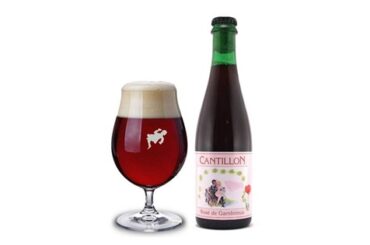
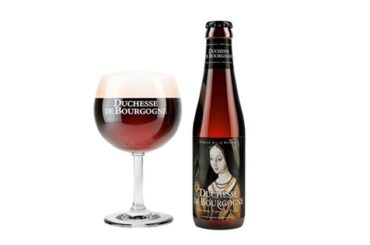
This post is also available in:
 Español
 Português
 Français
The tulip glass is very similar to the snifter, but larger, with a longer stem and a curve that flares out at the top, ideal for full-bodied, aromatic and complex beers.
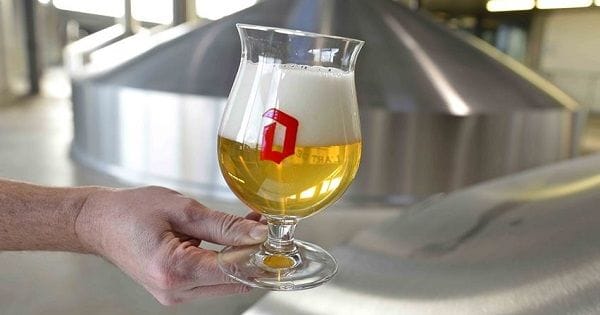
The tulip glass has its roots in the Belgian brewing tradition, where it was designed to enhance the sensory experience of top-fermented ales.

Its evolution responds to the need to balance looks and function when serving complex beers.
Shape and Serving
The shape of the tulip glass encourages bubbles, retains aromas, concentrates flavors and helps form a thick layer of foam.
To make the most of these advantages, the key is to pour the beer in two stages, first a partial fill to release aromas and then topping up the glass at a controlled angle that preserves the foam.
This method lets the volatile compounds concentrate in the upper part of the glass.
It has a bulbous body, shaped to sit easily in the hand, with an upper section that narrows to hold the foam and then widens again so your lips can rest and you can drink comfortably. Holding it by the stem helps preserve the right serving temperature.
Capacity and Use
Its usual capacity is 390 ml (13 oz), enough to serve a standard bottle of beer topped with a generous head.
It also makes swirling easier, the gentle movement of the liquid that releases aromas.
Thistle and Teku Variants
One variation of the tulip glass is the thistle glass, modified to resemble Scotland’s national flower and used especially for serving Scotch Ales.

Another related glass is the Teku, an angular hybrid between a tall wine glass and a tulip, designed for tasting and usable with any beer style.
While the thistle prioritizes Scottish tradition, the Teku aims for precision in delivering aromas.
Choosing the style should take into account not only compatibility with the shape of the glass, but also the intensity of the aromas and the structure of the beer.
Beers with phenolic or fruity profiles benefit from the aromatic concentration this glass allows.
Care and Maintenance
How you care for a tulip glass directly affects how it performs. Always wash it by hand with warm water and mild soap, avoiding scourers that could scratch the glass.
Dry it with a lint-free microfiber cloth and store it upright to protect the rim, which is key to how the beer feels when you drink.
Suggested Styles
- American Double / Imperial IPA
- American Wild Ale
- Belgian Dark Ale
- Belgian IPA
- Belgian Pale Ale
- Belgian Strong Dark Ale
- Belgian Strong Pale Ale
- Bière de Garde
- Flanders Oud Bruin
- Flanders Red Ale
- Gueuze
- Fruit Lambic
- Quadrupel (Quad)
- Saison / Farmhouse Ale
- Scotch Ale / Wee Heavy
Frequently Asked Questions (FAQ)
1. What is the ideal serving temperature for beers in a tulip glass?
It depends on the style, but as a general rule Belgian ales and other complex beers do well served between 10 and 14°C (50 and 57°F). Lower temperatures can mute aromas, while too much warmth brings out the alcohol. The tulip shape helps hold that range when you hold the glass by the stem.
2. Can I use a tulip glass for drinks other than beer?
Yes, although its design is optimized for beer, it also works well with aromatic cocktails such as the Brandy Alexander or with spirits that benefit from concentrated aromas.
3. What is the difference between a tulip glass and a Teku?
The tulip has a rounder body and a rim that flares outward, while the Teku has a more angular profile. The Teku was designed with advice from tasting experts to offer greater precision in delivering aromas, while the tulip prioritizes tradition and versatility.
4. How does the material of a tulip glass affect the tasting experience?
Thin, clear glass is ideal because it does not interfere with temperature or leave residual flavors. Some leaded crystal versions can offer more brilliance but require more care. Avoid plastic or thick glass copies, since they reduce the tactile and thermal perception the tulip aims to enhance.