Andy Parker, head brewer and manager of the barrel program at Avery Brewing Co. (Boulder, Colorado), provides 5 tips on how to properly age beers in barrels.
Craft and independent brewers dedicate a great deal of time, effort, and resources to making the best beer possible, but all of this hard work can be ruined in the time it takes the beer to travel from the keg to the pint.
Why is a slice of lemon placed on the neck of clear glass beer bottles and not on others? It is a mystery that has never really been clear until now.
The term Radler means cyclist in German. As we delve into its history, the origins of these beers date back to 1900, as it may have been created at a bicycle club at the end of the 19th century.
Fresh hops generally refer to hops that are used immediately after drying, while wet hops never reach this point in the process.
Many beer enthusiasts are often unaware that beer styles were originally highly dependent on the geology of the area where the water for brewing was obtained.
Beer and cheese pairing offers an enormous world of sensations, mainly due to their common points such as yeasts, earthy nuances, toasted aromas, and floral or fruity notes.
Things have changed a great deal in a world predominantly dominated by men, as Trappist Abbey breweries have been for the last few decades.
The acronym IBU (International Bitterness Units) corresponds to the international measurement unit of bitterness and represents the iso-alpha-acids dissolved in beer, where each IBU is equivalent to one milligram of iso-alpha-acid per liter of beer.
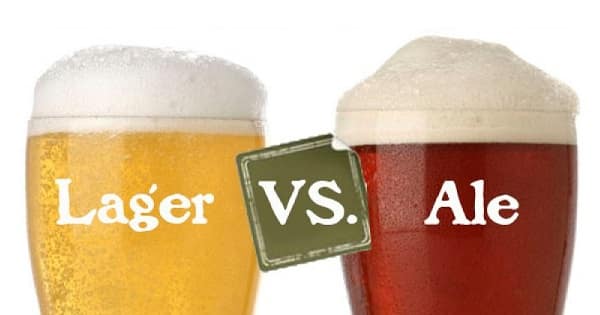
Today it is very common to wonder what the real difference is between beer types and beer styles, whether industrial or craft, because while the original idea is shared, it is the latter that has clearly begun to impose itself in recent decades among brewers and the market in general.
Chile has one of the finest terroirs in the world, thanks to its long territory, which has allowed it to develop a strong diversification of grape varieties and, therefore, a powerful wine presence at a global level.
The origins of the snifter glass date back to 18th-century France, gradually refined by European glassmakers to capture and concentrate the complex aromas developed during prolonged barrel aging.