
This post is also available in:
 Español
  Português
In the early days of history, there were no hierarchies or private property — just a vast savanna to explore and a new world to discover with seemingly endless natural resources; such were the beginnings of what we today understand as humanity.


Communities were fraternal; relationships were erotic, open, friendly, and uninhibited — such were the times of the first Homo sapiens to walk the planet.
It is possible that in many important historical events, beer was merely a spectator; however, it is also fascinating to see why it played such a pivotal role in other moments, even to the point of altering their course.
1. Adaptive Advantages
According to Darwin’s theory of evolution, the difference between the first proto-humans and other mammals is that ten million years ago, a common ancestor shared with gorillas and chimpanzees underwent a mutation in the ADH4 enzyme that allowed them to digest alcohol without major problems.
This provided an enormous adaptive advantage, as the fermentation of fallen fruit gave early humans a greater supply of nutrients — and, why not, a bit of fun.

Later, the mastery of fire gave humans the ability to control grain mashing and, as a result, eventually develop processes for producing alcohol.
This is when we began paying attention to grain and, consequently, when sedentarization occurred — driven by the need to cultivate more cereal to increase beer production.
According to studies conducted at the excavation of the first known large settlement, Göbekli Tepe in Turkey, humans were already capable of fermenting beer 11,600 years ago.
Throughout the world, agricultural societies had worse health conditions than hunter-gatherers: lack of sanitation, cleanliness, disease, little physical activity, wars. And yet, humanity did not abandon its settlements.
2. Sedentarism and Monogamy
In this way, man entrenched himself in his home, built grain stores, and invented private property — including within it his wife and children, who were necessary for working the fields and defending territory. He hierarchized society and created the concept of the family, all while continuing to drink beer.

And of course, all of this had an impact on sexuality — primarily in the establishment of monogamy.
According to the studies of historian Rod Phillips:
Humanity is expelled from the Neolithic paradise where there is no sin — where people live happily without private property, without shame of the human body, without food problems, in a supportive, selfless, and fraternal social system — and all of it lost to knowledge, civilization, egocentrism, materialism, sin, private property, and war.
3. From Nomads to Farmers
It was not until nomadic societies decided to cultivate grain that everything changed — a commercial and dietary revolution was about to take place.
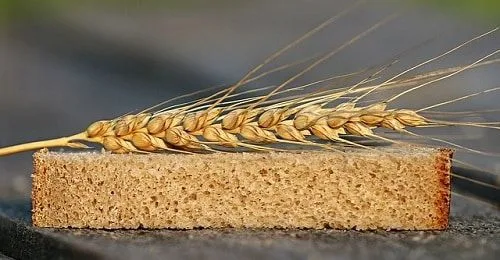
Beer played a very important part in this historical process, as barley was used as an essential food in the diet of the world’s first settled populations.
4. The Code of Hammurabi
Maintaining the quality of beer has always been of the utmost importance to humanity, and the Code of Hammurabi is evidence of this. On this great stone containing the principles of law, order, and punishment of ancient Mesopotamia, there was a provision stating that beer must be regulated by law.

Those were difficult and extreme times, and civilizations like the Babylonians followed the Code of Hammurabi to the letter — which is why disputes over who brewed the best beer were common.
However, if a master brewer did not do his job properly, or if the flavor, aroma, and consistency of the beer failed to satisfy consumers, the punishment was to drown him in his own drink.
As one might expect, there were many tasters — but very few dared to brew.
5. Louis Pasteur and Yeast
In the history of beer, one need not go back centuries of physical and social evolution, nor establish extreme quality laws — Louis Pasteur is a perfect example.

Pasteur was a French microbiologist who discovered the role of yeast in fermentation and also designed the process known as pasteurization — a procedure that involves heating a liquid to 80°C (176°F) so that the heat kills most bacteria and microorganisms harmful to human consumption. Common today for milk, it was first tested on beer.
6. Roosevelt’s Presidential Campaign
Beer has also been used for political purposes. In the early 1930s in the United States, the famous “Prohibition” was living through troubled times, on the verge of disappearing — in large part thanks to the presidential campaign of Franklin Delano Roosevelt.
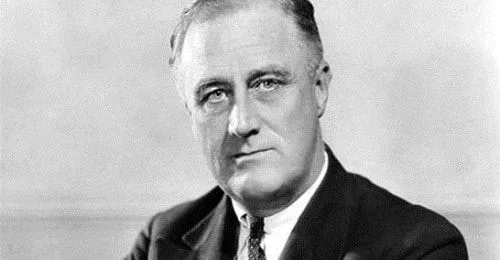
Roosevelt, in his quest to lift a country out of its great economic collapse in 1929, promised to repeal this law, so that beer-loving American citizens would not be driven underground.
As we have seen, the moments in which beer has shaped the course of humanity are countless — scientific and cultural alike, some more significant than others, but all of them profoundly influencing our evolution as a society.
[amazon box=”8416223416″]
10 Curious Facts About the History of Beer
The history of beer spans thousands of years, and today it is the third most popular drink in the world — behind water and tea — and the most widely consumed alcoholic beverage.
Keep reading for a concise look at 10 historical facts about brewing that will make your drink taste even better!

1. The Importance of Women
It was not until the discovery of the malting process — reportedly by the Mesopotamians between 2000 and 3000 BC — that beers began to contain significant amounts of alcohol.
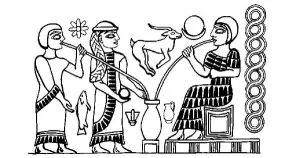
At that time, brewing beer was a noble profession in the hands of elite women or priests. Some types of beer were even reserved for religious ceremonies.
2. Beer Bread
The earliest documented beers date back 5,000 years, though they may have tasted quite different from the beers we know today.
The brewing process used by the Sumerians in Mesopotamia resulted in what we now call beer bread: half-baked bread soaked in water to create a fermented drink, often flavored with honey and herbs.
Since it shared the same basic ingredients as bread, it was considered equally nutritious. Some ancient pottery findings suggest the brewing process dates back even further — some 7,000 or more years ago.
3. Ancient Egypt
In Ancient Egypt, beer was part of the daily diet. Tombs sometimes reveal stone and wooden depictions of the brewing process.
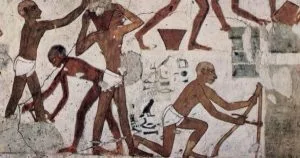
Analysis has concluded that the Egyptians were familiar with different types of beer made from different cereals. In addition, beer was often used in medicines and served religious purposes.
4. Beer and Tea
In the 18th century, during the Enlightenment, Europe was an anti-alcohol society. With the rise of coffee and tea, beer experienced a slight decline.
In the United States, this devastation was far greater due to Prohibition (1920–1933), when consuming alcoholic beverages was illegal — followed by the Great Depression.
American breweries had considerable difficulty recovering from those difficult years.
5. Germany
The Romans, who preferred wine, pushed the brewing process further north.
The Germans were the ones who found a way to move beyond bread-making and brewed beer from germinated and dried grains, which they then fermented.
6. The Middle Ages
In medieval Europe, the brewing process was largely reserved for monks — the most educated segment of society.
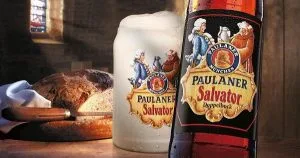
However, beer was a typical drink consumed by all social classes for its nutritional value and because it was generally much safer than drinking contaminated water.
7. Industrialization
The Industrial Revolution had a huge impact on beer production. With the invention of the steam engine in 1765, industrialization reached beer.
The addition of the thermometer (1760) and the hydrometer (1770) made the brewing process increasingly efficient, turning beer into a mass-market product.
8. Beer in Buckets
The first bottled beer was sold in 1850. Before that, people would carry buckets known as “growlers” to taverns to have them filled. Some brewpubs still maintain this old tradition today.
9. Beer Marketing
In the 20th century, advertising and marketing played a significant role in the growing popularity of different types of beer.
At sales and auctions of brewery memorabilia, you will always find many advertising posters that define this era — from brewery signs from the 1930s to typical promotional mirrors from the 1980s.
10. Weihenstephan
The world’s oldest brewery has been producing beer for nearly 1,000 years. You can find the Bayerische Staatsbrauerei Weihenstephan on the same Weihenstephan hill in Germany, where beer has been brewed since 1040!
Does your beer suddenly have a better aroma and more intense flavors? The history of beer is just as fascinating as that of wine.
Frequently Asked Questions (FAQ)
1. What genetic mutation allowed early human ancestors to consume alcohol, and what advantage did it provide?
Ten million years ago, a common ancestor shared with gorillas and chimpanzees underwent a mutation in the ADH4 enzyme that allowed them to digest alcohol. This conferred an adaptive advantage by enabling them to obtain additional nutrients from fermented fruit fallen from trees.
2. What is the connection between beer and the shift from nomadism to sedentarism?
The need to cultivate more cereals to increase beer production, combined with the control of grain mashing through the mastery of fire, drove the sedentarization of humanity and the creation of the first agricultural settlements some 11,600 years ago.
3. How did the Code of Hammurabi punish master brewers who did poor work?
In ancient Mesopotamia, if a beer failed to satisfy consumers in terms of flavor, aroma, or consistency, the law dictated that the responsible master brewer was to be drowned in his own drink.
4. What was Louis Pasteur’s discovery concerning beer, and what process did he design?
Louis Pasteur discovered the fundamental role of yeast in fermentation and designed pasteurization — a procedure that eliminates harmful microorganisms by heating the liquid to 80°C — which was first tested on beer.
5. What was the “beer bread” made by the Sumerians thousands of years ago?
It was an ancient brewing method consisting of half-baked bread soaked in water to produce a fermented drink, often flavored with honey and herbs, and considered a highly nutritious food.

Recommended
- Why do some people get drunk faster than others?
- The best selection of natural medicine recipes with beer, hops, and barley