
This post is also available in:
 Español
  Português
  Français
It’s a day or two after you pitched the yeast into your latest homebrew, and there are already signs of fermentation in the form of a foam called “krausen”.
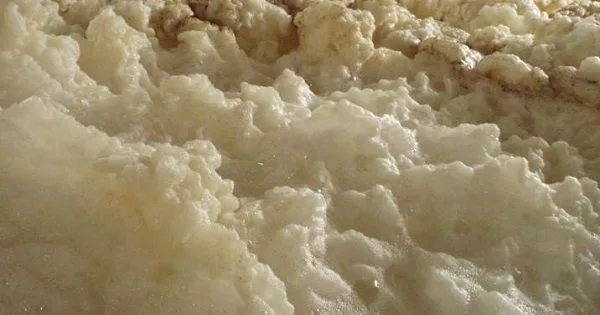

A few days later, a rocky foam nearly fills the headspace in the fermenter as the yeast works its way through its most active period, known as high krausen.
What is krausening?
German lager brewers traditionally took wort at high krausen from a freshly fermenting batch and added it to a fully fermented batch of the same recipe.
This process, known as krausening, introduces fresh, healthy yeast to pick up where the primary yeast left off after going dormant because of the temperature.
Uses of krausening in brewing
Under the German beer purity law (Reinheitsgebot), sugars not derived from malt were not allowed, so brewers needed alternative ways to supply a small extra dose of sugar for the yeast to convert.
1. Carbonation
The solution was to add high krausen wort from the same recipe to an already fermented batch, providing the sugar needed for bottle carbonation.
The same technique can also be used to carbonate kegs naturally. Some brewers add unfermented wort, called Speise or gyle, as priming sugar. Adding active yeast through krausening, on the other hand, was essential for carbonating lagers.
2. Restarting fermentation
At its core, all krausening is a way of activating fermentation, and the process can be used both to start and to restart a fermentation.
Using krausening to start a fermentation is essentially the same as making a starter, where the entire starter would be added to the wort at the peak of its activity.
If you are dealing with a stuck fermentation or need to finish a high gravity beer, krausening adds more healthy yeast that is up to the task.
Krausening can also be used to add more yeast to a finished lager that is ready for conditioning and carbonation, when the original yeast has gone dormant because of cold fermentation temperatures.
3. Cleaning up off-flavors
While carbonation was the main goal of krausening in traditional German lager brewing, it was also recognized as a way to clean up some of the qualities associated with off-flavors found in young beer by helping the maturation process along.
It can also help with flaws such as diacetyl and acetaldehyde.
Adding more yeast through krausening is also said to help reduce oxidation in batches that may have been aerated by accident.

4. Practical applications for brewers
For a homebrewer, krausening is not always a practical procedure, since it is much simpler to just mix up a priming sugar solution and add it to the uncarbonated beer instead of saving or brewing more wort for this purpose.
Of course, if you really want to recreate a historic German beer or try out a different brewing technique, this is a great opportunity. If you decide to use krausening, keep in mind that the risk of contamination is high.
Clarity can also become an issue, since homebrewers don’t usually have the filtration methods that commercial brewers have available.
Even so, krausening has benefits that can be tempting. If you use it to carbonate bottled beer, especially smaller batches, you can be sure you are not diluting your beer with sugar water.
On top of that come the benefits already mentioned for cleaning off-flavors out of the beer and preventing the effects of oxidation from air.
To work out how much krausen wort to add, a rule of thumb is that the addition should raise the beer’s gravity by about three points (BeerSmith, 2010). Expressed in liters, the formula is as follows.
[math]V_{\text{wort}} = V_{\text{beer}} \times \dfrac{3}{P}[/math]
Here [math]P[/math] is the gravity points of the krausen wort, that is, the thousandths above 1.000. For example, for 20 liters of beer and a wort with a gravity of 1.060, the calculation works out as follows.
[math]V_{\text{wort}} = 20 \times \dfrac{3}{60} = 1 \text{ liter}[/math]
Traditionally, the wort is added at its peak of activity, right before bottling or kegging the beer, which is then left to carbonate for one or two weeks in a cool, dark place.
Frequently Asked Questions (FAQ)
1. What is the risk of contamination when krausening, and how can you reduce it?
The main risk is that bacteria such as Pediococcus or Lactobacillus get into the finished beer while the krausen wort, which was already boiled like any other wort, is being handled and transferred. The best way to reduce that risk is to use clean, sanitized equipment for the transfer, make sure the yeast in the active wort is healthy and dominant, and keep the pH of the finished beer low, which inhibits most contaminants.
2. Can I use active wort from one style (e.g. Pale Ale) to krausen a different style (e.g. Stout)?
Technically it is possible for carbonation, since the krausen wort supplies the sugar needed and the active yeast ferments it. It is not the recommended practice or krausening in the strict sense, because the traditional method calls for the same wort and the same yeast strain to preserve the sensory profile. If you use a different strain, you could introduce off-flavors or change the ester profile of the final beer.
3. If my fermentation stalled halfway, is krausening more efficient than simply adding rehydrated dry yeast?
Adding healthy, rehydrated dry yeast is usually the simplest, fastest and most predictable way to restart a stuck fermentation. Krausening is useful, but it requires having a second batch actively fermenting, which is logistically complex. Krausening becomes the better option when the secondary goal is to clean up diacetyl or acetaldehyde at the same time as the restart.
4. What is the fundamental difference between krausening and adding priming sugar (Speise) for carbonation?
Speise is simply the addition of unfermented wort (sugars) for carbonation, acting as priming sugar. Krausening is the addition of the same wort at its high krausen stage, which actively introduces healthy yeast and active biomass along with the sugars. Krausening therefore has a double benefit, carbonation and active cleanup of off-flavors, while Speise only provides the sugar.
5. Is krausening useful for preventing oxidation in homebrews that were accidentally aerated?
Yes, it is one of its recognized benefits. The healthy, active yeast introduced with the krausen consumes residual oxygen. The yeast uses this oxygen to build membrane sterols, acting as a biological oxygen “scavenger”, which reduces the potential for oxidation that leads to cardboard or sherry flavors in the finished product.

Recommended
- Louis Pasteur, the father of modern brewing microbiology
- How to make craft beer at home step by step: Everything you need to know