
This post is also available in:
 Español
Chill haze is an aesthetic phenomenon in beer production caused by protein-polyphenol complexes. It is measured using nephelometers or turbidimeters that quantify light scattering in NTU or EBC units, allowing visual clarity to be evaluated according to the beer style being brewed.
Unlike permanent haze, this process is reversible through temperature changes due to its weak molecular bonds. Technical prevention includes precise pH control during mashing to manage protein degradation, ensuring colloidal stability and visual quality of the final product.
Chill haze is a widely studied phenomenon in brewing science and presents itself as one of the main challenges in the production of clear beers.

The brilliance and transparency of beer are aesthetic characteristics that significantly contribute to the perception of quality, particularly in styles where this is a category feature. However, chill haze interferes with this desired clarity, generating a hazy appearance when the beer is cooled below approximately 1.6°C (35°F).
Although this phenomenon is reversible upon warming the beer, its appearance can trigger a negative perception in the consumer, making the control and understanding of this haze essential for brewers.
Contenido
- Chemical foundations of chill haze
- Molecular mechanism of haze
- Factors influencing chill haze
- Prevention and control techniques
- How is haze measured?
- Frequently Asked Questions (FAQ)
- 1. What is the crucial chemical difference between chill haze (reversible) and permanent haze (sediment)?
- 2. How does pH control during mashing influence the prevention of chill haze?
- 3. If an unpasteurized beer develops chill haze, does this interfere with safety or only with product aesthetics?
- 4. Why are Nephelometric Turbidity Units (NTU) used instead of directly measuring proteins or polyphenols?
- Recommended
Chemical foundations of chill haze
Chill haze is the result of molecular interactions that occur when certain beer compounds react to low temperatures. These interactions generate the formation of colloidal particles, which are large enough to scatter light and become visible to the human eye, with a size ranging between 0.1 and 1 μm.
Although chill haze disappears when the beer is brought back to room temperature, it can evolve into permanent haze over time, generating sediment in the package.
Molecular mechanism of haze
At the molecular level, chill haze is caused by the interaction between two main groups of compounds in beer: polyphenols and proteins.
Polyphenols, which come from malt and hops, associate with proteins and polypeptides, mainly proline-rich hordeins, to form stable aggregates that scatter light.
These bonds are formed through hydrogen bridges, which are temperature-sensitive, thus explaining the reversibility of the phenomenon.
The relationship between polyphenols and proteins is complex, as these compounds also play important roles in the flavor profile and antioxidant stability of beer.
Therefore, their complete elimination is not ideal, and the challenge is to control their concentrations to reduce haze without compromising organoleptic characteristics.

1. Proteins
The proteins involved in chill haze are mostly low molecular weight and come directly from malt. These proteins, although they represent only a fraction of total proteins, are highly reactive due to the presence of proline.
According to the standards of the European Brewery Convention, approximately 2 mg/l of protein is sufficient to produce a haze of 1 NTU. Furthermore, hordeins, a class of proline-rich proteins, play a key role in the formation of these colloidal aggregates.
2. Polyphenols
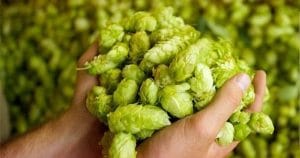
Polyphenols are found in both malt and hops and serve a dual function in beer, contributing on one hand to flavor and antioxidant stability.
But on the other hand, under low temperature conditions, they tend to associate with proteins and form colloidal complexes that scatter light, resulting in visual haze.
Factors influencing chill haze
Although chill haze is an initially reversible phenomenon, prolonged exposure to low temperatures can cause these aggregates to grow and become more stable, resulting in permanent haze or sediment formation.
Factors such as the level of soluble proteins in malt, storage time and temperature, and the presence of certain metals and carbohydrates significantly affect this evolution.

An excess of proteins or polyphenols can predispose beer to more persistent haze, while proper storage and minimization of contaminants in the brewing process can reduce the possibility of sediment formation.
Prevention and control techniques
The brewing industry uses various chillproofing strategies to reduce chill haze without compromising the flavor profile and natural antioxidants of beer.
The selection of quality ingredients is essential, and controlling malt composition and hop dosage helps keep protein and polyphenol levels under control. During the mashing process, furthermore, adjusting pH and enzymatic process temperatures makes it possible to limit the extraction of compounds responsible for haze.
Additionally, post-fermentation treatments, such as the use of clarifying agents or the application of specific filtration, can be effective methods to remove haze precursors. These processes, together, optimize beer stability at low temperatures, improving its appearance for the consumer.
| Factors | Effect on haze | Control methods |
| Low molecular weight proteins (hordeins) | Facilitate haze formation by associating with polyphenols | Selection of low-protein malt, pH control during mashing |
| Polyphenols (from malt and hops) | Interaction with proteins produces colloidal aggregates | Control of hop dosage, use of specific clarifying agents |
| Storage temperature | Low temperatures promote reversible haze formation | Controlled storage, minimization of temperature fluctuations |
| Prolonged storage time | Promotes formation of permanent haze and sediment | Consumption within optimal periods, stability monitoring |
| Residual metals and carbohydrates | Can act as catalysts for the formation of colloidal complexes | Proper filtration and clarification |
Table 1. Causes and solutions of chill haze
How is haze measured?
Haze in beer is measured using a nephelometer or turbidimeter, instruments that quantify the degree of opacity in a sample by measuring the amount of light scattered by suspended particles.
Results are generally expressed in Nephelometric Turbidity Units (NTU) or in Formazine Units (EBC, according to the European system), both recognized standards in the brewing industry.
| Beer style | NTU range |
| Light Lager | 0 – 1 |
| Pilsner | 0 – 1.5 |
| IPA | 1 – 4 |
| Stout | 1 – 5 |
| Weissbier | 3 – 10 |
| Hazy IPA | 10 – 20 |
Table 2. Haze in different beer styles
The beer must be cooled and handled carefully to avoid bubble formation, which could affect the measurement. It should be gently agitated to ensure particles are evenly distributed.
The beer sample is placed in a special glass cuvette, which is inserted into the nephelometer or turbidimeter. These devices are designed to project a beam of light through the sample.
The device measures the amount of light scattered at a specific angle, generally 90 degrees relative to the initial light beam, where the amount of scattered light is directly proportional to the number and size of particles present in the sample.
The nephelometer displays the result in NTU units, while equipment adjusted to European standards expresses it in EBC units. For most clear beers, acceptable haze values are typically less than 1 NTU, while for hazier beers like Hefeweizen or Hazy IPA, values can be significantly higher.
Frequently Asked Questions (FAQ)
1. What is the crucial chemical difference between chill haze (reversible) and permanent haze (sediment)?
The difference lies in the stability of the molecular bond. Chill haze is reversible because protein-polyphenol complexes are held together by weak hydrogen bridges, which break when temperature increases. Permanent haze forms when these aggregates grow, mature, and bond through stronger covalent (chemical) bonds, becoming insoluble and insensitive to temperature changes, resulting in stable sediment.
2. How does pH control during mashing influence the prevention of chill haze?
pH control during mashing is fundamental for the balance of proteins and polyphenols. A slightly lower pH (between 5.2 and 5.4) favors the activity of proteolytic enzymes, which degrade large proteins into smaller polypeptides. By controlling this degradation, the brewer can limit the formation of proline-rich hordeins that are highly reactive with polyphenols.
3. If an unpasteurized beer develops chill haze, does this interfere with safety or only with product aesthetics?
Chill haze (protein-polyphenol haze) is a purely aesthetic and colloidal stability phenomenon that does not affect the food safety of the product. Haze caused by yeast or bacteria can be a sign of spoilage or contamination. However, in a commercial context, reversible haze negatively interferes with the perception of quality and the desired shelf life of clear beers.
4. Why are Nephelometric Turbidity Units (NTU) used instead of directly measuring proteins or polyphenols?
NTU is used because it measures the direct visual effect of particles on light, which is what the consumer perceives. Although polyphenols and proteins are the chemical precursors, measuring them does not directly indicate how much visible haze they will generate. NTU is the standard measurement because it quantifies the light scattering (opacity) caused by already-formed colloidal complexes, offering a relevant metric for aesthetic quality control.