This post is also available in:
 Español
 Português
 Français
Unlike all other Trappist breweries, Orval produces only one variety of beer for the general public, with only 15% of its total production available for export.
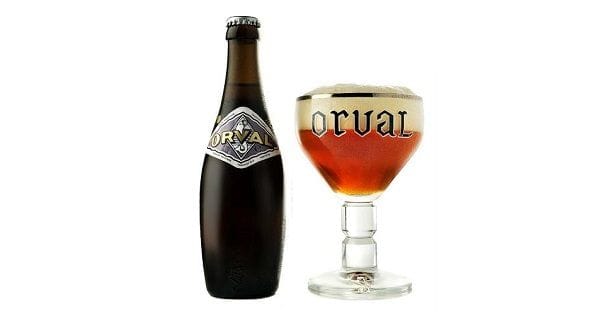
Its second fermentation in the bottle and the use of Brettanomyces shape a dry, complex, and changing profile, where fruity, spicy, earthy, and hoppy notes coexist.

General Information
Name: Orval
Brewery: Brasserie d’Orval
Origin: Florenville, Belgium
Style: Belgian Ale
ABV: 6.2%
IBU: 32
Calories: 186 kcal
Glassware: Tulip, Chalice
Tasting Notes and Impressions
Orval has an intensely aromatic and dry character. Between the first and second fermentation, there is also an additional dry-hopping process through which the beer acquires its pronounced hop aroma and its extra dry flavor.
1. Appearance
Dark gold with coppery tones and slight turbidity, with a clarity that allows appreciating a lively carbonation of fine bubbles in high flow, crowned by a whitish, medium-high foam that settles compact but light, with very good retention and adhesion.
2. Aroma
The aromas follow one another, diverse, fruity, of sour apple and citrus zest, with spicy, floral, earthy notes, of leather and cheese crust, followed by a very soft maltiness in the middle and traces of yeast in the background, which close in a framework of esters that accentuate toward the end of the nose.
3. Flavor
It develops gradually into characteristics that combine sour, citrus, herbal, earthy notes, of leather and humidity, with a somewhat more spicy accent mid-palate, giving way to a soft maltiness that, with touches of caramel, provides enough support for the evolution of a medium but firm bitterness, which closes in a markedly dry finish that then extends to a fruity aftertaste, again herbal, slightly mentholated.
4. Mouthfeel
Medium body, soft structure, with a sensation of effervescence that then evolves toward a slight roughness on the tongue, with a very low alcoholic sensation.
5. Overall Impression
A beer that defines itself. Orval is the expression of a tradition that combines a centuries-old history, a fantastic legend, and a magnificent design to offer us an always unrepeatable experience, where each day is a metamorphosis of its content, leaving in our hands the possibility of deciding when to capture some point of its evolution. It is a multidimensional sensory experience, which requires setting aside prejudices, taking a pause, and allowing the expression of time to speak in the beer. An iconic product of a tradition that, with or without official titles, is undoubtedly a universal heritage of humanity.

Suggested Pairings
Orval is a very versatile Belgian Ale when it comes to pairings, and here we share some recommendations that highlight and complement its complexity of aromas and flavors.
1. Main Dishes
Roast lamb with herbs will complement the dry and spicy profile of Orval, balancing the richness of the meat with the carbonation and acidity of the beer.
2. Cheeses
The earthy and slightly spicy flavors of aged goat cheese will pair very well with the earthy and spicy notes of Orval, ideally accompanied by walnuts and honey.
3. Vegetarian Dishes
A French ratatouille will complement very well with the herbal and spicy notes of Orval, enhancing the flavors of Mediterranean vegetables.
4. Desserts
A homemade apple pie will perfectly harmonize the fruity and spicy touches of Orval, creating a delicious contrast between the sweetness of the pie and the dry finish of the beer.
Frequently Asked Questions (FAQ)
1. Why does the flavor of Orval beer change depending on its aging time?
Unlike other beers, Orval uses Brettanomyces yeast in its second fermentation in the bottle. This makes it a “living” beer that evolves drastically. When young (less than 6 months), it is more bitter and hoppy, while over the years it develops acidic, earthy, and complex notes, losing its initial bitterness.
2. What is the ideal temperature to serve an Orval and appreciate its complexity?
To enjoy its full aromatic palette, Orval should not be served excessively cold. The temperature recommended by the abbey is between 12 and 14°C. If served colder, the nuances of the Brett yeast and fruity esters will be masked by the low temperature.
3. What does the legend of the fish and the ring on the Orval label mean?
The logo represents the legend of Countess Matilda of Canossa, who lost her wedding ring in a spring in the valley. After praying, a trout emerged with the ring in its mouth. She exclaimed: “This is truly a Valley of Gold!” (Val d’Or), from which the name “Orval” and the iconography of its label come.
4. Is it possible to buy “Orval Vert” outside the abbey?
Orval Vert (also called Petit Orval) is a version with lower alcohol content (approx. 4.5% ABV) originally made for the monks’ consumption. Generally, it can only be enjoyed on draft at the café “A l’Ange Gardien”, located next to the abbey in Florenville, and it is not regularly commercialized or exported.
5. How should a bottle of Orval be stored for proper maturation?
For optimal aging, Orval bottles should be kept in a dark, cool place (between 10 and 15°C) and always in an upright position. This allows the yeast sediments to settle at the bottom, facilitating a clean service or allowing the consumer to decide whether to add the lees at the end.

We Recommend
- What Are Base Malts for Brewing Beer? Main Types and Uses
- How to Install a Temperature Controller for Fermenting Beer?