This post is also available in:
 Español
 Português
In the old town of Bamberg, a corner of Upper Franconia steeped in history and declared a UNESCO World Heritage Site, stands Schlenkerla — a tavern that is without doubt far more than a simple beer establishment.
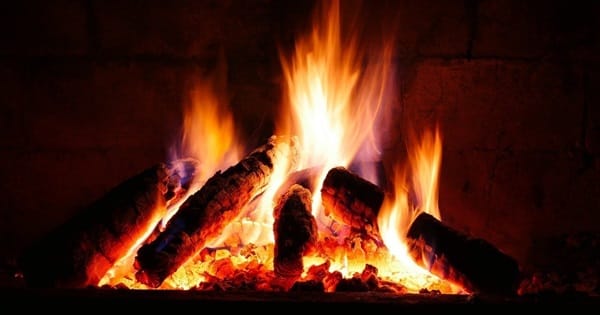
It is the epicenter of the Rauchbier beer style, a variety that has survived centuries of cultural and technological change.

Its walls, blackened by centuries of smoke, and its distinctive medieval façade stand as silent witnesses to a brewing tradition that dates back to 1387.
The Origins of Smoked Beer
In some tourist circles it is mistakenly claimed that Schlenkerla invented smoked beer by accident, when after a fire at the brewery they decided to use the charred malts rather than discard them.
But contrary to this debunked story, Schlenkerla did not invent smoked beer by accident — the real question is who invented beer without the need for smoke.
In ancient civilizations located in warm climates, grains for brewing were probably dried in the sun; however, due to the humid climate of Central Europe and particularly Bavaria, this method was not practical, so drying malt over an open fire was the most suitable option.

The distinctive character of Rauchbier dates back to a time when smoky flavor was not a stylistic choice but an inevitable consequence of the production method. Without this technique, beer production was simply not possible.
However, in 1635 a technological breakthrough marked a turning point when Sir Nicholas Halse patented a “smokeless” kiln in England — an innovation that would soon revolutionize brewing across Europe.
In fewer than two centuries, virtually all German breweries adopted this technology, pushing the ancient smoking technique to the margins of the industry.
It was here that Schlenkerla found its unique purpose: preserving what others had decided to leave behind.
Bamberg as a Stronghold of Tradition
Why did Bamberg, and specifically Schlenkerla, keep this tradition alive when others abandoned it? The answer combines geography, religion and tradition.

Bamberg is strategically situated next to the largest beech forest in Germany, providing direct access to the essential wood for smoking.
Furthermore, until 1804 the city was under ecclesiastical governance, which favored the preservation and continuity of traditional practices, removed from the commercial pressures of modernity.
Schlenkerla, first officially documented in 1405, thus emerged as the guardian of this heritage.
What Is the Origin of the Name Schlenkerla?
It was in the late 19th century that, following an accident, Andreas Graser — the owner at the time — developed a way of walking in which he swung his arms loosely at his sides, a condition referred to in German as “schlenkern” (dangling swing).

Andreas, who was also known for his grumpy character, became the perfect target for a nickname and his customers began calling him “Schlenkerla.”

Years later, when his son Michael took over the business, he decided to adopt Schlenkerla as a registered trademark in order to immortalize this peculiar chapter of family history.
But that was not all: Michael also preserved the ancient tradition of brewing beer with smoked malt, laying the foundations for what Schlenkerla has remained to this day, with each subsequent generation following his example.
The Meticulous Smoking Process
The Schlenkerla brewing process begins with germination, where barley is intermittently soaked in water for approximately one day, allowing for intermittent oxygenation to prevent the grain from suffocating.
The barley is then transferred to germination boxes, where it remains for one week, allowing its initial development.
Next, the distinctive aspect of smoked beer lies in the grain drying process, carried out in a closed kiln for 24 hours. During this time, the grain is exposed to the heat and smoke of beechwood, which imparts its characteristic flavor.

During the cooking stage, a decoction step is also carried out — a traditional process that intensifies flavors and aromas, especially those reminiscent of freshly baked bread.
Once fermentation is complete, the Rauchbier matures for two months in stainless steel tanks (formerly done in wooden barrels) in underground stone cellars.
During that time, gradual cooling from 8°C down to temperatures close to 1°C optimizes turbidity removal and protein stability, avoiding the use of filters.
The result is a smoked beer of unique organoleptic complexity that offers a layered experience from the very first sip, with multiple flavor dimensions that invite enjoyment and reflection.
Its profile is rich and toasty, with a subtly sweet smoothness that combines perfectly with a characteristic smoky note, evoking the flavor of a caramel cookie toasted over an open fire.
As the beer warms up, new savory and meaty nuances emerge — notes of bacon, with a flavorful and balanced finish.
The Future of Smoked Beer
In a beer world dominated by contemporary styles — including endless IPA varieties — Schlenkerla stands as a bastion of tradition.
However, this is not merely about nostalgia, as the brewery continues to modernize. Today it is led by sixth-generation brewer Mathias Trum, adopting sustainable practices ranging from responsible management of the beech forests to upgrading the efficiency of its facilities.
Its commitment to authenticity has ensured that the smoke, far from dissipating into history, remains a vital component of the present-day brewing world.
How to Experience Rauchbier?
For those visiting Bamberg, the experience of drinking a Rauchbier straight from the tap in this historic tavern is a journey into the past and a reminder of how tradition can remain vibrant in a changing world.
In every pint of Rauchbier, Schlenkerla encapsulates centuries of history, technique and passion, ensuring that this unique style remains relevant and cherished for generations to come.

Recommended
- How to grow hops in pots? Everything you need to know
- 5 brewing schools you should know: A journey through their traditions