This post is also available in:
 Español
  Português
Saccharomyces pastorianus, the yeast responsible for producing Lager or bottom-fermented beers, is a hybrid species that emerged from the cross between Saccharomyces cerevisiae (Ale or top-fermenting) and Saccharomyces eubayanus, a cold-tolerant species only discovered in 2011.
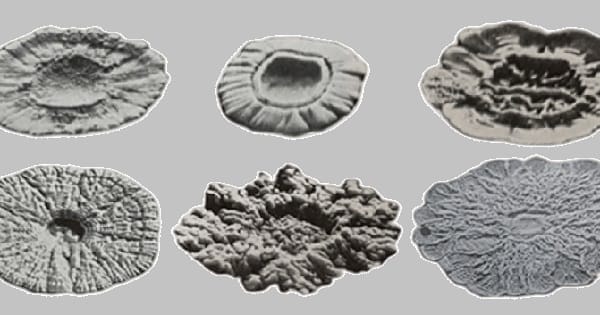
With this in mind, a new study published by FEMS Yeast Research suggests that this hybridization could have occurred at the beginning of the 17th century, about 200 years earlier than previously thought, from the colonization of Saccharomyces cerevisiae yeasts in an environment where Saccharomyces eubayanus yeast was already present and not the other way around as previously proposed.
The study indicates that this could have happened from a top-fermenting yeast originating from the Schwarzach brewery in Einbeck, Germany, and that the hybridization into Saccharomyces pastorianus would have occurred specifically at the Hofbräuhaus brewery in Munich between 1602 and 1615, a period during which its facilities simultaneously produced both top-fermented wheat beer and bottom-fermented brown beer.
Top Fermentation vs. Bottom Fermentation
In general terms, today we consider top-fermenting yeasts (Ale) to be those that work at the top of the tank and typically ferment at temperatures ranging from 15-23°C (59-73°F).
Bottom-fermenting yeasts (Lager), on the other hand, work at much lower temperature ranges, from 7-12°C (45-54°F), carrying out their work at the bottom of the tank.
The Origin of Lager Yeasts
The history of beer dates back to the origins of civilization, with archaeological records evidencing its production in the eastern Mediterranean about 13,000 years ago.
But a particular characteristic of this history is that, for almost all of that time, until the early 20th century, beer was made with the same family of Ale yeasts (Saccharomyces cerevisiae), and in just 100 years, global production evolved to brewing with Lager yeasts (Saccharomyces pastorianus), which now accounts for approximately 90% of the beer consumed today.
The general hypothesis until now was that this mysterious hybrid arose when a traditional Saccharomyces cerevisiae beer fermentation was contaminated with wild yeasts that included a cold-resistant strain called Saccharomyces eubayanus, which was originally identified by a multinational team in Argentine Patagonia and has since also been isolated in forests of Chile, Tibet, China, New Zealand, the USA, and, recently, Ireland, for the first time in Europe, almost always linked to trees of the genus Nothofagus and fungi of the genus Cyttaria.
But recent research proposes a new possibility for this scenario, as a detailed analysis of historical Central European brewing records has revealed that bottom-fermented beer was already being produced regularly in Bavaria at least two hundred years earlier than previously thought.
The Birth of a New Brewing Yeast
While it has been assumed that the critical step in the birth of Saccharomyces pastorianus was the encounter between a rare Saccharomyces eubayanus and an environment dominated by Saccharomyces cerevisiae, until now no one has managed to figure out how or where this mutation that gave rise to Lager yeasts occurred.
The alternative hypothesis is that the key event actually resulted from an encounter between a particularly adapted Saccharomyces cerevisiae from Bohemia and a Saccharomyces eubayanus already established in Bavaria.
The concentrations necessary to allow the development of a new variety would have required travel via raw materials, products, or people; however, at that time, yeasts and beers moved limitedly within a neighborhood, a city, or a nearby town, and only exceptionally were they traded between more distant places.

Beer in Germany was always considered a valuable product and even used for political purposes, which is why its production was carefully regulated.
So much so that it was in Bavaria that a brewing ordinance of 1516, the famous purity law or Reinheitsgebot, only allowed the use of specific ingredients under Bavarian brewing techniques, simultaneously becoming the first food regulation in history.
Today, from a historical perspective, we can also appreciate that this was at the same time an obligation to produce beer with cold-tolerant yeasts, although at that time the nature of yeast’s action in brewing was not even scientifically known.
But in neighboring Bohemia, located in the Czech Republic, excellent wheat beer made with top-fermenting yeasts was produced at the same time, and large quantities of it were also imported into Bavaria.

Thus, in an attempt to limit the economic damage caused by these imports, in 1548 the Bavarian ruler Wilhelm IV granted Baron Hans VI von Degenberg a special privilege to brew and sell wheat beer in the German regions bordering Bohemia, contravening the Bavarian purity law itself.
Saccharomyces pastorianus
Unexpectedly, in 1602, the von Degenberg family lineage became extinct because Hans Sigmund von Degenberg could not have heirs, thus allowing the Bavarian Duke Maximilian von Sternburg to seize this special privilege.
Immediately, in October of that same year, the top-fermenting yeast used to brew wheat beer in Einbeck was transferred by an expert brewer to the duke’s court brewery in Munich, where both wheat beer and the local brown beer began to be brewed in rotating day and night shifts, generating a mixture of yeasts called “Stellhefen,” which would ultimately have been the breeding ground for the famous hybridization that gave rise to modern Lager yeast, Saccharomyces pastorianus.
Based on this, researchers worked to demonstrate how the strains of Saccharomyces pastorianus originating in Bavaria spread throughout Europe and are indeed the source of all modern Lager yeast strains.
A Three-Stage Evolution
The research results, which include historical records along with evolutionary and genomic data from different types of yeasts, suggest that the dominance of Lager yeast Saccharomyces pastorianus developed in three stages.
Firstly, the Saccharomyces cerevisiae yeast strain arrived in Munich from Bohemia, where brewers had brewed wheat beer since at least the 14th century.

Next, the Saccharomyces cerevisiae yeast introduced to the Munich brewery in 1602 reproduced with the Saccharomyces eubayanus yeast, which was already present in the brewing of Munich-style brown beers, to give rise to Saccharomyces pastorianus.
Finally, the new yeast, Saccharomyces pastorianus, began to be distributed first in local Munich breweries and then migrated throughout Europe and the rest of the world.
The research at this point indicates that the coexistence of Saccharomyces pastorianus with the standardized brewing methods of the Bavarian city, combined with the willingness of brewers to share their knowledge and their yeast, was the main factor that established the strain’s dominance.
To conclude, Mathias Hutzler, one of the main authors of the research, notes:
There is a certain irony in that Hans VIII von Degenberg’s inability to produce offspring triggered the events that led to the birth of Lager yeast. As one lineage was dying out, another was just beginning.
Frequently Asked Questions (FAQ)
1. Why is Lager yeast called Saccharomyces pastorianus?
The name honors the French scientist Louis Pasteur, who was a pioneer in the microbiological study of beer and fermentation in the 19th century. Although the hybridization occurred naturally centuries earlier in Bavaria, current taxonomic classification recognizes its scientific discovery under this technical name.
2. What is the genetic difference between S. cerevisiae and S. pastorianus?
While Saccharomyces cerevisiae is a pure, top-fermenting species, Saccharomyces pastorianus is an allopolyploid hybrid. This means it possesses combined genomes from two distinct species: the fermentative vigor of cerevisiae and the cryotolerance (cold resistance) of Saccharomyces eubayanus, allowing it to work at temperatures near 7°C (45°F).
3. How did S. eubayanus get to Europe if it was originally discovered in Patagonia?
This is an active scientific debate. Although it was first identified in South America in 2011, the recent discovery of wild strains in Ireland and Tibet suggests that the yeast was already natively present in the Northern Hemisphere long before transatlantic trade. This explains how it could have crossed with German yeasts in the 17th century without needing transport from America.
4. What relation does the 1516 Purity Law have to the success of Lager beer?
The Reinheitsgebot (Bavarian Purity Law) not only limited ingredients to water, barley, and hops but indirectly favored bottom fermentation. By banning brewing during the summer months for hygiene reasons, it forced brewers to produce in winter and store in cold cellars, creating the ideal ecosystem for the hybrid yeast to dominate over Ale strains.
5. Is it possible to create new Lager yeasts through artificial hybridization today?
Yes. Thanks to genetic engineering and assisted evolution, laboratories today are recreating crosses between different strains of S. cerevisiae and S. eubayanus. The goal is to develop “next-generation Lagers” that have more complex aromatic profiles (typical of Ales) while maintaining the cleanliness and clarity of a traditional Lager.
Reference
Mathias Hutzler, John P Morrissey, Andreas Laus, Franz Meussdoerffer, Martin Zarnkow, “A new hypothesis for the origin of the lager yeast Saccharomyces pastorianus,” FEMS Yeast Research, doi.org/10.1093/femsyr/foad023.
We Recommend
- S. cerevisiae: The Key Piece in Studies to Extend Life
- What is the Real Difference Between Ale and Lager Beers?