
This post is also available in:
 Español
  Português
Fruit-infused beers emerge from the convergence between traditional fermentation methods and the use of fruits as complementary sources of fermentable sugars, phenolic compounds, natural pigments, and aromatic molecules.
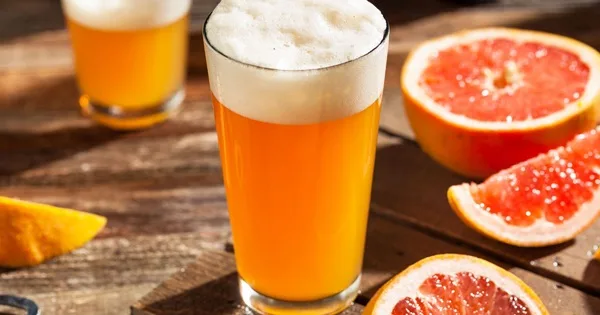
According to the study Fruit-Infused Beer: Brewing Techniques, Flavour Diversity and Quality Evaluation, integrating fruits during different phases of the brewing process not only broadens the sensory complexity of the final product, but also provides functional benefits due to their content of antioxidants, enzymes, and bioactive metabolites.

Historical foundations
The relationship between beer and fruit ingredients is not a modern phenomenon, but one that has deep roots in the history of brewing.
Historical evidence suggests that fruits and herbs were traditionally added to beer for both preservation and flavor enhancement purposes.
A paradigmatic example is Belgian Lambic beer, originating from the Senne valley, which is spontaneously fermented and aged with fruits such as cherries (kriek) or raspberries (framboise), giving rise to complex, acidic styles with a centuries-old tradition.
These styles have acted as cultural ambassadors, representing the particularities of their regions of origin.
The evolution of fruit beer has been linked to technical innovations, such as the development of the India Pale Ale (IPA) in the 18th century and subsequently the craft revolution, where the reintroduction of hops with citrusy profiles, such as Cascade, opened the door to bolder combinations with fruits.
This historical context demonstrates that the pursuit of sensory complexity through natural additives has been a constant in brewing, laying the groundwork for contemporary exploration.
Brewing methodology
The production process for fruit-infused beers preserves the classic stages of malting, mashing, boiling, fermentation, conditioning, and packaging. However, the inclusion of fruit introduces a decisive variable in microbiological control and fermentation kinetics.
Fruits can be incorporated as pulp, juice, or whole pieces, during either primary fermentation or secondary phases, depending on the desired sensory profile.
Research indicates that the type of fruit, its degree of ripeness, and fermentation conditions determine the balance among acidity, sweetness, bitterness, and aromas. Table 1 of the study shows significant variations depending on the type of fruit and yeast used.
For example, the use of Saccharomyces cerevisiae at 18 °C in beers with dry cape gooseberry produced an alcohol content of 6.13%, while fermentation with mixed yeasts in grape must reached up to 6.9% ethanol, with pH values ranging between 3.4 and 4.0.
These differences reflect how the interaction between fruit sugars and yeasts modulates the synthesis of alcohols, esters, and organic acids.
Table 1. Different types of fruits, microorganisms, processing conditions, and beer quality
| No. | Type of fruit or cereal | Yeast | Fermentation and storage temperature | Alcohol (%) | Physicochemical parameters |
| 1 | Dry cape gooseberry (Physalis peruviana) | Saccharomyces | 18 °C for 7 days, stored 10 days at room temperature | 6.13 | TPC = 318.62; pH = 3.81; TSS = 5.97 °Brix |
| 2 | Buckwheat | Saccharomyces cerevisiae CMS12 | 28 °C for 120 h | 7 | Acidity = 0.27; pH = 4.04; TSS = 1.3 °Brix |
| 3 | Mango | Fermented yeast S33 | 25 °C, 10–14 days | 5.8 | Bitterness = 27.5 IBU; Original wort = 14.2 °P |
| 4 | Red grape pulp | 1) Dekkera bruxellensis 3429 2) Metchnikowia pulcherrima MG970690 | 20 °C, 14 days | 1) 6.16 2) 6.90 | pH = 3.95 / 3.42; T.A. = 7.44 / 7.67 |
| 5 | Grape | Saccharomyces k1-V1116 | 15 °C, 4 weeks | 5–6 | Polyphenols = 754.40 mg/L; pH = 5.3 |
| 6 | Grape must | Saccharomyces | 9–10 °C for several days, then 0 °C | 5 | pH = 5.2 |
| 7 | Passion fruit | Saccharomyces cerevisiae SafAle S-04 | 15 °C and 22 °C for 120 h | 7.61 / 8.29 | TSS = 2.7 / 1.3 °Brix; pH = 2.85 |
| 8 | Mix of cherry, raspberry, blackberry, strawberry and elderberry | Saccharomyces | – | 2.5–8.5 | pH = 3.00–11.00 |
| 9 | Pomegranate | Dry yeast (S. cerevisiae) | – | 4.56 | – |
| 10 | Dry cape gooseberry | S. cerevisiae | 18 °C, 7 days | 5.13 – 6.13 | TPC = 13.83 ± 0.15 |
| 11 | Yellow passion fruit pulp | S. cerevisiae | Primary 15 °C (10 days); Secondary 4 °C (15 days) | 4.5 – 4.7 °GL | pH = 3.65–3.66; acidity = 0.33 %; phenols = 67–68 mg/100 mL; antioxid. = 2.45–3.04 mM |
| 12 | Sea buckthorn (Sea buckthorn) | – | 18 °C, 4 weeks | 8.40 ± 0.73 | pH = 5.8 → 4.6; foam = 6.86 ± 2.20; color = 7.92 ± 0.79 |
| 13 | Haskap (L. caerulea var. emphyllocalyx) + Kamchatka berries | S. cerevisiae SafAle US-05 | 21 °C for 21 days | 14.06 (average) | Acidity = 3.55–4.22; pH = 4.40–4.47 |
| 14 | Juçara fruit (Euterpe edulis Martius) | S. cerevisiae SafAle US-05 | 8 days of fermentation | 3.6 (w/v) | pH = 4.43 |
Biotransformation and the role of fruit enzymes
The microbial biotransformation process is one of the pillars of fruit-infused beer production.
During fermentation, enzymes produced by yeasts and bacteria, such as β-glucosidases, esterases, and cytochromes P450, transform aromatic precursors into volatile compounds that intensify fruity and floral profiles.
This phenomenon enables the release of terpenes, thiols, and esters from glycosylated molecules present in citrus fruits, berries, or stone fruits.

Table 2 of the article details endogenous enzymes with both organoleptic and physiological implications.
For example, papain from papaya improves product clarity by preventing chill haze (cold haze), while bromelain from pineapple contributes compounds such as methyl butanoate and ethyl hexanoate, responsible for sweet and tropical notes.
Likewise, enzymes such as lipase from avocado and amylase from mango promote the release of fatty acids and simple sugars, directly influencing the texture and body of the beer.
Table 2. Enzymes present in fruits and their health benefits
| No. | Fruit | Enzyme | Benefits | Flavor profile |
| 1 | Papaya | Papain | Rich in antioxidants; prevents chill haze | Trifluorononyl acetate and trans-2-dodecen-1-ol |
| 2 | Kiwi | Actinidin | Blood glucose control | 2-cyclohexen-1-one, (E,E)-2,6-nonadienal, 3-methyl-1-butanol |
| 3 | Pineapple | Bromelain | Antioxidant; reduces cancer risk | Methyl hexanoate, ethyl 3-(methylthio)-propanoate |
| 4 | Fig | Ficin | Reduces cholesterol | Isocaproic acid, benzaldehyde, 2-ethyl-hexanol |
| 5 | Mango | Amylases | Hydrolyzes starches into glucose and maltose | γ-octalactone, 1-octanol, (E,Z)-2,6-nonadienal |
| 6 | Avocado | Lipase | Degrades fatty acids and glycerol | Acetaldehyde, β-myrcene, α-farnesene |
| 7 | Grape pomace | Tannase, Cellulase, Pectinase | Diabetes control; antitumor effect | 1-pentanol, 3-methylbutan-1-ol |
| 8 | Cape fruit (Cape fruit) | Isothiocyanates | Prevention of metabolic syndrome and type II diabetes | p-menth-4(8)-ene-1,2-diol-glucopyranoside |
| 9 | Blackberry | Prolidase | Anti-inflammatory and antiviral properties | 3-methyl-1-butanol, phenylacetaldehyde |
| 10 | Mulberry (Mulberry) | Tyrosinase | Neuroprotective and immunomodulatory | 3-mercaptohexanol, ethyl butanoate, methional |
Aroma diversity and sensory profiles
The goal of incorporating fruit goes beyond adding sweetness or acidity. The enzymatic breakdown of thiols and the release of terpenic alcohols produce distinctive aromatic characteristics, perceptible even at low concentrations due to the low olfactory threshold of these compounds.
Techniques such as gas chromatography coupled with mass spectrometry (GC-MS) and high-performance liquid chromatography (HPLC-MS) allow quantification of the volatiles responsible for the final aromatic profile.
A relevant example comes from the addition of cv. Lambrusco grapes, which increased color intensity, acidity, and phenolic content.
In contrast, beers with quince showed elevated levels of esters such as ethyl hexanoate, which imparts fruity and citrusy notes.
Furthermore, the inclusion of persimmon was associated with a significant improvement in antioxidant capacity and total polyphenol content, demonstrating that the choice of fruit determines both the chemical stability and sensory complexity of the product.
Nutritional and functional implications
Traditional beer contains more than 2,000 bioactive compounds, including polyphenols and flavonoids.
The addition of fruit amplifies this biochemical matrix, improving antioxidant capacity and enhancing beneficial health effects.
Studies indicate that infusion with mango increased polyphenol content by up to 44% compared to the control, while the addition of cornelian cherry (Cornus mas) elevated antioxidant activity measured by DPPH and FRAP assays.
From a physiological perspective, the authors note that the presence of phenolic compounds—such as catechin, quercetin, and chlorogenic acid—could contribute to protection against oxidative stress, a process linked to cardiovascular disease, diabetes, and cellular aging.
However, the need for moderate consumption is emphasized, given that excessive alcohol intake carries documented metabolic and neurological risks.
Sensory evaluation and quality control
The sensory evaluation of fruit-infused beers involves trained panels analyzing attributes such as color, foam, aroma, flavor, body, and persistence.
Results indicate that consumers perceive fruit beers as more refreshing, lighter, and more complex, although with less residual bitterness.
Color correlates with the anthocyanin and carotenoid content, while body and texture are associated with the content of non-fermentable dextrins and pectins released by the fruit.
Reference
Hemanth, P., Ghosh, M., Rahman, M., Morya, S., Kumar, V., & Kumar, S. (2025). Fruit-Infused Beer: Brewing Techniques, Flavour Diversity and Quality Evaluation – A Review. Journal of Microbiology Biotechnology and Food Sciences, 15(2), e11488. https://doi.org/10.55251/jmbfs.11488


Recommended
- What Is a Radler Beer? The German Origin of Mixing Beer and Lemon Juice
- Martyn Cornell: “The Real 20 Most Influential Beers of All Time”