This post is also available in:
 Español
 Português
 Français
In the world of beer, few styles have achieved the worldwide recognition and far-reaching influence of Pilsner-type beers.
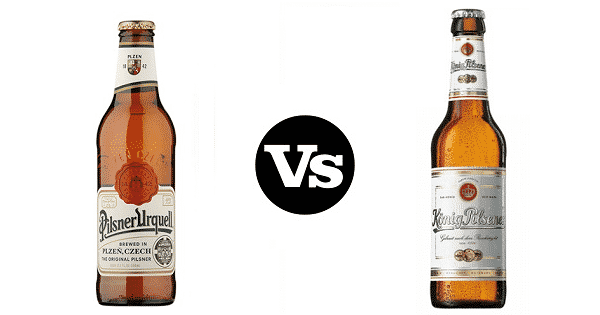
These pale, refreshing and bitterly balanced lagers have been the gold standard for beer lovers all over the world.

Within this family, Czech Pilsner and German Pilsner are the emblematic references, standing out for their cultural, historical and technical nuances while offering sensory experiences that reflect the brewing traditions of both countries.
From Bohemia to Germany
Czech pilsner originated in 1842 in the city of Plzeň (Pilsen), in what is now the Czech Republic, when brewmaster Josef Groll revolutionized the industry by introducing a golden lager with a rich malty profile and a floral, spicy hop character.
As the first golden lager in history, Czech pilsner marked the birth of the style and laid the foundations for all the future interpretations that turned it into the best-selling type of beer in the world.
The name, on the other hand, remained almost reserved in its homeland. In the Czech Republic only Pilsner Urquell and Gambrinus are called Pilsner, so the style guidelines describe the family under other names, Czech Premium Pale Lager for the BJCP and Czech-Style Pale Lager for the Brewers Association.
German pilsner, for its part, emerged three decades later, in the early 1870s, as an adaptation of the Czech style that adjusted to the waters of each region and to local hops, evolving into a drier, more vibrant and more bitter beer.
The water is no minor detail. The BJCP notes that German pils become drier and more bitter as you travel from south to north, in step with the sulfates in the water, so a pils from Bavaria turns out considerably gentler than a Jever from Friesland.
Sensory Profiles
Both beer styles are now considered traditional pilsners, yet they show clear differences in their sensory profile.
The two guidelines most widely used to judge them in competitions, the BJCP’s and the Brewers Association’s, agree on the overall portrait. Where they disagree is in the details, which is precisely where each style is best understood.
1. Appearance
German pilsners tend to be paler, in a color range from straw to deep yellow, with a persistent white head.
Czech pilsners tend to be slightly darker, from medium yellow to deep gold, with a creamy, long-lasting head.
The Brewers Association draws a less clear-cut line, because it describes both as straw to gold. In numbers, however, it allows the Czech up to 7 SRM against 4 for the German, a difference you notice when you serve them side by side.
2. Aroma
German pilsner shows moderate to moderately high aromas of floral, spicy or herbal hops, balanced by a light touch of sweet or biscuity malt.
Czech pilsner, by contrast, offers greater malt richness, with bready notes and sometimes a hint of caramel, complemented by a spicy, floral hop bouquet.
It is also the only one of the two in which both guidelines expressly accept a very light diacetyl, that buttery hint you would not expect to find in a well-made German pils.
3. Flavor
German pilsner is characterized by a malty start that quickly gives way to intense bitterness and a dry, lively, refreshing finish.
Czech pilsner, on the other hand, offers a more balanced experience between malt and hops, with a prominent but rounded bitterness and a fuller finish.
This is where the guidelines truly part ways. For the BJCP the Czech is the more bitter of the two, with 30 to 45 IBU against 22 to 40 for the German, while the Brewers Association reverses the order and assigns the German 25 to 50 IBU, leaving the Czech at 22 to 40.
The contradiction has more to do with the water than with the numbers. The soft water of Pilsen, low in sulfates and carbonates, rounds off even a high hopping rate, while in a pils from northern Germany the bitterness comes across as drier and sharper, what the Brewers Association describes as a firm and crisp hop character.
4. Mouthfeel
While German pilsner has a lighter body and moderate to high carbonation, Czech pilsner is a little more robust, with a medium body and softer carbonation.
The Brewers Association sharpens the contrast even further by describing the body of the German as low to medium-low and that of the Czech as medium.

Techniques and Ingredients
German pilsner uses continental Pilsner malts, traditional German hops such as Hallertau or Tettnang and water with a higher mineral content, which enhances its dryness and bitterness. The Brewers Association further specifies that its aroma comes from late kettle hopping and not from dry hopping.
Czech pilsners, for their part, use Czech malts and hops such as Saaz, along with low-mineral water, which contributes to their rounder, softer character.
Many Czech versions also retain the flavor of decoction mashing, a trait the Brewers Association expressly mentions in its description of the style.
Commercial Examples
Classic references of Czech pilsner include iconic beers such as Pilsner Urquell, Budvar 33 světlý ležák and Primátor Premium Lager, all characterized by their balance between malt and hops.
For German pilsner, the standouts are Jever Pilsener, Paulaner Pils and Rothaus Pils, known for their pronounced bitterness and dry finish.
These beers represent excellence in their respective styles and are an invitation to explore the differences between both brewing traditions.
Which of the Two Pilsners Should You Choose?
Choosing between a German pilsner and a Czech pilsner depends on the moment and on personal taste. If you prefer a dry, lively beer with more pronounced bitterness, German pilsner is ideal.
On the other hand, if you are looking for a more complex experience, with malt richness and a balance between hops and malt, Czech pilsner is your choice.
Both styles represent the best of the European brewing tradition, with almost two centuries of craft behind every sip.
Whether you lean toward German precision or Czech tradition, these pilsners offer an unforgettable experience for beer lovers.
Style Parameters According to the BJCP and the Brewers Association
The table brings together the ranges of the BJCP 2021, in its categories 3B and 5D, alongside those of the Brewers Association 2026. The most striking difference lies in gravity, because the Brewers Association sets the ceiling for versions brewed in the Czech Republic at 12.99 °Plato (1.052), while the BJCP allows up to 1.060.
It is worth reading them for what they are, descriptions designed for judging beers in competitions rather than brewing rules. A commercial beer can fall outside a range and still be a benchmark of the style.
| Characteristic | Czech (BJCP) | Czech (BA) | German (BJCP) | German (BA) |
| Alcohol (ABV) | 4.2-5.8% | 4.6-5.1% | 4.4-5.2% | 4.6-5.3% |
| Original gravity (OG) | 1.044-1.060 | 1.044-1.052 | 1.044-1.050 | 1.044-1.052 |
| Final gravity (FG) | 1.013-1.017 | 1.009-1.014 | 1.008-1.013 | 1.006-1.012 |
| Bitterness (IBU) | 30-45 | 22-40 | 22-40 | 25-50 |
| Color (SRM) | 3.5-6 | 4-7 | 2-4 | 3-4 |
Frequently Asked Questions (FAQ)
1. Why Is the Saaz Hop Essential to Czech Pilsner?
The Saaz hop is one of the four varieties of noble hops and is the cornerstone of the aromatic profile of Czech pilsner. It is grown in the Bohemia region (Czech Republic) and is essentially mild, offering distinctive floral, herbal and spicy aromas. Its low alpha acid content, between 2.5 and 4%, means it has to be used in generous amounts to reach the bitterness of the style, which leaves the beer with a generous hop character that the soft water of Pilsen keeps rounded and free of harshness.
2. How Does Decoction Mashing Affect the Flavor of Czech Pilsner?
Decoction mashing is a traditional Czech brewing technique (triple in the case of Pilsner Urquell) that involves drawing off a portion of the mash, boiling it and returning it to the mash tun to raise the temperature. Although it is not widely used today, when it is applied it helps create the rich malt flavor with bready notes and the fuller mouthfeel that set Czech Pilsner apart. Boiling part of the mixture promotes Maillard reactions, which form melanoidins and deepen the color and complexity of the malty flavor.
3. What Is the Main Difference Between a Pilsner and a Standard Lager?
Technically, a pilsner is a specific subtype of lager. All pilsners are lagers, but not all lagers are pilsners. The key difference lies in the hopping and the flavor. Pilsners are bottom-fermented lagers distinguished by their pale color, notable bitterness and an evident hop profile (floral, spicy or herbal, depending on whether it is Czech or German). A standard lager (such as an American Lager or some Pale Lager beers) tends to be much less bitter, with a much more neutral flavor profile that is less focused on hops.
4. Is There a Less Bitter Version of German Pilsner?
Yes, because within Germany the intensity changes with geography. Bavarian pils tend toward a softer bitterness than those from the north, where water richer in sulfates lengthens the dry finish. If you want even less bitterness, the right style is no longer a pils but Munich Helles, created in 1894 to compete with pilsners, which sits at around 16 to 22 IBU according to the BJCP and 15 to 25 according to the Brewers Association.
5. Which Foods Pair Best with a Czech Pilsner or a German Pilsner?
Thanks to its greater malt richness, medium body and rounded bitterness, Czech Pilsner pairs exceptionally well with heartier or spicier dishes such as goulash, roast pork, bratwurst-style sausages or washed-rind cheeses. The light sweetness of the malt balances heat and intense flavors. On the other hand, the dry, lively and bitter character of a German pilsner makes it an excellent palate cleanser, ideal with white fish, fresh salads, grilled chicken, simple pizzas or sushi. Its bitterness cuts through fat, while its dryness refreshes the palate.
References
Beer Judge Certification Program (2021). 3B. Czech Premium Pale Lager. BJCP Beer Style Guidelines 2021. bjcp.org
Beer Judge Certification Program (2021). 5D. German Pils. BJCP Beer Style Guidelines 2021. bjcp.org
Beer Judge Certification Program (2021). 4A. Munich Helles. BJCP Beer Style Guidelines 2021. bjcp.org
Brewers Association (2026). Czech-Style Pale Lager, German-Style Pilsener and Munich-Style Helles. 2026 Brewers Association Beer Style Guidelines. brewersassociation.org
Pilsner Urquell. Brewed the same way since 1842. pilsnerurquell.com

Recommended
- Budweiser Budvar: Tasting Notes and Food Pairings Recommended by a Beer Sommelier
- Budweiser vs. Budweiser? The Century-Long Battle Over the Brand Name