This post is also available in:
 Español
  Português
  Français
Belgian Saisons are historically beers rooted in farm life, whereas Belgian Grisettes are beers intrinsically rooted in mining and the Industrial Revolution.
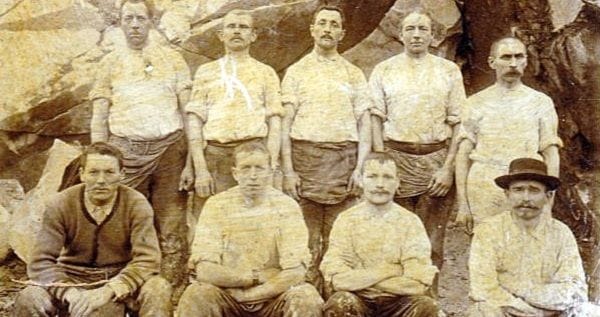
This centuries-old and mysterious beer style was brewed for the miners who worked in the province of Hainaut and some adjacent mining areas in southern Belgium, which until World Wars I and II was one of the main hubs of the Industrial Revolution in Europe.

The Origins of the Grisette Style
The origins of grisette beer lie in the province of Hainaut, in the French-speaking region of Wallonia, Belgium, the same region where the saison style originated, so in their early days there were probably significant similarities between Grisette and Saison.
In addition, both styles were beers drunk to refresh and hydrate workers, miners on one side and farmhands on the other, and they met the same basic requirements.
The name Saison itself refers to the “saisonniers”, seasonal farm workers who took advantage of the lighter workload of the winter months to brew beer with whatever grain was available, beer that would then be drunk during the warm, productive months.
Mining, on the other hand, was not seasonal work, so it called for a beer that had to be available year-round, with stable production and with ingredients and methods that could not change suddenly.
As the world industrialized, so did breweries, which likely encouraged the establishment of larger breweries with better and more specialized equipment, driven mainly by this desire for consistency.
This also meant the development of more specific roles and of trained people to fill them, rather than brewing being a part-time, off-season task.
For beer, especially one like grisette, essential to the work of those who were part of this industrialization, this would mean cleaner fermentations and the regular use of certain ingredients instead of recipes that changed depending on what was available.
It could also mean that brewing became more of a full-time occupation and less of a side activity to another job, such as farming, as the time devoted to fermentation and conditioning began to shrink.
Malting practices were improving at the same time, which meant that more consistent and probably paler malts were available.
Consumer taste preferences were also beginning to change as beers had to travel shorter distances and imported beers from neighboring countries began to arrive.
All of this combined to create a very dynamic beer landscape at the time. Since beer writers of that era probably did not care much that highly localized beer styles were being brewed in certain rural and not-so-rural areas of Belgium, there is little solid documentation on how they developed.
The Development of the Grisette Style
This gives us a good starting point for understanding what kind of beer a grisette was, reasonably thought of as a lost branch of the saisons in an intermediate category between old and modern seasonal beers.
Many modern saisons are also much cleaner, using only Saccharomyces yeast, with higher gravities than historical saisons. On top of that, the gravities on some saison labels were also higher than those on grisette labels from the same period, usually accounting for aging periods.
All of this is based on descriptions such as “vieille” or “mûrie dans nos caves” (aged in our cellars) on the labels of the time; the saisons of that era were still older beers, aged for a while.
Given how dynamic the brewing landscape was back then, it is likely that Saison and Grisette evolved on their own as well as through their relationship with each other.

What we know about grisette from historical records is often contradictory. This could be because authors may be discussing grisette from different eras or from different producers.
Beer styles definitely changed over time, and grisette definitely existed long enough to see some of that change.
Much of the information we have comes from the early 20th century, probably describing a grisette that was already different from that of the mid-19th century.
The differences in historical records could also stem from the fact that records at the time were not always accurate, representative or even objective.
Something may also have been lost in the translation of specific terms and techniques, or in the use of obsolete units of measurement.
Whatever the case, this is what we know about the types of grisette that likely existed.
1. Grisette “de table”
Table beer, brewed with the grain from a first batch of grisette, very low in alcohol.
2. Grisette “jeune”
Young beer, brewed year-round, with a somewhat stronger summer version.
3. Grisette “de garde” or “de saison”
Keeping beer, brewed between September and December.
4. Grisette “supérieure”
Beer with double the usual alcohol.
Characteristics of Grisette Beers
In short, most of the information seems to indicate that grisette was a hoppy, pale, low-alcohol wheat beer that would not have been aged for long, and some versions may have been slightly stronger and aged a little longer.
Most recorded grisettes were low-strength beers, ranging from 3 to 5% ABV.
Unfortunately, the available labels offer no specific recipe information, but we can be reasonably sure that (at least at one point) wheat was a fundamental part of how it was brewed.
Many of the breweries that made grisette also brewed other styles such as Saison, Bock, Brune and/or Abbey beers, so it seems that at least by the early 1900s brewers already knew how to handle beers with different types of yeast in the same facility.

Together with grisette’s overall identity tied to industrialization, this supports the idea that grisettes were beers of controlled fermentation, unlike historical Saisons.
Because grisette labels do not indicate an aged beer, whereas some other labels of the period do include an explicit reference (mainly because of the cost the brewery incurred to keep a beer stored longer), we can also assume that grisettes were generally served while still young.
This would mean that the hop character was more pronounced than in an aged beer of similar characteristics and that there would be little time for bacteria and/or wild yeasts to develop, which fits with some records stating that grisette was a refreshing, hop-forward beer with no sourness.
The Fundamentals of the Grisette Style
Based on the above, we could say that grisette was a fairly clear, pale wheat beer drunk as a refreshing summer drink, in most cases low in alcohol.
Most grisettes were fundamentally designed not to age. There were also keeping versions, which changed part of the core structure of their recipe to benefit from aging over a fairly short period.
Based on hop usage rates and the general lack of aging described in historical accounts, grisettes were most likely not sour beers.
Unfortunately, some texts note that very few brewers knew how to make grisette and that they did not like to talk about it.

The origins of the style would date back to the 1700s in Belgium’s Hainaut province, specifically in the areas around the Scheldt and Dender rivers, with production that even spread to other important cities of the time, such as Charleroi and Tournai.
The earliest known records date back to 1812, in a document that mentions a brewery that had become famous for brewing and distributing grisette, even for export.
This allows us to suggest the confirmation of at least 3 hypotheses, namely that these were not small breweries, that they brewed grisette for quite a long time and that people liked to drink it.
Ingredients for Brewing Grisette
1. Hop Use
Grisette was probably brewed with native Belgian hop varieties, likely from the province of Hainaut, as well as from Aalst or Poperinge.
Some brewers, especially the larger ones, would also have occasionally used imported hops such as Hallertau, Saaz or East Kent Goldings, at an established rate of 3 to 4 g/l for a standard grisette, generally for bitterness.
Grisettes are also believed to have benefited from dry hopping, at fairly low doses of 1 g/l and with higher-quality hops, with Czech or English varieties favored for the purpose.
2. Malt Use
Grisettes were brewed with malted wheat, and no mention of any grain other than wheat and barley has been found in the historical literature.
The breakdown given in Pelset’s 1874 text, the only source that goes into detail on brewing grisette, mentions the use of 88% 6-row malted barley and 12% malted wheat.
The wheat was finely crushed and malted with very short germination and at very low kilning temperatures, not far from air-dried malt.
3. Yeast Use
In short, there is no clear answer. One of the terms most often used to describe this beer’s yeast character is “clean”.
A clean yeast profile may refer to a more neutral-tasting yeast within Saccharomyces comparisons, something between a Lager and an American Ale strain, as opposed to very expressive yeasts such as Belgian strains, especially the yeasts used to brew Saison.
Alternatively, clean can be used to describe Saccharomyces beers free of Brettanomyces yeast.
Even so, there are a couple of things about fermentation and yeast use in grisette beers that we could be sure of, and one is that the average grisette was not an aged beer.
Now, while there is no certainty about exactly what the term “clean” might have meant, they would certainly have been “cleaner” than Saisons for most of their shared history, since grisettes generally did not reach enough age to express a mixed bacterial culture, whereas Saisons were definitely aged beers.
So a grisette presented as a Saccharomyces-only beer, or perhaps with just a touch of additional yeast or bacteria, would definitely be cleaner than a historical saison, a beer that could often have had a flavor profile with plenty of similarities to lambic beers.
The Origin of the Grisette Name
There are several theories about the origin of the name grisette, all related to the color of the beer, similar to the gray, dull appearance of the miners themselves, who worked constantly covered in dust from the porphyritic granite extracted from the Hainaut mines.
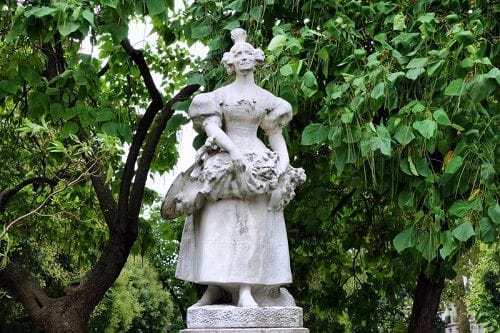
A second hypothesis, somewhat more widely accepted, links it to the dull gray dresses of the women who delivered beer to the miners and who usually also worked as seamstresses.
A final, more controversial hypothesis holds that the term was used to refer to the sex trade that may have developed around the mines, in connection with the encounters between the miners and the shop girls, a reference that can still be confirmed today as an “archaic” use of the word “grisette” in some online dictionaries.
Be that as it may, at least in France the image of grisettes that has endured is that of independent young women, often seamstresses or shop girls, with bohemian relationships.
Frequently Asked Questions (FAQ)
1. What Is the Main Difference Between a Grisette and a Modern Saison?
Although they share roots in Wallonia, the key difference lies in the fermentation profile and freshness. Saisons tend to show a strong phenolic (spicy) and ester (fruity) character from the yeast and, in historical versions, some sourness from aging, whereas Grisette is a clean-fermented beer designed to be drunk young. This makes it closer to a wheat “Session Pale Ale”, putting refreshment first without the rustic complexity of Saison.
2. Is Grisette an Acidic or “Sour” Beer?
Historically, no. Unlike other Belgian farmhouse styles, Grisette was brewed for quick consumption by the miners, which prevented lactic bacteria or wild yeasts such as Brettanomyces from developing. As a low-strength beer with a high hop content (hops act as a natural preservative), its profile is refreshing, bitter and clean, lacking the sourness typical of long-aged beers.
3. What Glassware Is Best for Serving a Grisette?
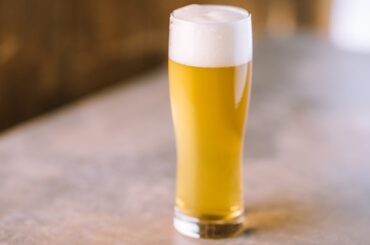
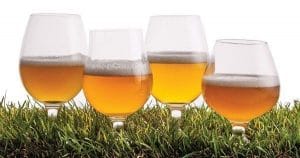
To highlight its aromatic qualities and effervescence, a Tulip glass or a Stange (a narrow, cylindrical glass) is recommended. The tulip glass helps retain the dense white head produced by the wheat, and a straight, slim glass accentuates its pale clarity and makes for a quick, refreshing drinking experience true to its working-class origins.
4. Was Grisette a Low-Alcohol Beer?
Yes. Most recorded grisettes were between 3% and 5% ABV. It was a refreshing beer meant for the miners of Hainaut province, which brings it close to what we now call session beers.
5. What Foods Pair Best with a Grisette?
Thanks to its lightness, wheat notes and moderate bitterness, Grisette pairs excellently with fresh seafood (especially steamed mussels), bitter salads (such as endive salad) and young goat cheeses. Its high carbonation cleanses the palate, which also makes it an ideal companion for light fried dishes or grilled white fish.
Bibliography
- What is Grisette Part II – Updated and Abridged
- La Grisette, la prima desconocida y modesta de la Saison
- What is: a Grisette?
- La grisette moderna | La ‘session saison’

Recommended
- Flanders Red Ale Becomes a Protected Geographical Indication (PGI) in the European Union
- Westmalle Dubbel Turns 100 as the Trappist Beer That Gave Life to a Style