This post is also available in:
 Español
  Português
When Georg Schneider reflects on his great-grandmother Mathilde, he cannot help but smile, reminiscing about receiving her kisses during his childhood.

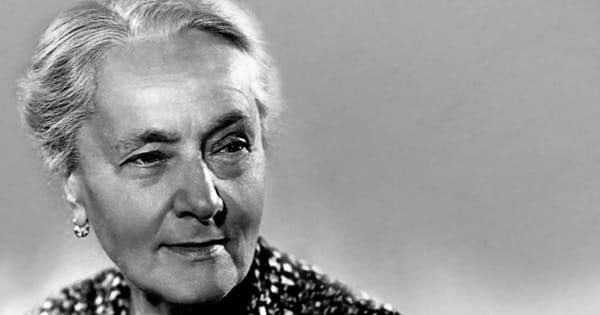
“She was affectionate but also strict,” he says with nostalgia. However, it is clear that the Schneider Weisse brand owes a great deal to her influential personality.
The brewery, which today is headquartered in Kelheim, still maintains deep roots in Munich, where Georg Schneider proudly carries the legacy of being the sixth generation to lead the brewery.
It is at the Weisses Bräuhaus, alongside his son, where they enjoy an Aventinus, marking the start of the strong beers season.
Family Brewing Tradition
Family tradition is palpable, as it was great-grandmother Mathilde who created this special wheat beer Doppelbock in 1907, something completely innovative for the time and which remains a rarity in the brewing world to this day.
Strong beers are relatively common, but very few are of the top fermentation type like Aventinus.
This beer has earned a special place in the hearts of Weisses Bräu im Tal customers, where enthusiasts known as “Aventinus-Buam” consume it throughout the year, keeping this tradition alive for 40 years.
Furthermore, this Bavarian specialty has transcended borders, finding followers in the United States, Australia, and over 30 other countries to which it is exported.
Its flavor profile, reminiscent of dates, figs, and ripe bananas with a spicy touch, is undoubtedly widely appreciated by beer lovers.
However, its pleasant warm sensation in the chest can be deceptive, as its alcohol content of 8.2% ABV will usually ensure a lively atmosphere at the tavern.
An Unexpected Turn in History
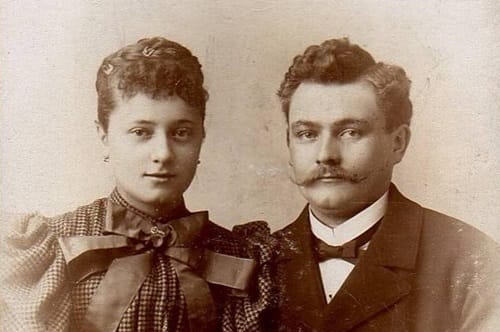
The story of Mathilde Schneider (1877–1972) took a tragic turn in 1905 when her husband Georg III suffered an accident on Lake Starnberg.
Caught off guard by a storm while rowing, the brewery patriarch got soaked, fell ill, and died.
His adventurous life ended abruptly at age 35, and it is rumored that Mathilde, a woman of firm Catholic faith, even speculated that his premature death may have been due to his Protestant faith.

Mathilde suddenly found herself in charge of her family and the brewery, facing the difficult task of keeping the business afloat in the absence of her husband.
Despite the laws that prevented a woman from running a brewery, Mathilde had been influenced by European feminist movements demanding equal rights, and so she demonstrated her tenacity and vision by appointing her brother-in-law as nominal director, while she managed the reins of the business from the shadows.
The Birth of Aventinus
Her decision to create Aventinus, a strong wheat beer called Doppelbock, marked a milestone in brewing history, overcoming the obstacles imposed by a conservative brewers’ association that initially rejected the idea due to its name inspired by the historian Johannes Aventinus.
The brewers’ association vetoed the new Aventinus with the dubious argument that the beer should bear the name of a saint, although it was probably just a pretext to prevent the new beer from reaching the market.
But Mathilde stuck to the name and sought help from a priest at the church of St. Georg in Bogenhausen, whom she persuaded to do some research.
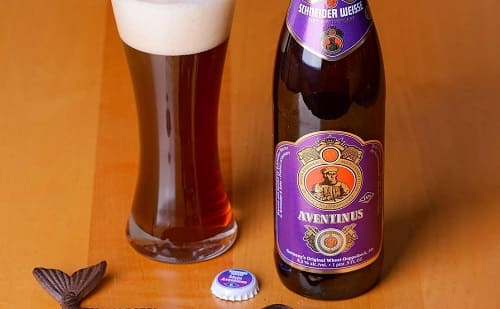
Finally, they discovered that one of the seven hills of Rome bears the name of a very obscure Saint Aventinus, so the brewers’ association had to yield and Mathilde’s innovation reached the market, becoming a commercial success.
Today, Aventinus is not only a symbol of Mathilde Schneider’s perseverance and innovation, but also one of the most award-winning beers in Europe.
Georg Schneider VII, 28 years old, master brewer and part of the management team, underlines the importance of double fermentation, maturation with cultivated yeast and fresh wort to achieve Aventinus’s unique profile.
This dedication to quality and innovation continues to inspire new generations of the Schneider family, such as Georg VII, who has recently introduced new beer varieties, keeping alive the tradition of experimentation and excellence that Mathilde initiated over a century ago.
Frequently Asked Questions (FAQ)
What food pairings are recommended for a Schneider Weisse Aventinus?
Due to its complex flavor profile with fruity notes (dates, figs, bananas) and its high alcohol content (8.2% ABV), Aventinus is ideal for pairing with intense desserts such as apple strudel or dark chocolate tarts. It is also an excellent accompaniment for strong blue cheeses and game dishes or braised beef.
Where is the Schneider Weisse brewery currently located?
Although the brewery’s roots are deeply tied to Munich (where the historic Weisses Bräuhaus still stands), Schneider Weisse’s main headquarters and production facility are currently located in Kelheim, Bavaria. The brewery offers tours and tastings for visitors interested in learning about the brewing process.
What is the technical difference between a regular Doppelbock and a wheat Doppelbock?
A regular Doppelbock is traditionally brewed with barley malt. The Aventinus beer is a Weizenstarkbier (strong wheat beer) or Weizen-Doppelbock. The main difference lies in the use of a high proportion of wheat malt in the recipe, which gives it a smoother body, a denser foam, and a unique flavor profile, typically with fruity and phenolic esters (such as clove and banana), not found in barley Doppelbocks.
What other beer varieties does the Schneider Weisse family offer?
The brewery has innovated over the years, maintaining Mathilde’s tradition. Other notable strong varieties include Schneider Aventinus Eisbock (an even more concentrated and alcoholic version of Aventinus, obtained by freezing) and Tap X, which are limited and experimental editions, often barrel-aged, following the experimentation philosophy of the seventh Schneider generation.
What influence did historian Johannes Aventinus have on Bavarian culture?
Johannes Aventinus (born 1477) is considered the “Herodotus of Bavaria.” He was a crucial humanist and chronicler who wrote the Bavarian Chronicle (Bayerische Chronik), one of the first detailed histories of the region in the German language. By naming the beer in his honor, Mathilde Schneider sought to associate the beverage with the rich history and cultural tradition of Bavaria, a gesture that was initially controversial but ultimately prevailed.