This post is also available in:
 Español
  Português
  Français
What do we mean by an “anti-IPA”? An IPA style beer brewed to have zero calculated IBU, which in brewing jargon is known as a Zero IBU IPA.
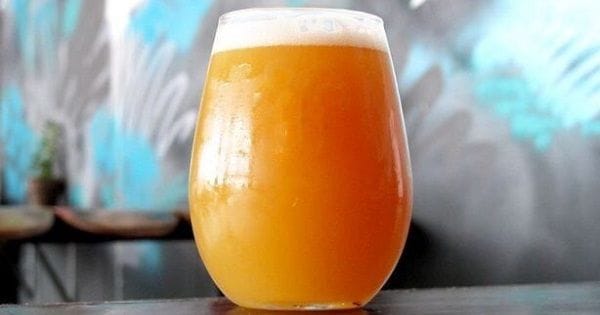
For roughly five centuries, the main role of hops in brewing has been to provide the touch of bitterness needed to balance the flavor of the other ingredients in each particular type of beer.
The first known Zero IBU IPA was IdontwanttoBU, from The Veil Brewing Co. (Richmond, Virginia), in April 2016, with Citra and Mosaic added only after the boil. Breweries such as Other Half and Twin Sails followed.
The New Prominence of American Hops
But just a few decades ago, everything changed when the United States began using local hops with bolder and more intense flavors.
Hops started to play an ever larger role in the flavor of beer, not only in its bitterness, thanks to their wide acceptance among drinkers.
So when it comes to beer, the English vocabulary distinguishes between hoppy and bitter. The first term refers precisely to the flavor and aroma of the hops that blend with the other elements of a beer.
What Does IBU Measure?
“Bitterness”, on the other hand, refers to the degree of bitterness, and IBU (International Bitterness Unit) is the measure used to try to quantify it. But it does not measure the sensation we perceive, rather a concentration in the laboratory.
The official method measures the absorbance of a beer extract at 275 nanometers, and this is how IBU is calculated in a laboratory. That value correlates with perceived bitterness, but it also picks up polyphenols and other compounds, so one IBU is only roughly equal to one milligram of isohumulones per liter.
Isohumulones are compounds formed when the alpha acids in hops isomerize during the boil.
In other words, hops must be boiled to produce these bittering compounds. And that is the key to non bitter IPAs with zero IBU, which are starting to gain a presence that, while still small, is slowly growing.
To brew them, the timing of the hop additions is decisive, and they take place mainly during cooling and during fermentation of the beer.
It is worth noting that these are not “gruit” beers, which use no hops but other herbs and plants to add aromas and flavors to the beer. These are beers with hops that, moreover, belong to the style that uses them in the greatest quantity.
Can an IPA Really Have 0 IBU?
In practice, no. The 0 IBU of these beers is a value calculated with the usual formulas, which only count boiled hops, and not a laboratory measurement.
The whirlpool keeps isomerizing alpha acids while the wort stays above about 80 °C, although much more slowly than in the boil. And dry hopping contributes humulinones, oxidized alpha acids that need no boil and have around two thirds of the bitterness of isohumulones, according to research by Tom Shellhammer’s group at Oregon State University.

That is why a Zero IBU IPA always has some measurable and perceived bitterness. What it achieves is to reduce it to a minimum so that hop aroma and flavor take over.
New England IPA
Perhaps this new trend is a natural continuation of the now famous NEIPAs, the New England or North East IPAs, beers that are certainly hoppy but generally low in IBU, where the flavor and aroma of the hops take center stage, not their bitterness.
The next logical step was to maximize the distance between bitterness and hoppiness, and this is where ZERO IPAs come in.
The opposite extreme, IPAs with hundreds of IBU, had already been explored exhaustively. So the new beers simply close the full circle of possibilities within the style.
Over the years, Zero IBU IPAs remained a niche experiment. What did succeed was the underlying idea, and today most Hazy IPAs aim for low bitterness and a profile reminiscent of fruit juice, as explained in why an IPA is called juicy.
Zero IPA, Yes or No?
From our point of view, there are only positives. On the one hand, it would be an ideal way to introduce craft beer to those who have not yet dared or been able to try it.
Bitterness, like spiciness or acidity, is a sensation that takes getting used to and feels aggressive at first. Naturally, as you keep tasting, you build up a certain tolerance or insensitivity to it, which leads you to be able (and in some cases to need) to keep increasing the “doses”.
And perhaps precisely because of this, ZERO IPAs could be a very welcome arrival for those bitterness lovers who already struggle to find an IPA with enough IBU to satisfy them.
For them, ZERO IPAs could be something like nicotine patches for smokers, a way to savor the hops without the bitterness while gradually recovering their original sensitivity to it.
Drinking only ZERO IPAs for a while would, over time, let you go back to traditional, bitter IPAs as if for the first time. That does not sound bad at all.
Frequently Asked Questions (FAQ)
1. What is a Zero IBU IPA or anti-IPA?
It is an IPA brewed without hops in the boil, with all additions in the whirlpool and in dry hopping, so that its calculated bitterness is 0 IBU. The first known example was IdontwanttoBU, from The Veil Brewing Co., in April 2016.
2. Is a Zero IBU IPA really bitter?
It has some bitterness, although much less than a traditional IPA. The hot whirlpool keeps isomerizing alpha acids and dry hopping contributes humulinones, which are also bitter, so its IBU measured in a laboratory is never zero.
3. What exactly does IBU measure?
IBU is an analytical measure obtained from the absorbance of a beer extract at 275 nanometers. It correlates with the bitterness we perceive and is roughly equal to one milligram of isohumulones per liter, but it does not directly measure the sensation.
4. What is the difference between hoppy and bitter?
Hoppy describes the aroma and flavor hops contribute, such as citrus, tropical or resinous notes, while bitter describes the intensity of the bitterness. A beer can be very hoppy and only slightly bitter, like Zero IBU IPAs or Hazy IPAs.
5. Are Zero IBU IPAs the same as Hazy IPAs?
No. Hazy or New England IPAs have low bitterness but usually include some hops in the boil, while Zero IBU IPAs remove them entirely. Zero IBU IPAs take the same idea behind Hazy IPAs to the extreme.

Recommended
- Why is an IPA called “juicy” and tastes like fruit juice if it contains no fruit?
- Hoppy vs. bitter in beer, what is the difference and how do they show up?