Analyzing a beer requires different perspectives depending on the context and objective. What for a trained judge establishes quantifiable parameters, for a hobbyist consumer can be a memorable sensory experience.
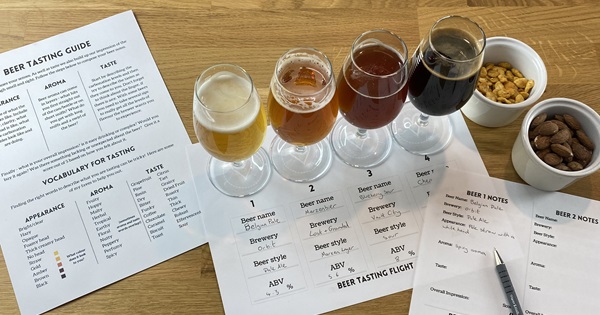
Analyzing a beer requires different perspectives depending on the context and objective. What for a trained judge establishes quantifiable parameters, for a hobbyist consumer can be a memorable sensory experience.

For millennia, human saliva was the most effective enzyme for creating fermentable sugars as an intimate biochemical reaction that defined the history of fermentation long before agriculture.

For early humanity, beer was perhaps the most important staple in their diet—a valuable source of protein and vitamins, and a crucial milestone in ensuring our survival as a species.

Discover the Origin of the Word “Cerveza” and Its Various Variations by Exploring the Main Theories About Its Etymology and Its Relationship with Different Cultures in This Fascinating Linguistic Journey.
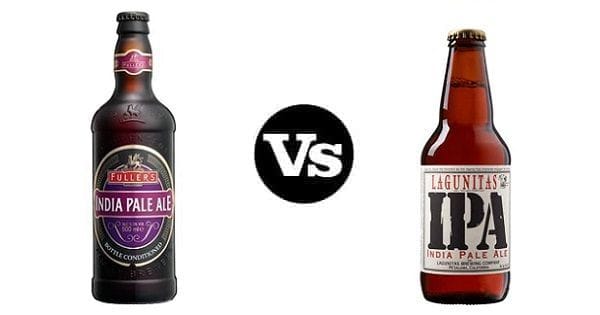
IPA beers (India Pale Ale) are a top-fermented beer style with over 200 years of history, increasingly widespread and appreciated around the world, and from which new variations emerge from time to time.
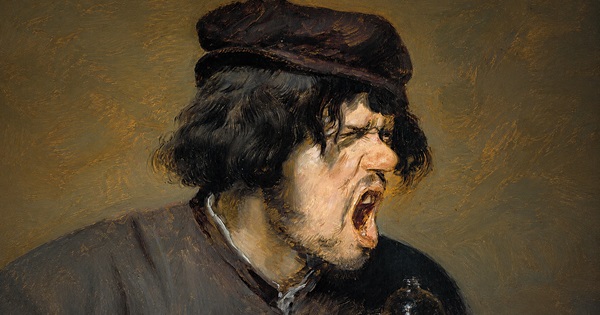
IPAs are one of the most popular beer styles worldwide, yet there are people who cannot stand hop-heavy bitter beers, and this could be due to a genetic variation in their perception of this taste.

If you are a beer lover, you have probably heard some of the long and complicated names of the yeasts and bacteria specifically used in sour beer production. We break them all down.
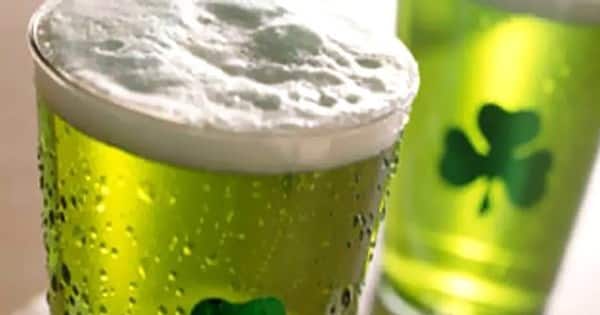
Almost everyone agrees that the tradition of consuming green-tinted beer on St. Patrick’s Day is not an Irish tradition; however, very few know the true story of the origin of this custom, where and how it began.

Whether you’re a beginner homebrewer or an experienced one with years of practice and hundreds of batches under your belt, the fundamentals always remain the same.

With issue No. 100 of All About Beer magazine, Daniel Bradford had the opportunity to explore the world of fine beers with two of the most influential individuals in the modern history of beer.

Pierre Celis was the man who put the small Belgian village of Hoegaarden on the world beer map when in the 1960s he revived a beer style made with wheat, spices, and fruit known as Witbier (white beer).

At a 1,700-year-old site, a team of archaeologists unearthed an ancient funerary site revealing a previously unknown and deeply symbolic practice of pouring alcoholic beverages such as wine and beer over the dead.

Drinking beer is a very common social activity, especially when enjoyed with friends. However, after having a couple of beers, it is common to notice that bathroom visits increase significantly.
The Brewer’s Star, also known as Bierstern or Brauerstern, is an iconic symbol that has accompanied humanity for over 500 years, representing the art, tradition, and passion behind beer brewing.
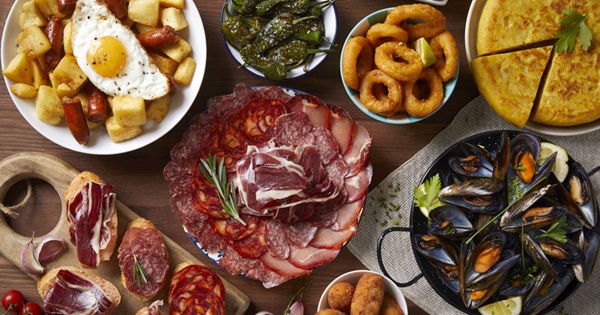
Its designations of origin, the richness of its cured and smoked products, as well as its regional variety—from Atlantic Galician cuisine to Levantine pastry—offer a vast territory to explore the principles of beer pairing.

The Eleusinian Mysteries were annual celebrations that took place in the autumn, approximately twenty kilometers west of Athens, at a sanctuary dedicated to the goddesses Demeter and Persephone.
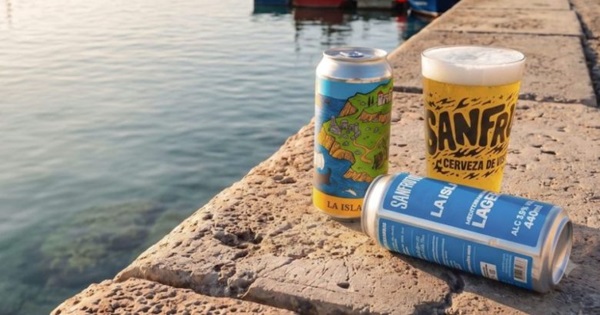
The Spanish Association of Sommellerie and Beer Culture (ASYCCE) has established the Mediterranean Lager as the country’s first officially native style, with a technical description including clear sensory parameters.

We invited Rob Tod, founder of Allagash Brewing Co., to share 20 practical lessons for brewery success learned over 25 years of activity. This was his response.
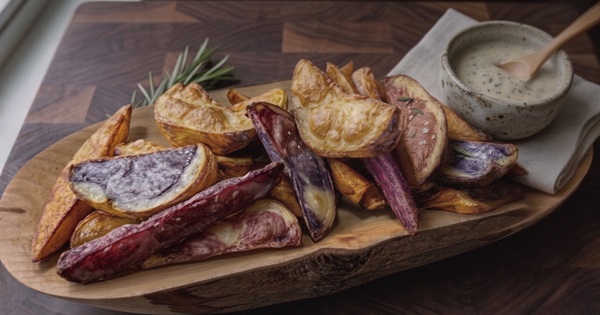
The Belgians point to fishermen from the Meuse River, who fried potato strips when the waters froze in the 17th century. The French point to street vendors at Paris’s Pont Neuf, who popularized them in the late 18th century.
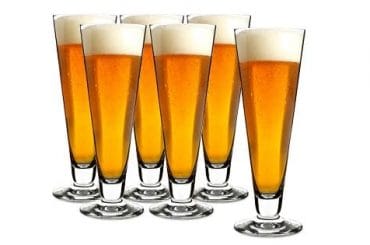
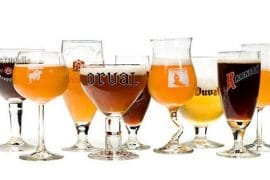
The Pilsner glass is used for many types of clear, bright beers. Its classic trumpet shape is narrow at the base and widens toward the top, maintaining carbonation, showcasing color and enhancing foam retention.
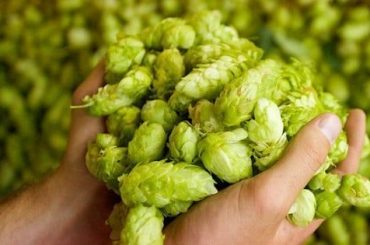
Fresh hops generally refer to hops that are used immediately after drying, while wet hops never reach this point in the process.

Why is a slice of lemon placed on the neck of clear glass beer bottles and not on others? It is a mystery that has never really been clear until now.

Among the list of Mexican spirits that have become fashionable, there is one that experts consider the forgotten beverage: pulque, traditional among the ancient Mexicans.

The combination of beer with Coca-Cola and fruit liquor is a curious German cocktail called Goassmass or Goass, very popular in the 80s and which has resurged with new generations.

However, as we delve into the engineering and science behind beer production, we discover a fascinating relationship between π and beer, especially relevant today, March 14, when we celebrate Pi Day.
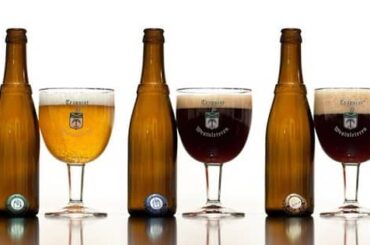
Unlike other Trappist abbeys located in Belgium, the Abbey of Saint Sixtus of Westvleteren (Sint-Sixtusabdij van Westvleteren in Dutch) does not date back to the times of the first congregations of the Cistercian Order.

Sahti is an ancient beer originating from Finland, recognized for its unique flavor, traditional brewing process, and rustic character, with juniper playing a prominent role.

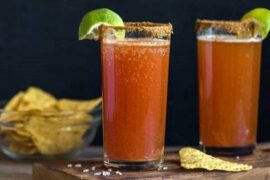
The basic definition establishes that a cocktail is a combination of different beverages—alcoholic or not—such as fruit juices, sodas (carbonated drinks), fermented drinks (beer, cider), and/or spirits (whiskey, rum, vodka, etc.).

In Tusheti, a remote region of the Georgian Caucasus, the sacred drink is not wine but aludi: a beer brewed with sun-malted barley and wild hops whose recipe has been passed down from grandmother to granddaughter for centuries.

In South Korea, the two most popular alcoholic beverages are soju and beer. This is why the smooth and delicious beer cocktail known as “somaek” has gained immense popularity, creating a perfect combination of both.
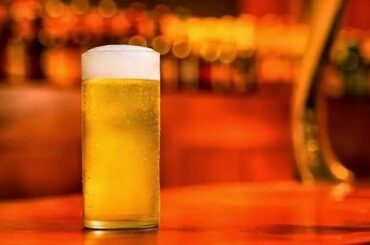
On December 11, 2014, the liso was officially declared Intangible Cultural Heritage of the city of Santa Fe by the Honorable Municipal Council of this emblematic Argentine city.

Muday is a traditional beverage of the Mapuche people of Chile and Argentina, an ancestral beer made from wheat, distinguished by its fermentation process — which includes chewing part of the grain — and its nutritional properties.
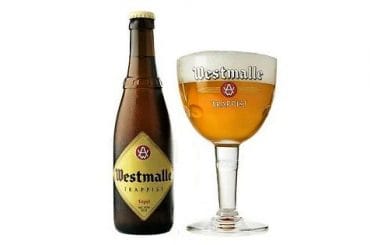
Westmalle Tripel is a Belgian Trappist beer brewed by Brouwerij der Trappisten van Westmalle and first introduced to the market in 1934, being a pioneer of its style and marking a milestone in the country’s brewing tradition.
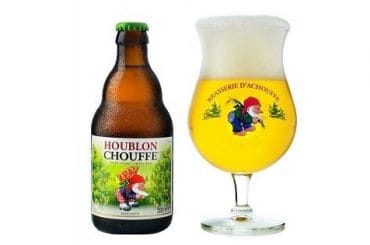
Houblon Chouffe Bière Tripel IPA represents a unique fusion of the English IPA tradition, the American Double IPA revolution, and the Belgian Tripel heritage.
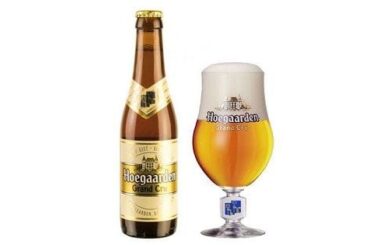
Hoegaarden Grand Cru is a Belgian Strong Ale brewed by Hoegaarden Brewery in Belgium, with 8.5% ABV, 29 IBU and 255 calories, best served in a Tulip or Snifter glass.
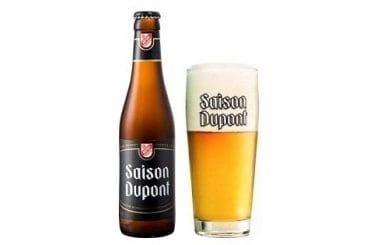
Saison Dupont is a Belgian top-fermented beer, bottle-conditioned, brewed since 1844 during the winter to quench the thirst of the “saisoniers” who would work in the fields during the summer.
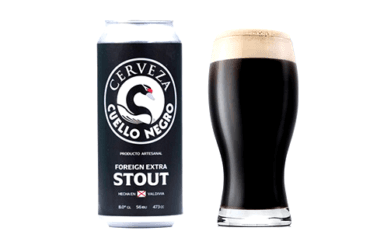
Cuello Negro Stout is a craft beer made with pure water from the Valdivian rainforest in southern Chile, whose flavor comes from a careful brewing process that gives it an unmistakable distinctive character.
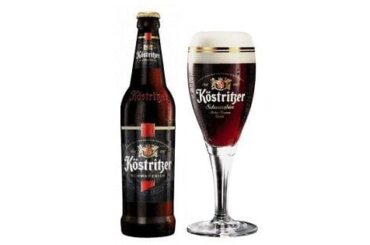
Köstritzer Schwarzbier is a bottom-fermented black lager. It has been produced since 1543 by the Köstritzer Schwarzbierbrauerei brewery, in the German state of Thuringia.
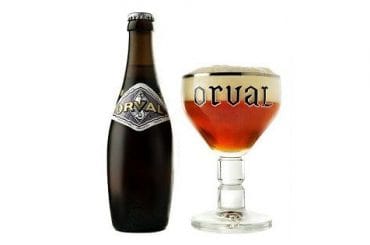
Unlike all other Trappist breweries, Orval produces only one variety of beer for the general public, with just 15% of its total production available for export.

Gulden Draak is a Belgian strong ale-style beer originating from Ertvelde, Belgium, and brewed by Brouwerij Van Steenberge, with 10.5% ABV, 18 IBU, and 255 total calories.
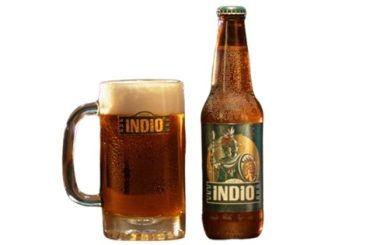
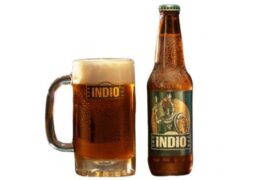
Indio is one of Mexico’s most iconic beers, with a rich history dating back to 1893. It emphasizes the use of local ingredients and traditional brewing techniques.

Excessive alcohol consumption is unfortunately a deeply rooted practice in many cultures around the world, making its impact on human health a topic of constant research and concern.

Next Glass acquired BeerAdvocate in February 2020 in a deal that brought under one roof the oldest beer review community on the internet and the world’s most popular consumption tracking app.
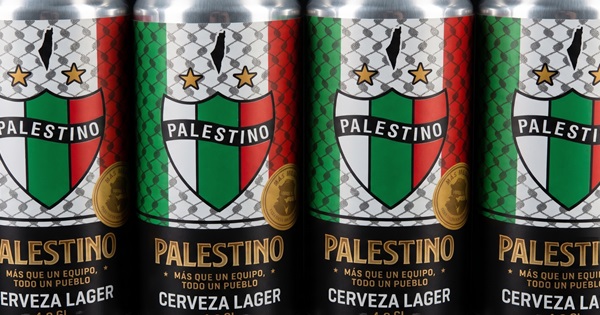
Over 500,000 people of Palestinian descent live in Chile today, where second, third, and fourth-generation families keep alive the language, traditions, and memory of a territory many have never been able to return to.
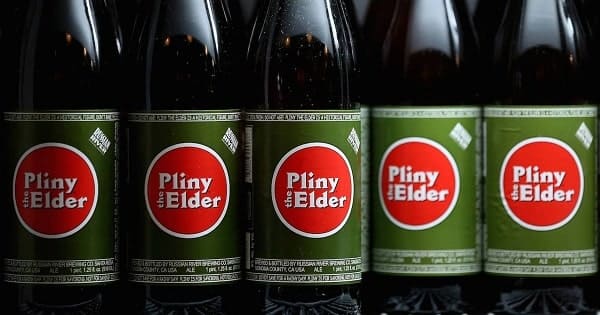
The beer Pliny the Elder takes its name in honor of the Roman traveler, naturalist, historian, and writer Gaius Minor Plinius Caecilius Secundus, who is credited with having given the first botanical name for hops.
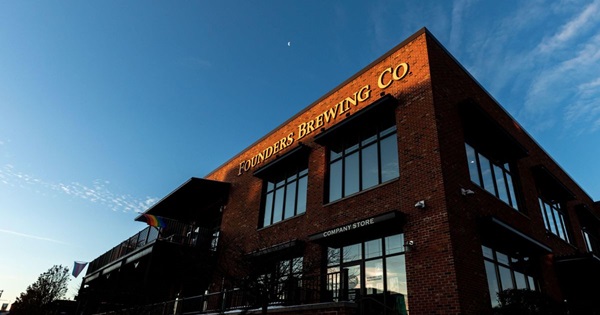
Mahou San Miguel has announced the acquisition of 100% of Founders Brewing, one of the most prestigious craft breweries in the United States, based in Grand Rapids, Michigan.
We invited Rob Tod, founder of Allagash Brewing Co., to share 20 practical lessons for brewery success learned over 25 years of activity. This was his response.

A Kantar Millward Brown annual study reveals that 5 of the 6 most valuable brands in Latin America are beer brands. Discover which beer leads sales in each country of the region.

To start this top 10 of the best-selling beers in the world, we can comment that for 2020, most of them are on the way to generating an impressive sum of 688.4 billion dollars in sales.
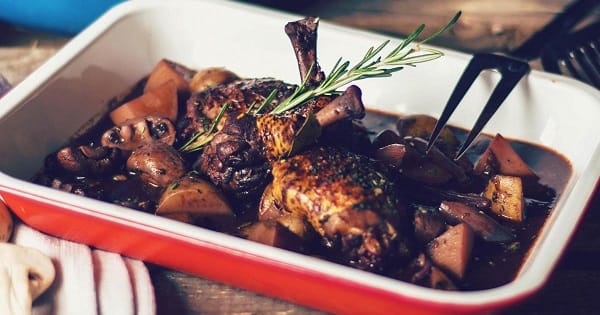
France is famous for its exquisite gastronomy. Although primarily known for wine production, beer has also been a popular beverage in France for centuries.
Nitro beer has been dismissed as a passing trend more than once — yet it keeps finding new fans and new formats. From the Guinness widget to nitro Cream Ales and Lagers, here is the science and history behind the nitrogen revolution in beer.

The discovery of a 220-year-old beer bottle recovered from the Sydney Cove, sunk in Australian waters near Tasmania, has inspired the creativity of a team of researchers.

A refractometer is an optical instrument that measures the sucrose concentration of a solution based on the refractive index produced by light in that solution.

The relationship between the chemical composition of a beer and its consumer appreciation has been an elusive field for food science, due to the non-linear nature of perception and its complex interactions.
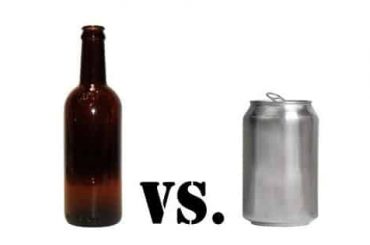
Every consumer already has their preferences: some reject cans while others love the creative designs they can carry. This article cuts through the aesthetics to lay out the objective facts on which format is better depending on the conditions.

The rise of non-alcoholic or low-alcohol beers has led the brewing industry to explore new yeast strains and fermentation techniques.

The cold chain essentially means that the product being distributed is kept refrigerated at a constant temperature at all times, including during transportation.

The STC-1000 temperature controller lets you manually program a precise temperature range for your fermenter inside a refrigerator, freezer, or appropriately sized cooler.

You do not simply request an "IPA recipe"; instead, you instruct Claude Code to first analyze the ingredient inventory, evaluate the cooling capacity of the equipment, and propose a mashing process that favors the desired final body.

A team at Chalmers University of Technology has developed a biodegradable construction material made from baker’s yeast, algae alginate, wood cellulose, and vegetable glycerol—3D printable at room temperature with no heating, no support structures, and no waste.
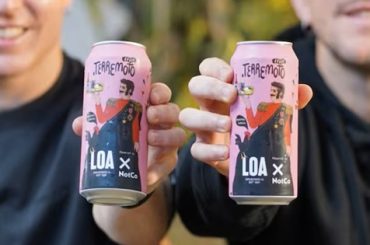
The beverage, named “Ocho punto ocho” (8.8), combines the characteristic flavor of the terremoto with a different nutritional profile, standing out for its lower sugar content and half the calories compared to the homemade version.

Craft and independent brewers dedicate a great deal of time, effort, and resources to making the best beer possible, but all of this hard work can be ruined in the time it takes the beer to travel from the keg to the pint.
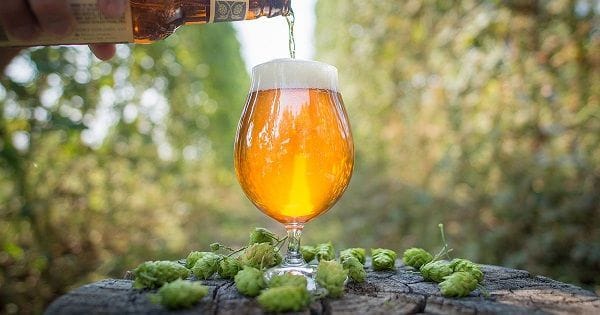
The idea was born with the help of social media in 2011, with Ashley Routson and Ryan Ross as its main promoters, quickly spreading globally as one of the most important beer style celebrations.

The PERP framework offers a structural model for understanding how global warming alters the biological cycles of barley and hops, with concrete responses to maintain quality and economic viability.

Google’s algorithm doesn’t always prioritize specialized beer media, but now it allows you to add The Beer Times as a preferred content source in Google Discover in less than a minute.

Tradition holds that Pythagoras, the celebrated mathematician and philosopher who founded his school in Croton, in southern Italy, grew tired of watching some of his disciples abuse wine during symposia.

In Tusheti, a remote region of the Georgian Caucasus, the sacred drink is not wine but aludi: a beer brewed with sun-malted barley and wild hops whose recipe has been passed down from grandmother to granddaughter for centuries.